




Copper Manifolds
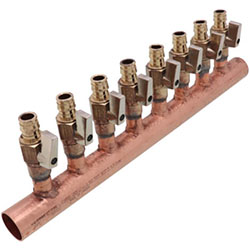
A copper manifold splits one supply line into multiple branch lines, each feeding a separate zone, loop, or fixture. It lets a single trunk line serve several PEX or copper runs from one location instead of branching pipe at several points through a house.
Manifold bodies are typically built from Type L copper. They connect to branch tubing through crimp rings, ProPEX expansion fittings, or soldered joints, depending on which system the rest of the job uses. Contractors pick outlet count and branch spacing based on the number of loops or fixtures being served. They choose a valved manifold when each branch needs its own shutoff for zoning or repair. Flow rate through the manifold body sets a practical limit on how many branches one manifold can serve before pressure drops.



Subcategories
- Crimp Style Manifolds: Crimp style manifolds built to ASTM F1807 use a Type L copper trunk with 1/2 inch PEX branches. They join with a crimp tool and copper crimp rings rather than an expansion tool. Plumbers reach for this style when the rest of the job is already plumbed in crimp connections and a separate expansion tool isn't on hand.
- ProPEX Style Manifolds: ProPEX style manifolds pair a Type L copper body with 5/8 inch or 3/4 inch branches spaced 4 inches on center. They are rated for up to 45 gpm through the manifold body. Branches connect using the ProPEX expansion tool instead of rings or solder, matching the rest of an Uponor PEX-a installation.
- Copper Sweat Manifolds: Copper sweat manifolds join the trunk and branches by soldering rather than crimping or expanding. This suits crews without a crimp or expansion tool on the truck, or a rough-in that specifies all-solder connections. They connect to copper or CPVC branch lines using standard sweat fittings.
Buying Guide
Match the manifold's connection method to the tubing already specified for the job. A crimp style manifold needs a crimp tool and rings on hand. A ProPEX style manifold needs the ProPEX expansion tool. A sweat manifold needs a torch and solder.
Count the number of zones or fixtures the manifold needs to feed before choosing outlet count. Running a manifold with too few outlets forces awkward branch splits later in the job.
Choose a valved manifold when any branch might need to be shut off independently for a repair, seasonal shutdown, or zoning a single system into separate areas. Valveless manifolds cost less but shut down the whole trunk to service any one branch.
Check the manifold body's rated flow before loading it with branches. A body rated for a set number of gpm through its trunk connection can lose pressure at the far branches if too many loops draw from it at once.
Confirm the manifold's branch spacing matches the tubing runs planned for the space behind it. Tight spacing crowds tubing bends, where a wider manifold would allow a cleaner run.
Frequently Asked Questions
What's the difference between a crimp style and a ProPEX style copper manifold?
A crimp style manifold connects to PEX branches using a crimp tool and copper rings, built to ASTM F1807. A ProPEX style manifold uses the ProPEX expansion tool instead, with no rings involved. Pick the style that matches the connection method already used on the rest of the PEX in the job.
Can a copper sweat manifold be used with PEX tubing?
Yes, with the right transition fitting. A sweat manifold joins to copper or CPVC branch lines by soldering. PEX branches need a PEX to copper transition fitting sized to the manifold's outlet before the PEX run starts.
How many outlets does a copper manifold need for a radiant heat system?
Outlet count should match the number of separate loops the system calls for, with one outlet per loop. Adding a spare outlet or two during rough-in gives room for a future zone without swapping the manifold later.
Do copper manifolds need shutoff valves on every branch?
Valved manifolds add a shutoff at each branch so an individual loop can be closed for repair or balancing without draining the whole system. Valveless manifolds work fine where every branch runs at the same time and none need individual isolation.
What limits how many branches a copper manifold can supply?
The manifold body's rated flow through its trunk connection sets the limit. Loading more branches onto a manifold than its trunk is rated for can drop pressure at the farthest outlets, so check the rated gpm before adding branches.
Resources
Subcategories
- Crimp Style Manifolds: Crimp style manifolds built to ASTM F1807 use a Type L copper trunk with 1/2 inch PEX branches. They join with a crimp tool and copper crimp rings rather than an expansion tool. Plumbers reach for this style when the rest of the job is already plumbed in crimp connections and a separate expansion tool isn't on hand.
- ProPEX Style Manifolds: ProPEX style manifolds pair a Type L copper body with 5/8 inch or 3/4 inch branches spaced 4 inches on center. They are rated for up to 45 gpm through the manifold body. Branches connect using the ProPEX expansion tool instead of rings or solder, matching the rest of an Uponor PEX-a installation.
- Copper Sweat Manifolds: Copper sweat manifolds join the trunk and branches by soldering rather than crimping or expanding. This suits crews without a crimp or expansion tool on the truck, or a rough-in that specifies all-solder connections. They connect to copper or CPVC branch lines using standard sweat fittings.
Buying Guide
Match the manifold's connection method to the tubing already specified for the job. A crimp style manifold needs a crimp tool and rings on hand. A ProPEX style manifold needs the ProPEX expansion tool. A sweat manifold needs a torch and solder.
Count the number of zones or fixtures the manifold needs to feed before choosing outlet count. Running a manifold with too few outlets forces awkward branch splits later in the job.
Choose a valved manifold when any branch might need to be shut off independently for a repair, seasonal shutdown, or zoning a single system into separate areas. Valveless manifolds cost less but shut down the whole trunk to service any one branch.
Check the manifold body's rated flow before loading it with branches. A body rated for a set number of gpm through its trunk connection can lose pressure at the far branches if too many loops draw from it at once.
Confirm the manifold's branch spacing matches the tubing runs planned for the space behind it. Tight spacing crowds tubing bends, where a wider manifold would allow a cleaner run.
Frequently Asked Questions
What's the difference between a crimp style and a ProPEX style copper manifold?
A crimp style manifold connects to PEX branches using a crimp tool and copper rings, built to ASTM F1807. A ProPEX style manifold uses the ProPEX expansion tool instead, with no rings involved. Pick the style that matches the connection method already used on the rest of the PEX in the job.
Can a copper sweat manifold be used with PEX tubing?
Yes, with the right transition fitting. A sweat manifold joins to copper or CPVC branch lines by soldering. PEX branches need a PEX to copper transition fitting sized to the manifold's outlet before the PEX run starts.
How many outlets does a copper manifold need for a radiant heat system?
Outlet count should match the number of separate loops the system calls for, with one outlet per loop. Adding a spare outlet or two during rough-in gives room for a future zone without swapping the manifold later.
Do copper manifolds need shutoff valves on every branch?
Valved manifolds add a shutoff at each branch so an individual loop can be closed for repair or balancing without draining the whole system. Valveless manifolds work fine where every branch runs at the same time and none need individual isolation.
What limits how many branches a copper manifold can supply?
The manifold body's rated flow through its trunk connection sets the limit. Loading more branches onto a manifold than its trunk is rated for can drop pressure at the farthest outlets, so check the rated gpm before adding branches.