




'/%3E%3C/svg%3E)
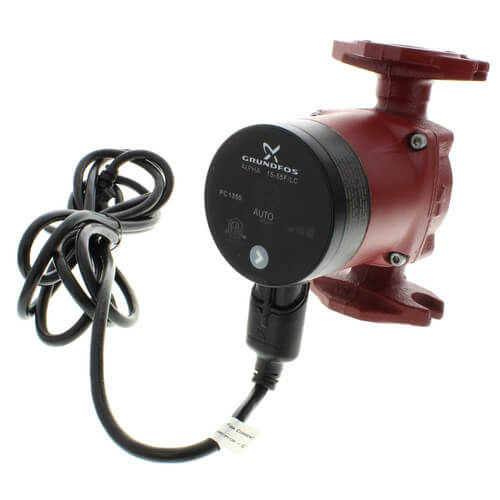
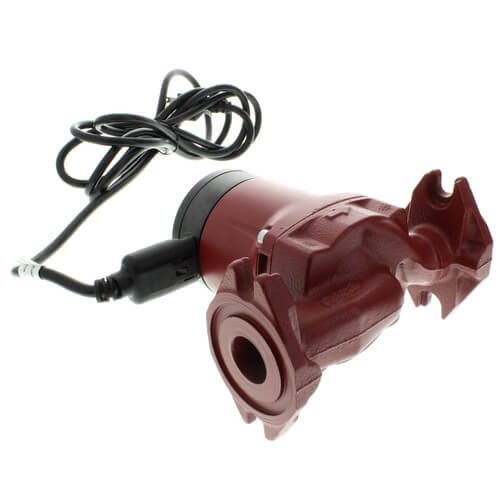
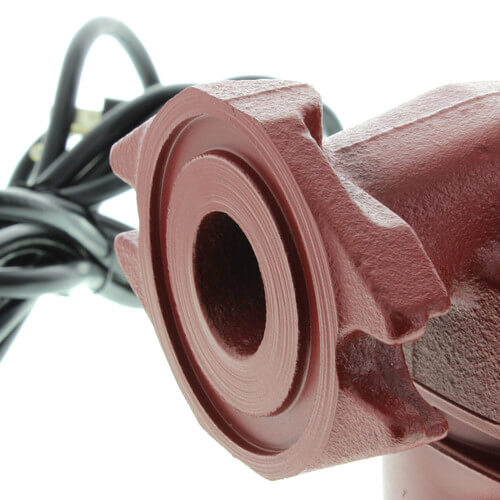
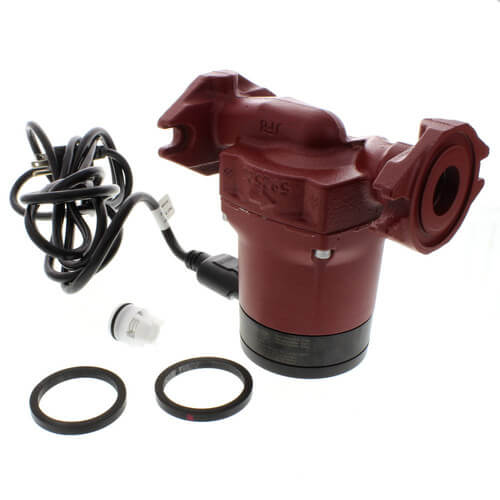
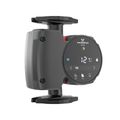
ALPHA 15-55 F/LC Cast Iron Circulator Pump (w/ Line Cord)
 --%3E %3Csvg version='1.1' id='Fill' xmlns='http://www.w3.org/2000/svg' xmlns:xlink='http://www.w3.org/1999/xlink' x='0px' y='0px' viewBox='0 0 100 100' enable-background='new 0 0 100 100' xml:space='preserve'%3E %3Cpath fill='%23F15C02' d='M79.44,0.95H20.56C9.78,0.95,0.95,9.78,0.95,20.56v58.87c0,10.79,8.82,19.61,19.61,19.61h58.87 c10.79,0,19.61-8.83,19.61-19.61V20.56C99.05,9.78,90.22,0.95,79.44,0.95z M65.38,58.24l9.38,29.58L49.69,69.78L24.5,87.82 l9.34-29.6L8.8,39.6l30.73-0.17c0,0,6.98-19.61,10-28.93c0.54,1.36,9.88,29.1,9.88,29.1H91.2L65.38,58.24z'/%3E %3C/svg%3E)
' fill='%23F15C02' d='M49 0C21.938 0 0 21.938 0 49s21.938 49 49 49 49-21.938 49-49S76.062 0 49 0m0 82.709a7.54 7.54 0 1 1 0-15.08 7.54 7.54 0 0 1 0 15.08m7.54-28.412a7.541 7.541 0 0 1-15.08 0V22.831a7.54 7.54 0 0 1 15.08 0v31.466z'/%3E%3C/svg%3E)
MANUALS (3)
 --%3E %3Csvg version='1.1' id='Half' xmlns='http://www.w3.org/2000/svg' xmlns:xlink='http://www.w3.org/1999/xlink' x='0px' y='0px' viewBox='0 0 100 100' enable-background='new 0 0 100 100' xml:space='preserve'%3E %3Cg%3E %3Cpath fill='%23F15C02' d='M30.05,70.23l3.79-12.01L8.8,39.6l30.73-0.17c0,0,6.98-19.61,10-28.93c0.54,1.36,9.88,29.1,9.88,29.1h1.58 L93.71,7.18c-3.58-3.82-8.66-6.23-14.28-6.23H20.56C9.78,0.95,0.95,9.78,0.95,20.56v58.87c0,5.41,2.22,10.32,5.79,13.88 L30.05,70.23z'/%3E %3C/g%3E %3Cpath fill='%23FBC8B4' d='M93.71,7.18L60.98,39.6H91.2L65.38,58.24l9.38,29.58L49.69,69.78L24.5,87.82l5.55-17.59L6.75,93.32 c3.55,3.54,8.44,5.73,13.82,5.73h58.87c10.79,0,19.61-8.83,19.61-19.61V20.56C99.05,15.4,97.01,10.69,93.71,7.18z'/%3E %3C/svg%3E)

Product Highlights


Description
Features:
- AUTOADAPT measures system changes automatically and maximizes energy savings
- Easy-to-use operation
- Select a mode with the touch of a button
- Easy-to-read LED display shows flow indication and power consumption
- Simple plug connections
- No wiring required
Specs
| Material: | Cast Iron |
|---|---|
| Application: | Zoning |
| Horse Power: | 1/12 |
| Flow Range (GPM): | 0-21 |
| Max Flow (GPM): | 21 |
| Max Head (Ft): | 19 |
| Head Range (ft.): | 0-19 |
| Min Temp (F): | 36°F |
| Max Temp (F): | 230°F |
| Max Pressure (PSI): | 150 |
| Phase: | 1 |
| Voltage: | 115V |
| Amperage: | 0.65 |
| Type: | Var. Speed Pump |
| Connection Type: | Flanged x Flanged |
| Connection Size: | 3/4", 1", 1-1/4", 1-1/2" |


Questions?
Product Reviews
Most Liked Positive Review
Well Worth The Money
Most Liked Negative Review
 --%3E %3Csvg version='1.1' id='With-RB' xmlns='http://www.w3.org/2000/svg' xmlns:xlink='http://www.w3.org/1999/xlink' x='0px' y='0px' viewBox='0 0 100 100' enable-background='new 0 0 100 100' xml:space='preserve'%3E %3Cpath fill='%23FBC8B4' d='M79.44,0.95H20.56C9.78,0.95,0.95,9.78,0.95,20.56v58.87c0,10.79,8.82,19.61,19.61,19.61h58.87 c10.79,0,19.61-8.83,19.61-19.61V20.56C99.05,9.78,90.22,0.95,79.44,0.95z M65.38,58.24l9.38,29.58L49.69,69.78L24.5,87.82 l9.34-29.6L8.8,39.6l30.73-0.17c0,0,6.98-19.61,10-28.93c0.54,1.36,9.88,29.1,9.88,29.1H91.2L65.38,58.24z'/%3E %3C/svg%3E)
Ehh External control would make better
great package

Just what I have been looking for.
Well Worth The Money
So far so good
Performs amazingly.
Alpha Pump for radiant heat
Great replacement for Taco 007
They Rock!
Ehh External control would make better
ECM circulators are the way to go
Product Q&A
15 QuestionsQ: Im using this pump for closed heating loop coming off of a hot water heater, running it through a heat exchanger for a low temp radiator system, utilizing a shared appliance for DHW and space heat. I was sold this pump because it's one of the few that they stocked in stainless steel, as it's the secondary system pump. I don't need the auto adapt feature, this pump will be controlled by a relay, so I plan on setting the pump speed, and leaving it. My question is this, if the relay is turning the power to the pump on and off, will it resume back to the manual setting, or always default back to the auto-adapt? I realize that this pump is a bit overkill for this application, as I don't need the "logic" but it's installed and I'd like to use it
Asked by Tandttravis 11 years ago
Add your answer
Verified Reply- SupplyHouse StaffThe Alpha pump will always default to the AutoAdapt mode when power is supplied. There is no way to change this default mode
Q: Hello, How long is the supplied line cord? I have an outlet but it is not right next to the pump. Thanks
Asked by the1jonc 11 years ago
Add your answer
Verified Reply- SupplyHouse StaffThe line cord is 10 ft long.
Q: What assumption does the autoadapt feature make ? Gpm vs pump wattage use vs frequency of heat source requests ?
Asked by Deetle 11 years ago
Add your answer
Verified Reply- SupplyHouse StaffAUTOADAPT analyses the heating system and learns from it. It ensures that the differential pressure is automatically adjusted to match the flow requirements. So as the pump is operated and the flow increases, the pump pressure follows the line for the AUTOADAPT factory setting until the pump operates on the maximum curve, continuing downwards until it reaches the required flow. When the flow is subsequently reduced, the AUTOADAPT function ensures that the operating profile does not simply return to the original curve, it sets a new lower pump speed.
Q: Will the Alpha connect to existing Taco 007 flanges?
Asked by Bill 13 years ago
Add your answer
Yes it worked for me! Should work for you as well!
Yes, it will bolt right up w/no problem.
Just make sure that the pump motor is correctly positioned. Vertical pipe--makes no difference. Horizontal pipe--the pump motor should not be above or below the pipe, but at an even level with the pipe.
Q: what is the difference between the F and FR designation?
Asked by joe 13 years ago
Add your answer
Verified Reply- PexSupply StaffF denotes a flange connection, FR would be a rotated flange layout.
Q: When using this pump on zone valves, can you ruin it by dead heading the pump when valve closes and the boiler continues to run, such as on these new 90% boilers that have a boost or post purge after t-stat is satisfied? I have had other pumps die when running with no water flow. The boilers I am talking about would be the Purefire series by Peerless and the WM97+ by Weil McLain. I am a oil burner tech in NW Phila. with many years on the job. Bob K
Asked by Bob K 13 years ago
Add your answer
1) I'd be afraid of ruining your boiler 2) the Alpha pump was designed to pump full-time, even with all zone valves closed 3) one of my Alphas started to be audible recently, I don't know if the dead-heading added any wear, but the pump is designed for it.
This is late. On Blower post purge, only the blower runs not the pump. On Auto-Adapt the pump ramps down in speed. It doesn't hurt the pump to dead head as the impeller stops rotating. Not to be used on the boiler circuit(loop), on the zone circuits(loops)only, on a high head heat exchanger low mass condensing boilers.
Q: I've got an application that requires 6 gpm with 18 feet of head on an iron rad system. This is somewhat beyond the capabilities of the Alpha pump, but I want to go with Alpha. Can I connect two pumps in series? In parallel? Is one way better than another? Thanks, Steve
Asked by Steve 14 years ago
Add your answer
Verified Reply- PexSupply StaffConnecting two pumps in series doubles the head capabilities of the circulator, while connecting them in parallel doubles the flow rate potential. It appears that you could use either method to achieve the necessary results with two ALPHA circulators.
You would connect the pumps in series if you have a head that is too high for the pump to overcome; and in parallel if the pump adequatley overcomes the head but you need to up the flow rate. For the best efficency you need to keep the flow rate between 2 and 4 feet per second. Anything below 2fps will risk air getting stuck in the system on a vertical section ( flow rate is slower than bouyancy ) and above 4fps will make noise. For your situation you would be best putting two pumps in series.
Given a set and known demand, it's probably better to get one pump to do the job rather than using two. Remember, if you're pumping hot water uphill you have the advantage of convection.
That is a good question. I would want a Grundfos engineer to answer it especially in the Alpha Auto Adapt Mode. A normal, non variable speed pump, you would connect both pumps in series flange to flange. You might consider connecting a UPS15-58 FC to an Alpha to get the extra head. Talk to a Grundfos engineer.
Steve, on further consideration, I remind you that on multiple circuit you add the flow of each circuit when all the circuits are operating for a total flow required. However, you only need to over come the pressure loss, head loss, etc. of the most resistive to flow circuit. You don't add all the circuits "head loss" together. I have used a UPS15-58 in series with multiple Alpha pumps in a manifold radiant sys, but the UP15-58 overcame boiler and piping "pressure losses", it was connected before the Alpha pumps. These pumps were not hydraulically separated.
Q: do i still need a pressure differential valve on my secondary loop if i have one of these pumps on that loop?
Asked by monkeywrench 14 years ago
Add your answer
Verified Reply- PexSupply StaffA By-pass valve is not required with the Grundfos ALPHA.
If your Alpha on the secondary is supplying zones, then no, you do not need a pressure diiff. valve. The Alpha will ramp up & down to supply the needed flow, w/out excess.
NO. The Alpha pump should not be used on a low mass condensing boiler boiler loop only on the heating loop as the condensing boiler requires a given flow through the heat exchanger (HX)to prevent flashing (boiling of the water into vapor in the HX). The purpose of the variable speed pump is to eliminate the pressure differential bypass valve when zoning with zone valves. As the zone valves shut down the pump slows down. The low mass condensing boiler needs 2 pumps one for boiler loop and one for heating loop. Use the Alpha on the heating loop. In radiant systems as the thermal actuators on the manifold close the Alpha pump slows down eliminating the need for a PDBV.
Q: I have bought this pump for a two-zone radiant system. I will buy zone valves and control switches for those but I am not sure whether I need a switch relay for this pump. Will it start and stop automatically when it senses a zone valve opens, or does it need to be controlled by a switch relay? Thanks
Asked by Henrik 15 years ago
Add your answer
Verified Reply- PexSupply StaffIf you are zoning by zone valve, you do not need a switching relay. The zone valves, zone thermostats, and this pump will all wire into the zone valve control.
The thermostats operate the zone valves & the valve's end switch turns on the boiler. The Alpha doesn't need a connection to a relay, only power, it runs all the time, sensing pressure changes in the system and ramping up or down as needed(Auto Adapt). If you have a condensing boiler that requires a boiler loop and a heating loop (two pumps), do not use the alpha on the boiler loop, heating loop only.
Q: I would like to have a recirculating pump on my hot water heater for immediate hot water. What other parts would I need if I purchased this model? Does there need to be a part installed under a sink the furthest from the hot water heater? Anything else we need to know?
Asked by Shelia 15 years ago
Add your answer
Verified Reply- PexSupply StaffWe would recommend that you use part 96433895.
A BIG BIG NO! You must use a bronze or stainless steel pump for an open system and you don't need a variable speed pump. This has to be done right or you will get hot water out of the cold water tap in the kitchen sink. A Grundfos UP 15-18B5 would be a better choice or even a smaller pump, maybe. You can purchase a recirculation kit that has all the part needed and instructions.
This pump would be way overkill for this purpose. In fact you usually don't even need a pump. I ran a 3/8" line from the end of my hot water supply line to the bottom of the hot water tank and natural heat convection keeps the water in the line hot all the time. If you did chose to add a pump, one a quarter of the size of the Alpha would be more than adequate.