




Filters
SORT
Product Availability –
Size –
Grade –
Review Score –
 --%3E %3Csvg version='1.1' id='Fill' xmlns='http://www.w3.org/2000/svg' xmlns:xlink='http://www.w3.org/1999/xlink' x='0px' y='0px' viewBox='0 0 100 100' enable-background='new 0 0 100 100' xml:space='preserve'%3E %3Cpath fill='%23F15C02' d='M79.44,0.95H20.56C9.78,0.95,0.95,9.78,0.95,20.56v58.87c0,10.79,8.82,19.61,19.61,19.61h58.87 c10.79,0,19.61-8.83,19.61-19.61V20.56C99.05,9.78,90.22,0.95,79.44,0.95z M65.38,58.24l9.38,29.58L49.69,69.78L24.5,87.82 l9.34-29.6L8.8,39.6l30.73-0.17c0,0,6.98-19.61,10-28.93c0.54,1.36,9.88,29.1,9.88,29.1H91.2L65.38,58.24z'/%3E %3C/svg%3E)
Price Range –
Bluefin Oxygen Barrier PEX Tubing

 --%3E %3Csvg version='1.1' id='Half' xmlns='http://www.w3.org/2000/svg' xmlns:xlink='http://www.w3.org/1999/xlink' x='0px' y='0px' viewBox='0 0 100 100' enable-background='new 0 0 100 100' xml:space='preserve'%3E %3Cg%3E %3Cpath fill='%23F15C02' d='M30.05,70.23l3.79-12.01L8.8,39.6l30.73-0.17c0,0,6.98-19.61,10-28.93c0.54,1.36,9.88,29.1,9.88,29.1h1.58 L93.71,7.18c-3.58-3.82-8.66-6.23-14.28-6.23H20.56C9.78,0.95,0.95,9.78,0.95,20.56v58.87c0,5.41,2.22,10.32,5.79,13.88 L30.05,70.23z'/%3E %3C/g%3E %3Cpath fill='%23FBC8B4' d='M93.71,7.18L60.98,39.6H91.2L65.38,58.24l9.38,29.58L49.69,69.78L24.5,87.82l5.55-17.59L6.75,93.32 c3.55,3.54,8.44,5.73,13.82,5.73h58.87c10.79,0,19.61-8.83,19.61-19.61V20.56C99.05,15.4,97.01,10.69,93.71,7.18z'/%3E %3C/svg%3E)

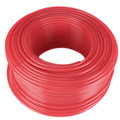
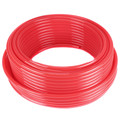


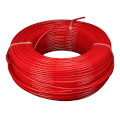

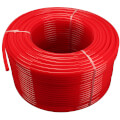


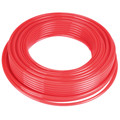
Bluefin Oxygen Barrier PEX Tubing is cross-linked polyethylene pipe built with an added EVOH layer that blocks oxygen from diffusing into a closed hydronic system. Radiant floor heating and baseboard installers use this tubing because oxygen infiltration through standard PEX can corrode boilers, pumps, and other ferrous components over time. Bluefin manufactures the tubing as PEX-b in sizes from 3/8 inch through 1 inch, with coil lengths suited to both small zone repairs and whole-house radiant runs. The tubing carries a 25-year warranty and installs with standard crimp, clamp, or compression fitting systems, so it fits into existing hydronic tool workflows without a specialty crimper. Because oxygen barrier tubing protects the metal components downstream of the pipe, specifying it correctly on any closed-loop heating job keeps the rest of the system, not just the tubing itself, running for its full service life.
Subcategories
- Small-Diameter Tubing (3/8 Inch): Bluefin's 3/8 inch oxygen barrier PEX serves tight radiant floor zones and snow-melt grids where individual loop runs stay short. Installers favor the smaller diameter for its tighter bend radius in confined floor assemblies. It's available in 600 and 1,000 foot coils for larger jobs. The reduced diameter keeps individual loop lengths shorter, which helps balance flow across a multi-zone manifold.
- Mid-Size Tubing (1/2 and 5/8 Inch): 1/2 inch and 5/8 inch oxygen barrier PEX cover the bulk of residential radiant floor heating jobs, balancing flow capacity against ease of bending around joists and subfloor. Coils run up to 1,000 feet for the 1/2 inch size, giving installers enough length for a full zone without a mid-run splice. Radiant heating contractors default to this range for standard slab and staple-up installations. The larger 5/8 inch option handles longer loops before pressure drop becomes a problem.
- Large-Diameter Tubing (3/4 and 1 Inch): 3/4 inch and 1 inch oxygen barrier PEX typically run as distribution or trunk lines feeding smaller zone loops rather than serving as the zone tubing itself. Boiler installers use the larger diameters to move higher volumes of water between the mechanical room and remote manifolds. Both sizes ship in 300 foot coils as well as 20 foot straight lengths for tight mechanical room runs. The bigger inside diameter reduces pumping head compared to running multiple smaller lines in parallel.
- Straight Lengths: Straight lengths of oxygen barrier PEX, available in 20 foot sections for 3/4 inch and 1 inch tubing, suit mechanical room runs where a coil's memory curve would fight tight corners near a boiler or manifold. Installers use straight stock for exposed piping in equipment rooms where appearance and clean bends matter. Coiled tubing still works for those runs, but straight lengths avoid the persistent curve a coil holds after uncoiling. Straight stock adds labor time savings on visible mechanical room piping specifically.
Buying Guide
Sizing oxygen barrier PEX starts with the application. Zone tubing embedded in a slab or stapled under a subfloor typically runs 3/8 to 5/8 inch, since smaller diameters bend easily around joists and fit tighter on-center spacing in radiant floor layouts. Trunk lines feeding multiple zones from a manifold or boiler room usually step up to 3/4 or 1 inch to move higher volumes without excessive pressure drop. Bluefin Oxygen Barrier PEX Tubing ships as PEX-b, which installs with standard crimp, clamp, or compression fittings already common on hydronic jobs, so no specialty tooling investment is needed to switch brands. Coil length matters for labor efficiency: longer coils reduce the number of couplings in a single zone run, cutting the number of potential leak points, while straight 20 foot lengths suit exposed mechanical room piping where a coil's natural curve would complicate clean routing. Every foot of this tubing carries the oxygen barrier layer, so mixing it with standard non-barrier PEX anywhere in a closed loop reintroduces the corrosion risk the barrier is meant to stop. Confirming the loop is fully oxygen barrier tubing, correctly sized for its role as zone or trunk line, and installed with fittings rated for radiant heating protects the system's boiler and pump components for the tubing's full warranty period.
Frequently Asked Questions
What does the oxygen barrier actually do on PEX tubing?
The EVOH layer bonded to the outside of Bluefin's oxygen barrier PEX blocks oxygen molecules from diffusing through the pipe wall into the water. Standard PEX without that layer lets trace oxygen pass through over time, which corrodes cast iron boiler sections, steel pumps, and other ferrous parts in a closed loop. Radiant heating and hydronic baseboard systems specifically need the barrier because those systems keep the same water circulating for years.
What sizes does Bluefin oxygen barrier PEX come in?
Bluefin manufactures oxygen barrier PEX-b from 3/8 inch up through 1 inch, covering both zone tubing and trunk line applications. Smaller diameters like 3/8 and 1/2 inch suit tight radiant floor spacing, while 3/4 and 1 inch sizes typically serve as distribution lines. Coil lengths range from 300 feet up to 1,000 feet depending on the diameter.
Can oxygen barrier PEX be joined with standard crimp fittings?
Bluefin's PEX-b tubing works with standard crimp, clamp, or compression fitting systems already used across most hydronic and radiant jobs. No specialty crimper or proprietary tool is required to switch to the oxygen barrier product. Matching the fitting type to the tubing's outer diameter still matters, the same as with any PEX installation.
What's the warranty on Bluefin oxygen barrier PEX tubing?
Bluefin backs its oxygen barrier PEX-b tubing with a 25-year warranty. Keeping the tubing out of direct sunlight before and during installation protects that warranty, since PEX degrades under prolonged UV exposure. Following the manufacturer's bend radius and fitting guidelines during installation also keeps the warranty intact.
Does oxygen barrier tubing need to be used throughout an entire loop?
Mixing standard non-barrier PEX with oxygen barrier tubing anywhere in a closed hydronic loop reintroduces the same oxygen infiltration the barrier tubing is meant to prevent. Every foot of tubing in a closed loop should carry the oxygen barrier layer to protect boiler and pump components downstream. Open-loop domestic water lines don't need the barrier, since that water isn't recirculated through metal heating components.
