



Tees
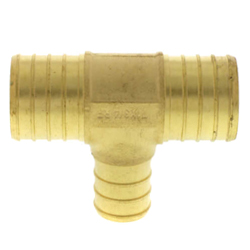
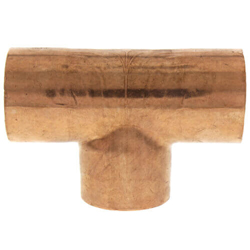
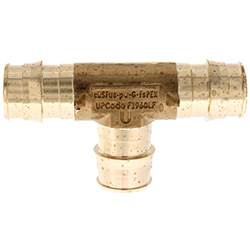
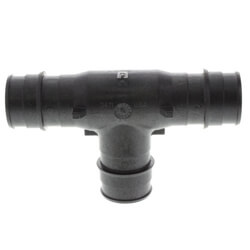
Tees add a branch connection into a pipe run, covering material and connection options across copper, black steel, galvanized steel, and press-fit systems. The category includes ABS DWV tees for drain lines, flare tees for gas and refrigerant tubing, and MegaPress tees for steel and stainless piping.
Selecting a tee's material and connection style depends on the pipe system it is joining, since a grooved tee uses a mechanical coupling that clamps onto pipe rather than soldering or threading. Matching branch and run sizes correctly keeps flow balanced through both the main run and the new branch.
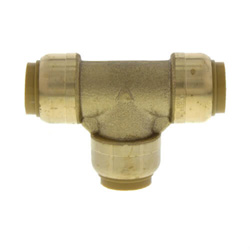
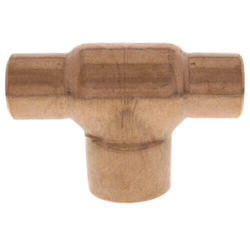
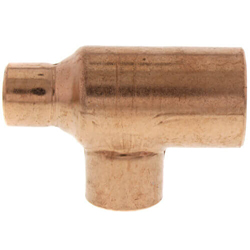
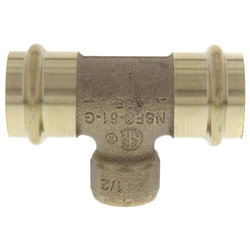
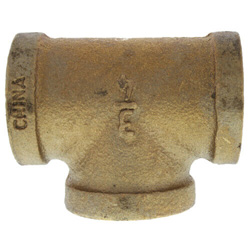
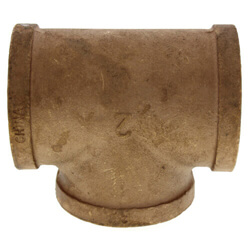
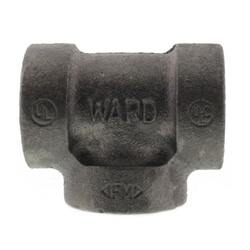
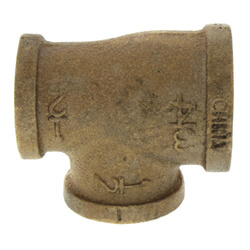



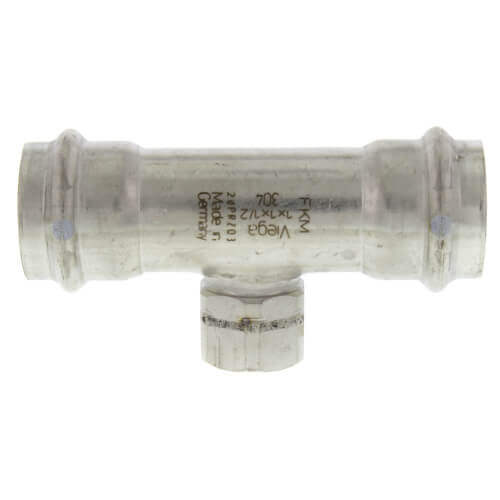

Subcategories
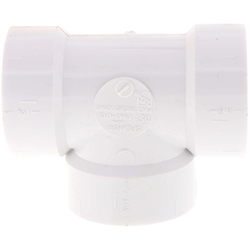
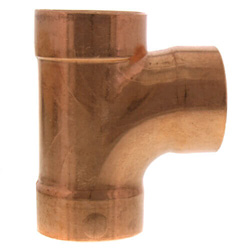
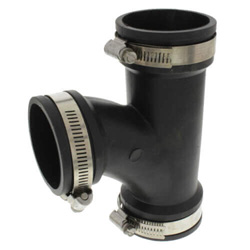
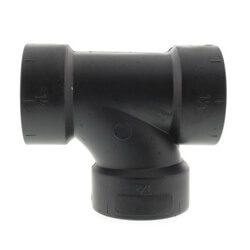
- ABS DWV Tees: ABS DWV tees join drain, waste, and vent lines in black plastic piping, typically solvent-welded rather than mechanically connected. Contractors use them for branch connections in residential and light commercial drainage systems.
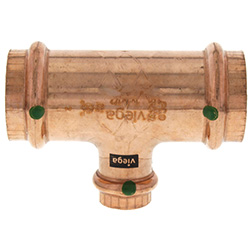
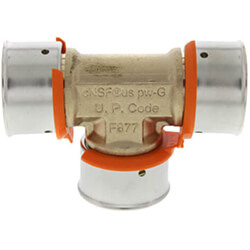
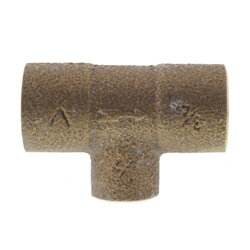
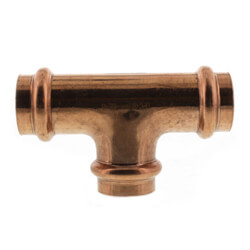
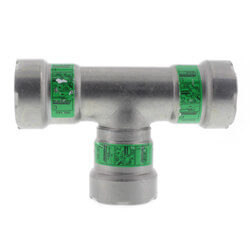
- Copper Press Tees: Copper press tees join three runs of copper pipe using a press tool instead of a torch, cutting installation time and removing open flame from the job. An internal O-ring seals the joint once the tool compresses the fitting onto the pipe.
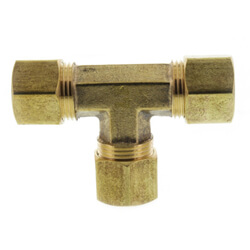
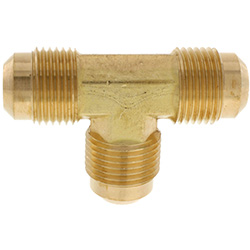
- Flare Tees: Flare tees connect tubing runs, often on gas, refrigerant, or oil lines, using a flare nut and a flared tube end rather than solder or welding. The connection can be taken apart and remade without cutting the tubing.
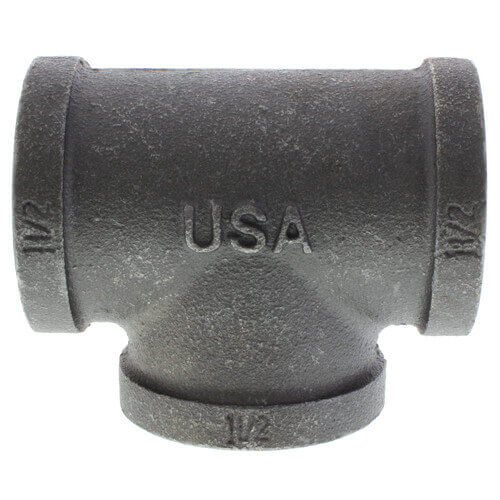
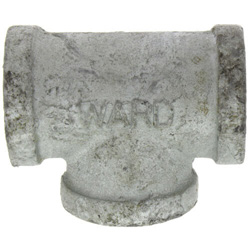
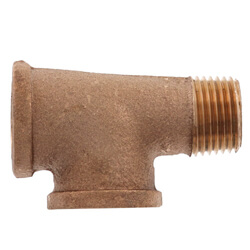
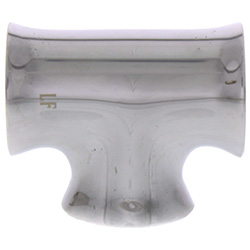
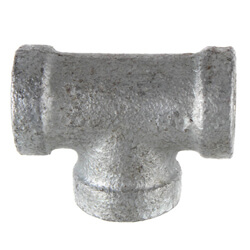
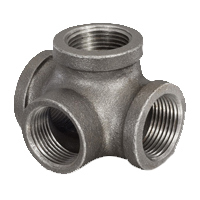
- Galvanized Tees (Imported): Galvanized tees thread onto steel pipe and see the most use in repair or extension work on older water and gas distribution systems still running galvanized pipe. Matching thread type and pipe size to the existing run matters more here than on newer piping systems.
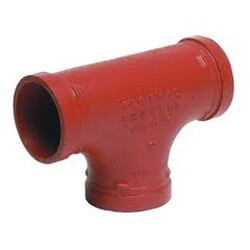
- Grooved Tees: Grooved tees use a mechanical coupling that clamps onto a grooved pipe end rather than a threaded, soldered, or welded joint. Commercial fire protection and HVAC piping rely on grooved fittings for faster assembly and easier future disassembly.
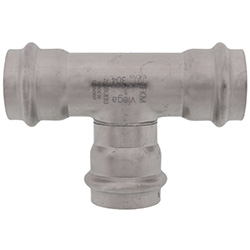
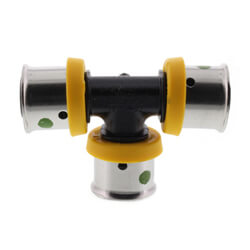
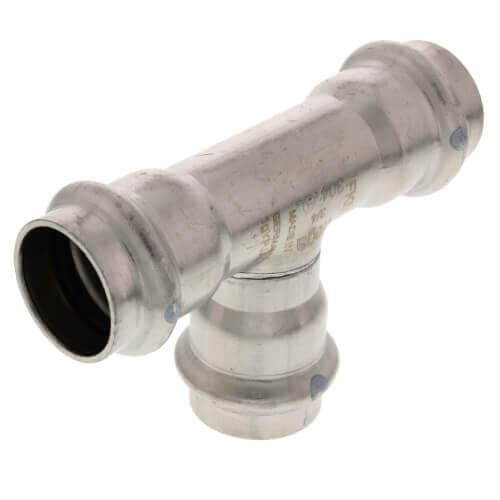
- MegaPress Tees: MegaPress tees press onto black iron or stainless steel pipe for gas and plumbing applications, joining the run without welding, threading, or a torch. The press connection speeds up installation on jobs where hot work isn't permitted.
Buying Guide
Selecting a tee starts with matching the pipe material and joining method already on the run, since a press, threaded, grooved, solvent-weld, or flare tee isn't interchangeable with another type without adapting the connection.
Confirm whether the branch outlet needs to be the same size as the main run or reduced to a smaller branch line, since a reducing tee changes the part number and fitting dimensions.
For drain, waste, and vent applications, check local plumbing code on venting requirements at the tee location, since some jurisdictions restrict how a branch line ties into a vent stack.
For gas and refrigerant lines, flare and press tees both avoid an open flame during installation, which matters on jobs near finished walls, occupied spaces, or where a hot work permit would otherwise be required.
On commercial or industrial runs, grooved tees are often chosen for the speed of assembly and disassembly during maintenance, while MegaPress and copper press tees suit jobs that need a permanent, tool-installed connection without welding.
Frequently Asked Questions
What's the difference between a straight tee and a reducing tee?
A straight tee has the same size opening on all three connections, while a reducing tee steps down to a smaller branch outlet, so the part number changes based on both the main size and the branch size.
Can a copper press tee be installed on a wet line?
Press fittings are generally rated for installation on a system that's been drained, since a wet or pressurized line can keep the press tool from seating the fitting correctly.
Are grooved tees allowed on plumbing lines or only HVAC and fire protection?
Grooved tees see the most use in fire protection and HVAC piping, though they show up on some larger commercial plumbing runs where mechanical coupling speeds up assembly.
Do MegaPress tees work on both black iron and stainless pipe?
MegaPress tees are built in separate lines for black iron and stainless steel pipe, so confirming the correct line for the pipe material on the job matters before ordering.
Why would a flare tee be used instead of a press or solder tee on a refrigerant line?
A flare connection can be taken apart and remade without cutting the tubing, which is useful on refrigerant or gas lines that might need to be serviced or reconfigured later.
Resources
Subcategories
- ABS DWV Tees: ABS DWV tees join drain, waste, and vent lines in black plastic piping, typically solvent-welded rather than mechanically connected. Contractors use them for branch connections in residential and light commercial drainage systems.
- Copper Press Tees: Copper press tees join three runs of copper pipe using a press tool instead of a torch, cutting installation time and removing open flame from the job. An internal O-ring seals the joint once the tool compresses the fitting onto the pipe.
- Flare Tees: Flare tees connect tubing runs, often on gas, refrigerant, or oil lines, using a flare nut and a flared tube end rather than solder or welding. The connection can be taken apart and remade without cutting the tubing.
- Galvanized Tees (Imported): Galvanized tees thread onto steel pipe and see the most use in repair or extension work on older water and gas distribution systems still running galvanized pipe. Matching thread type and pipe size to the existing run matters more here than on newer piping systems.
- Grooved Tees: Grooved tees use a mechanical coupling that clamps onto a grooved pipe end rather than a threaded, soldered, or welded joint. Commercial fire protection and HVAC piping rely on grooved fittings for faster assembly and easier future disassembly.
- MegaPress Tees: MegaPress tees press onto black iron or stainless steel pipe for gas and plumbing applications, joining the run without welding, threading, or a torch. The press connection speeds up installation on jobs where hot work isn't permitted.
Buying Guide
Selecting a tee starts with matching the pipe material and joining method already on the run, since a press, threaded, grooved, solvent-weld, or flare tee isn't interchangeable with another type without adapting the connection.
Confirm whether the branch outlet needs to be the same size as the main run or reduced to a smaller branch line, since a reducing tee changes the part number and fitting dimensions.
For drain, waste, and vent applications, check local plumbing code on venting requirements at the tee location, since some jurisdictions restrict how a branch line ties into a vent stack.
For gas and refrigerant lines, flare and press tees both avoid an open flame during installation, which matters on jobs near finished walls, occupied spaces, or where a hot work permit would otherwise be required.
On commercial or industrial runs, grooved tees are often chosen for the speed of assembly and disassembly during maintenance, while MegaPress and copper press tees suit jobs that need a permanent, tool-installed connection without welding.
Frequently Asked Questions
What's the difference between a straight tee and a reducing tee?
A straight tee has the same size opening on all three connections, while a reducing tee steps down to a smaller branch outlet, so the part number changes based on both the main size and the branch size.
Can a copper press tee be installed on a wet line?
Press fittings are generally rated for installation on a system that's been drained, since a wet or pressurized line can keep the press tool from seating the fitting correctly.
Are grooved tees allowed on plumbing lines or only HVAC and fire protection?
Grooved tees see the most use in fire protection and HVAC piping, though they show up on some larger commercial plumbing runs where mechanical coupling speeds up assembly.
Do MegaPress tees work on both black iron and stainless pipe?
MegaPress tees are built in separate lines for black iron and stainless steel pipe, so confirming the correct line for the pipe material on the job matters before ordering.
Why would a flare tee be used instead of a press or solder tee on a refrigerant line?
A flare connection can be taken apart and remade without cutting the tubing, which is useful on refrigerant or gas lines that might need to be serviced or reconfigured later.