




AquaPEX Fittings
AquaPEX fittings are the connectors that join lengths of PEX tubing to each other, to fixtures, or to other piping materials, and they're a core part of any PEX plumbing rough-in. Plumbers choose among several connection methods, including crimp, expansion, and push-fit, depending on the tools already on the truck and the specific job requirements, and the fitting shape (elbow, tee, coupling, adapter) is selected to match the layout of the run.
Because PEX plumbing so often ties into copper stub-outs, threaded valves, or existing fixtures, fittings that transition between materials are just as important as the ones that connect PEX to PEX. Keeping the fitting brand and connection type consistent with the tubing and tools on a job reduces compatibility issues and callbacks.
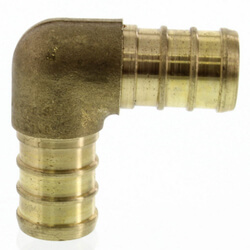

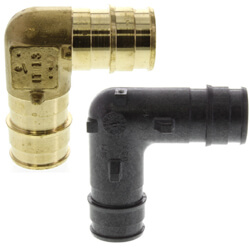


Subcategories
- PEX Crimp Fittings: Fittings that connect using a crimp ring and crimping tool, one of the most established PEX connection methods and compatible with a wide range of tubing brands.
- PEX Press Fittings: Fittings joined with a mechanical press tool that compresses a sleeve onto the connection, a method commonly used with multilayer and PEX-AL-PEX tubing systems.
- SharkBite Push-Fit Fittings: Push-to-connect fittings that join to tubing by hand pressure alone, requiring no crimping or expansion tool, useful for repairs and tight-access installs.
- Uponor ProPEX Expander Fittings: Expander-style fittings used specifically with the ProPEX expansion system, sized to match the expansion tool head for that connection platform.
- WIPEX Fittings: Compression-style fittings that use a separate ring to lock the tubing in place mechanically, an alternative connection method to crimp or expansion systems.
Buying Guide
The fitting's connection type has to match the tool already on hand or planned for the job. Crimp fittings need a crimp tool and rings, expansion fittings need an expansion tool sized to that system, and push-fit fittings need neither, so contractors should decide on a connection platform before ordering a mixed batch of fittings.
Fitting shape follows the layout of the run. Elbows change direction, tees branch a line, couplings join two straight sections, and adapters transition to a different pipe size or material, so mapping out the rough-in before ordering avoids running short on the specific shapes a job needs.
Transition fittings deserve extra attention on renovation work. A job that ties new PEX into existing copper, CPVC, or threaded fixtures needs fittings built for that specific transition, and using a generic adapter not rated for the materials involved can lead to a weak or leaking connection.
Push-fit fittings are worth keeping on the truck for repair calls and tight spots where a crimp or expansion tool can't fit or where a quick, toolless connection speeds up the job, even if the rest of a new installation uses crimp or expansion fittings.
Consistency across a job matters more than mixing brands to save a few dollars on individual fittings. Staying within one fitting and connection system for an entire run reduces the chance of a mismatched, unreliable joint and makes future repairs more predictable for whoever services the system next.
Frequently Asked Questions
What is the difference between crimp and expansion PEX fittings?
Crimp fittings are secured with a metal ring compressed by a crimping tool, while expansion fittings use a tool that stretches the tube end over the fitting, which then shrinks back into place. Expansion fittings can typically be reworked more easily if a connection needs to be redone.
Can push-fit fittings be used on any PEX job?
Push-fit fittings work well for repairs and tight-access spots where a crimp or expansion tool won't fit, but many contractors reserve crimp or expansion fittings for the bulk of a new installation and use push-fit fittings selectively.
Do I need special fittings to connect PEX to copper pipe?
Yes, a transition fitting rated for both materials is needed to join PEX tubing to copper, CPVC, or threaded piping. Using a fitting not designed for that specific transition can result in a weak or leaking joint.
Are PEX fittings interchangeable between different tubing brands?
Fitting compatibility depends on the connection type and sizing standard, not just the tubing brand, but it's safest to match fittings, tools, and tubing from a consistent system to avoid connection issues.
What tool do I need for expansion-style PEX fittings?
Expansion fittings require an expansion tool sized to that specific fitting system, since the tool head has to match the fitting's expansion ring for a proper connection.
Resources
Subcategories
- PEX Crimp Fittings: Fittings that connect using a crimp ring and crimping tool, one of the most established PEX connection methods and compatible with a wide range of tubing brands.
- PEX Press Fittings: Fittings joined with a mechanical press tool that compresses a sleeve onto the connection, a method commonly used with multilayer and PEX-AL-PEX tubing systems.
- SharkBite Push-Fit Fittings: Push-to-connect fittings that join to tubing by hand pressure alone, requiring no crimping or expansion tool, useful for repairs and tight-access installs.
- Uponor ProPEX Expander Fittings: Expander-style fittings used specifically with the ProPEX expansion system, sized to match the expansion tool head for that connection platform.
- WIPEX Fittings: Compression-style fittings that use a separate ring to lock the tubing in place mechanically, an alternative connection method to crimp or expansion systems.
Buying Guide
The fitting's connection type has to match the tool already on hand or planned for the job. Crimp fittings need a crimp tool and rings, expansion fittings need an expansion tool sized to that system, and push-fit fittings need neither, so contractors should decide on a connection platform before ordering a mixed batch of fittings.
Fitting shape follows the layout of the run. Elbows change direction, tees branch a line, couplings join two straight sections, and adapters transition to a different pipe size or material, so mapping out the rough-in before ordering avoids running short on the specific shapes a job needs.
Transition fittings deserve extra attention on renovation work. A job that ties new PEX into existing copper, CPVC, or threaded fixtures needs fittings built for that specific transition, and using a generic adapter not rated for the materials involved can lead to a weak or leaking connection.
Push-fit fittings are worth keeping on the truck for repair calls and tight spots where a crimp or expansion tool can't fit or where a quick, toolless connection speeds up the job, even if the rest of a new installation uses crimp or expansion fittings.
Consistency across a job matters more than mixing brands to save a few dollars on individual fittings. Staying within one fitting and connection system for an entire run reduces the chance of a mismatched, unreliable joint and makes future repairs more predictable for whoever services the system next.
Frequently Asked Questions
What is the difference between crimp and expansion PEX fittings?
Crimp fittings are secured with a metal ring compressed by a crimping tool, while expansion fittings use a tool that stretches the tube end over the fitting, which then shrinks back into place. Expansion fittings can typically be reworked more easily if a connection needs to be redone.
Can push-fit fittings be used on any PEX job?
Push-fit fittings work well for repairs and tight-access spots where a crimp or expansion tool won't fit, but many contractors reserve crimp or expansion fittings for the bulk of a new installation and use push-fit fittings selectively.
Do I need special fittings to connect PEX to copper pipe?
Yes, a transition fitting rated for both materials is needed to join PEX tubing to copper, CPVC, or threaded piping. Using a fitting not designed for that specific transition can result in a weak or leaking joint.
Are PEX fittings interchangeable between different tubing brands?
Fitting compatibility depends on the connection type and sizing standard, not just the tubing brand, but it's safest to match fittings, tools, and tubing from a consistent system to avoid connection issues.
What tool do I need for expansion-style PEX fittings?
Expansion fittings require an expansion tool sized to that specific fitting system, since the tool head has to match the fitting's expansion ring for a proper connection.