




Filters
SORT
Product Availability –
Review Score –
 --%3E %3Csvg version='1.1' id='Fill' xmlns='http://www.w3.org/2000/svg' xmlns:xlink='http://www.w3.org/1999/xlink' x='0px' y='0px' viewBox='0 0 100 100' enable-background='new 0 0 100 100' xml:space='preserve'%3E %3Cpath fill='%23F15C02' d='M79.44,0.95H20.56C9.78,0.95,0.95,9.78,0.95,20.56v58.87c0,10.79,8.82,19.61,19.61,19.61h58.87 c10.79,0,19.61-8.83,19.61-19.61V20.56C99.05,9.78,90.22,0.95,79.44,0.95z M65.38,58.24l9.38,29.58L49.69,69.78L24.5,87.82 l9.34-29.6L8.8,39.6l30.73-0.17c0,0,6.98-19.61,10-28.93c0.54,1.36,9.88,29.1,9.88,29.1H91.2L65.38,58.24z'/%3E %3C/svg%3E)
 --%3E %3Csvg version='1.1' id='With-RB' xmlns='http://www.w3.org/2000/svg' xmlns:xlink='http://www.w3.org/1999/xlink' x='0px' y='0px' viewBox='0 0 100 100' enable-background='new 0 0 100 100' xml:space='preserve'%3E %3Cpath fill='%23FBC8B4' d='M79.44,0.95H20.56C9.78,0.95,0.95,9.78,0.95,20.56v58.87c0,10.79,8.82,19.61,19.61,19.61h58.87 c10.79,0,19.61-8.83,19.61-19.61V20.56C99.05,9.78,90.22,0.95,79.44,0.95z M65.38,58.24l9.38,29.58L49.69,69.78L24.5,87.82 l9.34-29.6L8.8,39.6l30.73-0.17c0,0,6.98-19.61,10-28.93c0.54,1.36,9.88,29.1,9.88,29.1H91.2L65.38,58.24z'/%3E %3C/svg%3E)
Price Range –
Barber Colman Valve Repair Kits

 --%3E %3Csvg version='1.1' id='No-RB' xmlns='http://www.w3.org/2000/svg' xmlns:xlink='http://www.w3.org/1999/xlink' x='0px' y='0px' viewBox='0 0 100 100' enable-background='new 0 0 100 100' xml:space='preserve'%3E %3Cpath fill='%23CECECE' d='M79.44,0.95H20.56C9.78,0.95,0.95,9.78,0.95,20.56v58.87c0,10.79,8.82,19.61,19.61,19.61h58.87 c10.79,0,19.61-8.83,19.61-19.61V20.56C99.05,9.78,90.22,0.95,79.44,0.95z M65.38,58.24l9.38,29.58L49.69,69.78L24.5,87.82 l9.34-29.6L8.8,39.6l30.73-0.17c0,0,6.98-19.61,10-28.93c0.54,1.36,9.88,29.1,9.88,29.1H91.2L65.38,58.24z'/%3E %3C/svg%3E)

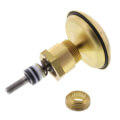
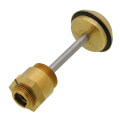

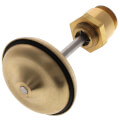
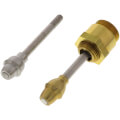
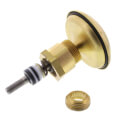
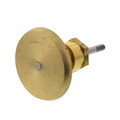
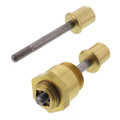

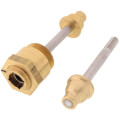
Barber Colman valve repair kits keep legacy pneumatic and electric control valves running in the commercial buildings where this control system is still installed. Barber Colman valves are a fixture in older HVAC control systems, particularly in institutional and commercial buildings built decades ago, and a working repair kit can keep an aging valve in service instead of forcing a full valve replacement and the control-system rework that would come with it. Building automation technicians pull from this category most often for stem packing, diaphragm assemblies, and seat kits when a control valve starts leaking or loses its ability to modulate properly. Because the original valve bodies vary across different Barber Colman product lines, matching the repair kit to the specific valve model matters more here than with a generic aftermarket part. Servicing the existing valve rather than replacing it also avoids disturbing surrounding pneumatic or electric control wiring that may not have straightforward documentation left behind.
Subcategories
- Diaphragm & Actuator Repair Kits: Diaphragm and actuator repair kits address the pneumatic components that physically move the valve stem in response to a control signal. A cracked or stiffened diaphragm is a common failure point on older pneumatic actuators, since rubber components degrade over decades of service even when the rest of the valve body remains sound. Replacing the diaphragm rather than the whole actuator assembly is typically the more economical repair path.
- Stem Packing & Seals: Stem packing and seal kits stop water or steam from leaking around the valve stem where it passes through the valve body. A leaking stem is one of the more visible signs that a Barber Colman valve needs service, and packing kits let a technician address that leak without removing the valve from the piping system entirely. Matching packing material to the system's temperature and media is important on steam applications specifically.
- Valve Seats & Trim Kits: Seat and trim kits replace the internal components that control flow through the valve body as it modulates open and closed. Worn seats are a common cause of a valve that won't fully close or that leaks through even in the closed position. These kits are typically sized to a specific valve body and aren't interchangeable across different Barber Colman product lines.
- Positioner & Linkage Parts: Positioners and linkage parts connect the actuator's motion to the valve stem and, on some models, provide more precise control over valve position than the actuator alone. Worn or misaligned linkage is a common cause of a valve that doesn't respond accurately to its control signal even when the actuator itself is functioning. Technicians typically inspect linkage alignment as part of troubleshooting a valve that's hunting or overshooting its setpoint.
Buying Guide
Ordering the correct Barber Colman Valve Repair Kits starts with identifying the exact valve model and body size from any markings still legible on the valve itself, since these older control systems span multiple product generations with parts that aren't interchangeable across lines.
Actuator type matters just as much as the valve body. Pneumatic and electric actuators use entirely different repair components, and confirming which type is installed before ordering avoids receiving a kit that doesn't fit the actuator on hand.
Given the age of most installed Barber Colman systems, technicians should weigh a repair against the practical remaining service life of the surrounding control system. A valve repair makes sense when the rest of the pneumatic or electric control infrastructure is still functional, but a facility mid-way through a broader controls upgrade may be better served putting the budget toward the replacement project instead.
Because these valves are legacy equipment, availability of an exact-match repair kit can vary. Confirming kit compatibility against the specific valve model before scheduling the repair avoids a technician arriving on site with a kit that doesn't fit.
Frequently Asked Questions
Are Barber Colman valve repair kits still available for older systems?
Availability depends on the specific valve model, since these are legacy control products spanning multiple decades and product generations. Confirming the exact valve model and body size before ordering is the best way to find a compatible repair kit.
How do I know if a control valve needs a repair kit versus full replacement?
A valve with a leaking stem, cracked diaphragm, or worn seat is usually a good candidate for a repair kit, since those are wear components rather than structural failures. A cracked valve body or extensive corrosion typically means the valve itself needs replacement rather than a kit.
Can a building maintenance tech install these repair kits, or does it require a controls specialist?
Basic packing and seal replacement is often within reach of an experienced building maintenance technician, but diaphragm, positioner, and linkage work usually benefits from someone familiar with the specific pneumatic or electric control system to avoid disrupting the valve's calibration.
What causes a pneumatic control valve to stop modulating properly?
A stiffened or cracked diaphragm, worn linkage, or a leaking stem seal are the most common causes of a valve that no longer modulates smoothly in response to its control signal. Checking these components in that order usually narrows down the cause faster than replacing parts at random.
Do repair kits include the tools needed for installation?
Typically no. Repair kits generally include the replacement components themselves, such as diaphragms, seats, or packing material, while installation still requires the technician's own hand tools and, in some cases, a way to isolate the valve from system pressure during the repair.
