



Black Pipe Fittings & Nipples
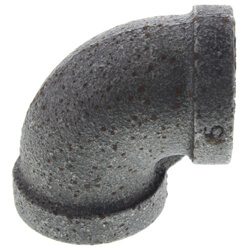
Black fittings are threaded pipe fittings made from black iron, used almost exclusively for gas piping and some low-pressure steam or compressed air applications. Their threaded connections and iron construction hold up to the pressures and code requirements that gas distribution lines call for. SupplyHouse carries black fittings and nipples in domestic or imported manufacture. Sizes cover most residential and light commercial gas piping jobs.
Because gas piping is code-regulated, black fittings need to match the pipe schedule, thread type, and pressure rating specified for the application. Mixing incompatible fitting types or using a fitting rated for the wrong pressure class can create a leak point that fails inspection or creates an unsafe condition.

-new-main.jpg)
-new-main.jpg)


Subcategories
- Black Fittings (Domestic): Domestic black fittings are manufactured in the United States and typically carry certifications that some jurisdictions or specifications require over imported alternatives. They cover the same range of elbows, tees, and couplings as imported black fittings, threaded for standard black iron pipe.
- Black Fittings (Imported): Imported black fittings offer the same threaded fitting shapes, elbows, tees, and couplings, at a lower price point than domestic manufacture. They meet the same dimensional standards for black iron pipe threading.
- Black Nipples (Domestic): Domestic black nipples are short, threaded lengths of black iron pipe used to connect two fittings or extend a run by a fixed length. Domestic manufacture is specified on some gas piping jobs where local code or a spec calls for it.
- Black Nipples (Imported): Imported black nipples serve the same function as domestic nipples, connecting fittings or extending pipe runs in gas piping systems, at a lower cost. They are threaded to the same standard as domestic black iron pipe.
- Black Schedule 80 Nipples: Schedule 80 black nipples have a thicker wall than standard schedule 40 nipples, giving them a higher pressure rating for applications that call for extra strength. They are used where code or the specific installation demands the heavier-duty pipe wall.
Buying Guide
Black fittings are almost always tied to gas piping code requirements. Confirming local code before ordering, including whether domestic manufacture is required, is a necessary first step on any gas line job.
Pipe schedule matters as much as fitting size. Schedule 40 covers most standard gas piping applications. Schedule 80 is called for where a heavier wall thickness is needed for pressure or physical protection. Mixing schedules on the same run can create a mismatch in fitting engagement.
Domestic versus imported manufacture is sometimes a compliance question rather than a quality one. Some specifications, particularly for commercial or municipal gas work, require domestically manufactured fittings even though imported fittings meet the same dimensional standards.
Thread sealant compatible with gas service, rather than a general-purpose pipe dope, is required on every joint. Using the wrong sealant on a gas connection is a common cause of failed pressure tests.
Ordering a few extra fittings and nipples of common sizes for a gas piping job reduces trips back to the supply house mid-installation. Black fittings come in a wide range of configurations, so running short on one elbow or tee size is a common holdup.
Frequently Asked Questions
Are black fittings only used for gas lines?
Black fittings are used primarily for gas piping, but they also show up in some low-pressure steam and compressed air applications. They are not used for potable water lines, since black iron is not rated for that service.
What is the difference between domestic and imported black fittings?
Domestic black fittings are manufactured in the United States and may be required by certain specifications or local codes. Imported fittings meet the same dimensional standards at a lower price. Functionally, both connect and seal the same way when installed correctly.
When is schedule 80 black pipe required instead of schedule 40?
Schedule 80 is called for when a job needs a higher pressure rating or greater physical durability than standard schedule 40 piping provides. Local code or a project specification typically dictates which schedule is required for a given gas piping application.
Can black fittings be used interchangeably with galvanized fittings?
Black fittings and galvanized fittings are not interchangeable for gas service, since the galvanized coating can flake off inside a gas line and cause blockages or regulator issues. Black iron fittings, uncoated, are the standard choice for gas piping.
How do I choose the right nipple length to connect two fittings?
Nipple length depends on the spacing needed between fittings in a given run. Measuring the actual gap before ordering avoids having to cut and re-thread pipe on site.
Resources
Subcategories
- Black Fittings (Domestic): Domestic black fittings are manufactured in the United States and typically carry certifications that some jurisdictions or specifications require over imported alternatives. They cover the same range of elbows, tees, and couplings as imported black fittings, threaded for standard black iron pipe.
- Black Fittings (Imported): Imported black fittings offer the same threaded fitting shapes, elbows, tees, and couplings, at a lower price point than domestic manufacture. They meet the same dimensional standards for black iron pipe threading.
- Black Nipples (Domestic): Domestic black nipples are short, threaded lengths of black iron pipe used to connect two fittings or extend a run by a fixed length. Domestic manufacture is specified on some gas piping jobs where local code or a spec calls for it.
- Black Nipples (Imported): Imported black nipples serve the same function as domestic nipples, connecting fittings or extending pipe runs in gas piping systems, at a lower cost. They are threaded to the same standard as domestic black iron pipe.
- Black Schedule 80 Nipples: Schedule 80 black nipples have a thicker wall than standard schedule 40 nipples, giving them a higher pressure rating for applications that call for extra strength. They are used where code or the specific installation demands the heavier-duty pipe wall.
Buying Guide
Black fittings are almost always tied to gas piping code requirements. Confirming local code before ordering, including whether domestic manufacture is required, is a necessary first step on any gas line job.
Pipe schedule matters as much as fitting size. Schedule 40 covers most standard gas piping applications. Schedule 80 is called for where a heavier wall thickness is needed for pressure or physical protection. Mixing schedules on the same run can create a mismatch in fitting engagement.
Domestic versus imported manufacture is sometimes a compliance question rather than a quality one. Some specifications, particularly for commercial or municipal gas work, require domestically manufactured fittings even though imported fittings meet the same dimensional standards.
Thread sealant compatible with gas service, rather than a general-purpose pipe dope, is required on every joint. Using the wrong sealant on a gas connection is a common cause of failed pressure tests.
Ordering a few extra fittings and nipples of common sizes for a gas piping job reduces trips back to the supply house mid-installation. Black fittings come in a wide range of configurations, so running short on one elbow or tee size is a common holdup.
Frequently Asked Questions
Are black fittings only used for gas lines?
Black fittings are used primarily for gas piping, but they also show up in some low-pressure steam and compressed air applications. They are not used for potable water lines, since black iron is not rated for that service.
What is the difference between domestic and imported black fittings?
Domestic black fittings are manufactured in the United States and may be required by certain specifications or local codes. Imported fittings meet the same dimensional standards at a lower price. Functionally, both connect and seal the same way when installed correctly.
When is schedule 80 black pipe required instead of schedule 40?
Schedule 80 is called for when a job needs a higher pressure rating or greater physical durability than standard schedule 40 piping provides. Local code or a project specification typically dictates which schedule is required for a given gas piping application.
Can black fittings be used interchangeably with galvanized fittings?
Black fittings and galvanized fittings are not interchangeable for gas service, since the galvanized coating can flake off inside a gas line and cause blockages or regulator issues. Black iron fittings, uncoated, are the standard choice for gas piping.
How do I choose the right nipple length to connect two fittings?
Nipple length depends on the spacing needed between fittings in a given run. Measuring the actual gap before ordering avoids having to cut and re-thread pipe on site.