




Filters
SORT
Product Availability –
Brand –
Size –
Review Score –
 --%3E %3Csvg version='1.1' id='Fill' xmlns='http://www.w3.org/2000/svg' xmlns:xlink='http://www.w3.org/1999/xlink' x='0px' y='0px' viewBox='0 0 100 100' enable-background='new 0 0 100 100' xml:space='preserve'%3E %3Cpath fill='%23F15C02' d='M79.44,0.95H20.56C9.78,0.95,0.95,9.78,0.95,20.56v58.87c0,10.79,8.82,19.61,19.61,19.61h58.87 c10.79,0,19.61-8.83,19.61-19.61V20.56C99.05,9.78,90.22,0.95,79.44,0.95z M65.38,58.24l9.38,29.58L49.69,69.78L24.5,87.82 l9.34-29.6L8.8,39.6l30.73-0.17c0,0,6.98-19.61,10-28.93c0.54,1.36,9.88,29.1,9.88,29.1H91.2L65.38,58.24z'/%3E %3C/svg%3E)
Price Range –
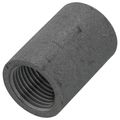
Black Merchant Couplings (Imported)

 --%3E %3Csvg version='1.1' id='No-RB' xmlns='http://www.w3.org/2000/svg' xmlns:xlink='http://www.w3.org/1999/xlink' x='0px' y='0px' viewBox='0 0 100 100' enable-background='new 0 0 100 100' xml:space='preserve'%3E %3Cpath fill='%23CECECE' d='M79.44,0.95H20.56C9.78,0.95,0.95,9.78,0.95,20.56v58.87c0,10.79,8.82,19.61,19.61,19.61h58.87 c10.79,0,19.61-8.83,19.61-19.61V20.56C99.05,9.78,90.22,0.95,79.44,0.95z M65.38,58.24l9.38,29.58L49.69,69.78L24.5,87.82 l9.34-29.6L8.8,39.6l30.73-0.17c0,0,6.98-19.61,10-28.93c0.54,1.36,9.88,29.1,9.88,29.1H91.2L65.38,58.24z'/%3E %3C/svg%3E)

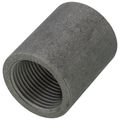
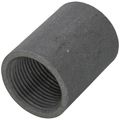
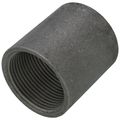
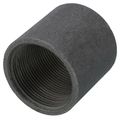
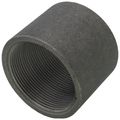
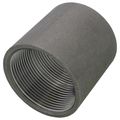
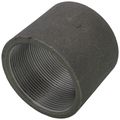
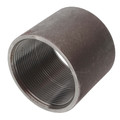
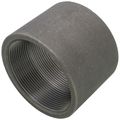
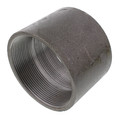
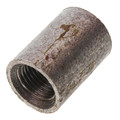
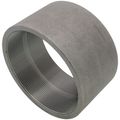
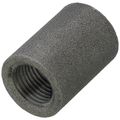
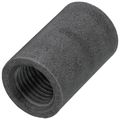
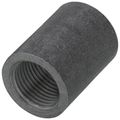

Black merchant couplings are threaded fittings used to join two lengths of black iron pipe in a straight run, most commonly on gas piping and other systems where black steel pipe is the standard material. A merchant coupling is a lighter-duty coupling than a standard-weight fitting, built for straightforward pipe-to-pipe connections rather than higher-stress applications. Because black iron pipe threads on both ends, a coupling simply provides internal threads that let two pipe ends thread in from opposite sides, extending a run or repairing a section without cutting and rethreading the existing pipe.
These imported couplings are a common stock item for plumbers and gas fitters working on residential and light-commercial black iron gas lines, where the coupling needs to hold a tight thread seal under gas pressure but doesn't need the added wall thickness of a heavier fitting class. Matching pipe size and thread type correctly is what keeps the joint sealed and code-compliant.
Subcategories
- Standard Straight Couplings: These join two pipe ends of the same diameter in a straight line, the most common use case for extending or repairing a black iron run. Both ends thread onto pipe with standard NPT threads, and the coupling itself has no reducing step, so pipe size must match on both sides. They're a basic stock item kept on hand for general repair and installation work rather than a specialty part.
- Reducing Couplings: Reducing couplings join two different pipe diameters in a single fitting, letting a run step down in size without needing a separate reducer bushing and coupling combination. This simplifies a transition point on a gas or piping run where the branch or continuation needs a smaller diameter than the main line. Pipe size on each end must still be confirmed against the specific reducing coupling's two threaded openings before ordering.
- Right and Left Couplings: Right and left couplings have opposite-hand threads on each end, letting a section of pipe with fixed fittings on both sides be installed or removed by rotating the pipe rather than the fittings themselves. This is useful in tight spaces or on runs where the pipe is boxed in by fixed elbows or equipment on both ends, since a standard coupling would require rotating the whole assembly to thread it together. Technicians identify these by the reversed thread direction stamped or visible on one side of the fitting. They're a specialty item kept on hand for jobs where standard couplings won't allow assembly.
Buying Guide
Selecting the right black merchant coupling starts with confirming pipe size on both sides of the joint, since a standard coupling requires matching diameters while a reducing coupling is needed for any transition between two different pipe sizes.
Confirm the coupling is rated for the application it's going into. Merchant couplings are a lighter-duty fitting class suited to standard gas and piping runs, and some higher-pressure or higher-stress applications call for a heavier-duty fitting instead, so it's worth checking local code requirements for the specific system before defaulting to a merchant-weight coupling.
Thread quality matters for a tight, code-compliant seal, particularly on gas piping where a poor thread engagement can lead to a leak. Inspect threads for consistent, clean cutting before installing, and always use an approved pipe thread sealant rated for gas service where applicable.
Because these are stock commodity fittings, buying in bulk for a job with multiple similar connections is usually more efficient than ordering piece by piece, especially on larger gas piping installations with many straight-run joints.
Finally, confirm local code requirements for black iron pipe fittings on gas applications specifically, since some jurisdictions have specific requirements around fitting type, thread sealant, or joint compound that go beyond general plumbing code.
Frequently Asked Questions
What's the difference between a merchant coupling and a standard-weight coupling?
A merchant coupling is a lighter-duty fitting built for straightforward pipe-to-pipe connections, while a standard-weight coupling has additional wall thickness suited to higher-stress applications.
Can a black merchant coupling be used on gas piping?
Yes, merchant couplings are commonly used on residential and light-commercial black iron gas lines, though local code requirements for the specific application should always be confirmed before installation.
When would I need a reducing coupling instead of a standard coupling?
A reducing coupling is needed any time a run transitions between two different pipe diameters in a single fitting, rather than continuing at the same size.
Do black merchant couplings need thread sealant?
Yes, an approved pipe thread sealant rated for the application, such as gas service where applicable, should be used to get a proper seal at each threaded joint.
What pipe size do I need for a black merchant coupling?
Pipe size must match the coupling's threaded openings exactly on a standard coupling, while a reducing coupling accommodates two different sizes, so confirming diameters on both sides of the joint before ordering is important.
