




Brass Drain Couplings with Cap

 --%3E %3Csvg version='1.1' id='No-RB' xmlns='http://www.w3.org/2000/svg' xmlns:xlink='http://www.w3.org/1999/xlink' x='0px' y='0px' viewBox='0 0 100 100' enable-background='new 0 0 100 100' xml:space='preserve'%3E %3Cpath fill='%23CECECE' d='M79.44,0.95H20.56C9.78,0.95,0.95,9.78,0.95,20.56v58.87c0,10.79,8.82,19.61,19.61,19.61h58.87 c10.79,0,19.61-8.83,19.61-19.61V20.56C99.05,9.78,90.22,0.95,79.44,0.95z M65.38,58.24l9.38,29.58L49.69,69.78L24.5,87.82 l9.34-29.6L8.8,39.6l30.73-0.17c0,0,6.98-19.61,10-28.93c0.54,1.36,9.88,29.1,9.88,29.1H91.2L65.38,58.24z'/%3E %3C/svg%3E)

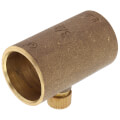
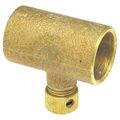

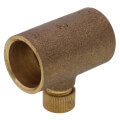
Brass Drain Couplings with Cap are cast brass fittings that join two sections of drain pipe while providing a removable cap for cleanout access or future line modifications. Lead-free cast brass construction, available in 1/2 and 3/4 inch sizes, meets the lead-free requirements standard on potable water and drain systems in most jurisdictions. The straight-coupling design connects to existing pipe on both ends, with the cap side allowing a plumber to open the line for inspection, snaking, or adding a branch fitting later without cutting into a wall or floor.
Rough-in plumbers use these fittings on tub and shower drain assemblies, radiator drain lines, and other spots where future access matters more than a permanent joint. Stocking both the 1/2 and 3/4 inch sizes covers the two most common branch drain diameters found in residential and light commercial work. For remodeling and service work where a drain line might need reopening later, a coupling with cap keeps the repair contained to a single fitting instead of cutting new access into finished surfaces.
Subcategories
- 1/2 Inch Brass Drain Couplings with Cap: The 1/2 inch size fits the branch drain lines most common in residential bathroom and utility sink rough-in work. Cast brass, lead-free construction lets a plumber install it on drain runs without violating lead-free code requirements. Removing the cap gives direct access to the line for snaking or inspection without disturbing the surrounding rough-in. Service techs stock this size for repair calls on tub and shower drain assemblies.
- 3/4 Inch Brass Drain Couplings with Cap: The 3/4 inch size steps up to larger branch or main drain runs found in light commercial and multi-fixture residential setups. Cast brass, lead-free construction matches the same code compliance as the smaller size while handling higher flow volume. A plumber uses the cap to reopen the line for a future branch tie-in without recutting the drain run. Radiator and boiler drain applications also call for this larger size on higher-capacity systems.
- Copper Solder Drain Couplings with Cap: Copper coupling with drain cap models, such as the 1/2 inch Elkhart 59272, solder directly onto copper drain or supply lines instead of threading onto pipe. Hydronic and radiator system installers favor this style because it matches the copper piping already run through most heating systems. The cap unscrews for periodic draining or flushing without cutting the soldered joint. Choosing solder versus threaded connection comes down to matching the coupling to the pipe material already in place.
Buying Guide
Match the coupling to the pipe material already running through the wall or floor before anything else. Threaded cast brass couplings work with existing threaded pipe runs, while a copper solder-style coupling with cap requires sweating the joint onto copper pipe, so mixing the two without a transition fitting causes a leak-prone connection. Size comes next: 1/2 inch fittings cover most residential branch drains and radiator drain lines, while 3/4 inch fittings handle larger branch runs and higher-volume light commercial applications. Lead-free certification matters on any drain coupling that ties into or sits near a potable water system, since most state plumbing codes now require it on new installations and many retrofits.
Brass Drain Couplings with Cap earn their keep on jobs where future access is likely, such as a radiator drain that needs periodic flushing or a branch line that might get a new fixture tied in later. If the line will only ever be a permanent, sealed joint with no need to reopen it, a standard coupling without a cap costs less to install and has one less potential leak point. Confirming the cap threads match the coupling body before leaving the distributor counter avoids a mismatched fitting on the truck. Checking local code for lead-free requirements on the specific application, whether it's a drain line, radiator system, or anything that could contact potable water, rounds out the decision before ordering.
Frequently Asked Questions
What's the difference between a brass drain coupling with cap and a standard coupling?
A standard drain coupling permanently joins two pipe sections with no way to reopen the line without cutting it. A brass drain coupling with cap adds a removable cap on one end, letting a plumber access the line for snaking, inspection, or a future branch tie-in. The cap threads back on to reseal the line once access is complete.
Do brass drain couplings with cap work on radiator and boiler drain lines?
Cast brass and copper coupling with cap styles both see regular use on radiator and boiler drain lines, since these systems often need periodic draining or flushing for maintenance. The removable cap gives direct access to the drain point without disconnecting the whole line. Matching the coupling material, brass threaded or copper solder, to the existing pipe keeps the connection sound.
What sizes do brass drain couplings with cap come in?
Common sizes run 1/2 inch and 3/4 inch, covering the branch drain diameters found in most residential and light commercial work. The 1/2 inch size fits standard bathroom and utility branch lines, while the 3/4 inch size handles larger branch or main runs. Confirming pipe diameter before ordering keeps the coupling from being oversized or undersized for the run.
Is a lead-free brass drain coupling required by code?
Most state plumbing codes now require lead-free certified fittings on any connection that ties into or sits near a potable water system, and many jurisdictions extend that requirement to drain lines as well. A lead-free cast brass coupling meets that requirement without a separate compliance check. Checking the specific local code before ordering confirms whether lead-free is mandatory or simply best practice for the job.
Can a copper coupling with drain cap be used in place of a threaded brass one?
Copper coupling with drain cap models solder onto copper pipe, while threaded brass couplings connect to threaded pipe runs, so the choice comes down to the pipe material already in place. Substituting one for the other without a transition fitting risks a poor seal at the joint. Matching connection type to existing pipe keeps the installation leak-free and code-compliant.
