




CPVC Schedule 80 Male Adapters (MPT x Socket)


 --%3E %3Csvg version='1.1' id='Fill' xmlns='http://www.w3.org/2000/svg' xmlns:xlink='http://www.w3.org/1999/xlink' x='0px' y='0px' viewBox='0 0 100 100' enable-background='new 0 0 100 100' xml:space='preserve'%3E %3Cpath fill='%23F15C02' d='M79.44,0.95H20.56C9.78,0.95,0.95,9.78,0.95,20.56v58.87c0,10.79,8.82,19.61,19.61,19.61h58.87 c10.79,0,19.61-8.83,19.61-19.61V20.56C99.05,9.78,90.22,0.95,79.44,0.95z M65.38,58.24l9.38,29.58L49.69,69.78L24.5,87.82 l9.34-29.6L8.8,39.6l30.73-0.17c0,0,6.98-19.61,10-28.93c0.54,1.36,9.88,29.1,9.88,29.1H91.2L65.38,58.24z'/%3E %3C/svg%3E)





 --%3E %3Csvg version='1.1' id='No-RB' xmlns='http://www.w3.org/2000/svg' xmlns:xlink='http://www.w3.org/1999/xlink' x='0px' y='0px' viewBox='0 0 100 100' enable-background='new 0 0 100 100' xml:space='preserve'%3E %3Cpath fill='%23CECECE' d='M79.44,0.95H20.56C9.78,0.95,0.95,9.78,0.95,20.56v58.87c0,10.79,8.82,19.61,19.61,19.61h58.87 c10.79,0,19.61-8.83,19.61-19.61V20.56C99.05,9.78,90.22,0.95,79.44,0.95z M65.38,58.24l9.38,29.58L49.69,69.78L24.5,87.82 l9.34-29.6L8.8,39.6l30.73-0.17c0,0,6.98-19.61,10-28.93c0.54,1.36,9.88,29.1,9.88,29.1H91.2L65.38,58.24z'/%3E %3C/svg%3E)


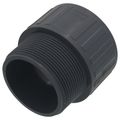
CPVC Schedule 80 Male Adapters (MPT x Socket) are transition fittings that connect threaded male pipe to socket-weld CPVC pipe in hot water and chemical-resistant piping systems. Spears manufactures the 836 series in sizes ranging from 1/2 inch through 2-1/2 inch, each with a male national pipe thread on one end and a socket connection on the other for solvent welding. Plumbers and mechanical contractors use these adapters to transition from CPVC pipe runs to threaded valves, pumps, and equipment connections without introducing a dissimilar metal joint into the CPVC line. The heavier wall thickness of Schedule 80 construction gives the fitting added resistance to pressure and physical damage compared to Schedule 40 alternatives. Because CPVC tolerates higher water temperatures than standard PVC, these adapters show up frequently in hot water distribution, recirculation loops, and industrial process piping. Matching the correct adapter size and schedule to the rest of the piping system keeps joints sound and avoids leaks at the threaded connection down the line.
Subcategories
- Standard Male Adapters: Standard male adapters cover the core size run of the 836 series, from 1/2 inch through 2 inch, each with a socket end for CPVC pipe and a male NPT end for threaded connections. Plumbers use these for transitioning CPVC pipe runs to threaded valves, pumps, or equipment fittings. The socket and thread sizes match on each adapter, so no reducing happens at the connection. Contractors specify this configuration most often for straightforward CPVC-to-threaded transitions.
- Reducer Male Adapters: Reducer male adapters step down pipe size at the same connection point, combining a size reduction and a thread transition in one fitting. The 1 inch by 3/4 inch reducer male adapter is a common example, letting a larger CPVC line connect to a smaller-threaded valve or fitting. Using a reducer adapter instead of a separate reducer bushing and standard adapter saves a joint in tight spaces. Fewer joints in a run generally means fewer potential leak points.
- Large Port Male Adapters: Large port male adapters cover the 2 inch and 2-1/2 inch sizes in the 836 series, used where CPVC pipe runs need to connect to larger threaded equipment or valves. Larger adapters see additional use on higher-flow applications like recirculation loops and industrial process lines where smaller pipe sizes would restrict flow. Socket depth and thread engagement matter more on larger sizes, since a shallow solvent weld has more surface area to fail under pressure. Contractors handling larger CPVC transitions specify these sizes specifically for that reason.
Buying Guide
Start with the connection point, not the pipe run. A male adapter is the right fitting whenever CPVC pipe needs to transition to a female-threaded valve, pump, gauge, or piece of equipment; if the connection point is female-threaded on the equipment side, a male adapter is what completes the joint on the CPVC side.
Size the adapter to match the CPVC pipe diameter on the socket end, then confirm the thread size on the equipment matches the male NPT end. A mismatch in either dimension means either a weak solvent weld or a thread that won't seat properly, both of which lead to leaks under pressure.
CPVC Schedule 80 Male Adapters (MPT x Socket) come in a standard run from 1/2 inch through 2-1/2 inch, plus reducer versions like a 1 inch by 3/4 inch adapter for stepping down pipe size at the connection. Reducer adapters save a coupling and a separate reducer bushing in tight spaces where fitting count matters.
Confirm schedule before ordering. Schedule 80's thicker wall handles higher pressure and rougher handling than Schedule 40, which matters on industrial process lines, chemical feed systems, and other applications where a fitting failure creates a bigger problem than a residential water line. Solvent cement compatible with CPVC, not standard PVC cement, is required for a proper joint regardless of adapter size.
Frequently Asked Questions
What's the difference between a male adapter and a female adapter in CPVC Schedule 80?
A male adapter has external NPT threads that screw into a female-threaded fitting or piece of equipment, while a female adapter has internal threads that accept a male-threaded pipe or nipple. The socket end on both types solvent-welds to CPVC pipe the same way. Choosing the wrong type means the threads won't mate with the equipment connection at all.
Can a Schedule 80 male adapter be solvent welded to Schedule 40 CPVC pipe?
Socket dimensions on Schedule 80 and Schedule 40 CPVC fittings are sized to accept their matching pipe schedule, so mixing schedules at a joint isn't a standard practice. Sticking with Schedule 80 fittings throughout a Schedule 80 pipe run keeps wall thickness and pressure rating consistent across the whole system. Contractors who need to step between schedules typically use a fitting rated for the transition rather than forcing a mismatch.
What sizes are available for CPVC Schedule 80 Male Adapters (MPT x Socket)?
The standard size run covers 1/2 inch through 2-1/2 inch, with reducer versions available for jobs that need to step down pipe size at the connection point, such as a 1 inch by 3/4 inch adapter. Picking the correct socket size for the pipe and the correct thread size for the equipment connection are two separate decisions. Reducer adapters combine both a size change and a transition fitting in a single part.
Why choose Schedule 80 over Schedule 40 for a CPVC male adapter?
Schedule 80's thicker wall gives the fitting a higher pressure rating and more resistance to physical damage than Schedule 40 construction. Industrial process piping, chemical feed lines, and applications with higher operating pressure typically call for Schedule 80 throughout. Residential hot water lines often use Schedule 40 instead, since the pressure and handling demands are lower.
What cement is required for installing a CPVC male adapter?
CPVC requires its own solvent cement formulated for the material; standard PVC cement doesn't create a proper chemical weld on CPVC pipe and fittings. Using the correct cement and following the manufacturer's cure time before pressurizing the line prevents a joint failure at the socket connection. Mixing cement types is a common cause of leaks that show up after a system is already in service.
