




Filters
SORT
Product Availability –
Size –
Review Score –
 --%3E %3Csvg version='1.1' id='Fill' xmlns='http://www.w3.org/2000/svg' xmlns:xlink='http://www.w3.org/1999/xlink' x='0px' y='0px' viewBox='0 0 100 100' enable-background='new 0 0 100 100' xml:space='preserve'%3E %3Cpath fill='%23F15C02' d='M79.44,0.95H20.56C9.78,0.95,0.95,9.78,0.95,20.56v58.87c0,10.79,8.82,19.61,19.61,19.61h58.87 c10.79,0,19.61-8.83,19.61-19.61V20.56C99.05,9.78,90.22,0.95,79.44,0.95z M65.38,58.24l9.38,29.58L49.69,69.78L24.5,87.82 l9.34-29.6L8.8,39.6l30.73-0.17c0,0,6.98-19.61,10-28.93c0.54,1.36,9.88,29.1,9.88,29.1H91.2L65.38,58.24z'/%3E %3C/svg%3E)
Price Range –
CPVC Couplings

 --%3E %3Csvg version='1.1' id='No-RB' xmlns='http://www.w3.org/2000/svg' xmlns:xlink='http://www.w3.org/1999/xlink' x='0px' y='0px' viewBox='0 0 100 100' enable-background='new 0 0 100 100' xml:space='preserve'%3E %3Cpath fill='%23CECECE' d='M79.44,0.95H20.56C9.78,0.95,0.95,9.78,0.95,20.56v58.87c0,10.79,8.82,19.61,19.61,19.61h58.87 c10.79,0,19.61-8.83,19.61-19.61V20.56C99.05,9.78,90.22,0.95,79.44,0.95z M65.38,58.24l9.38,29.58L49.69,69.78L24.5,87.82 l9.34-29.6L8.8,39.6l30.73-0.17c0,0,6.98-19.61,10-28.93c0.54,1.36,9.88,29.1,9.88,29.1H91.2L65.38,58.24z'/%3E %3C/svg%3E)

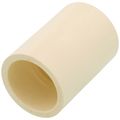
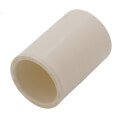
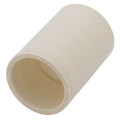
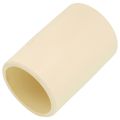
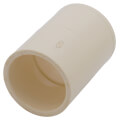
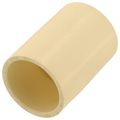
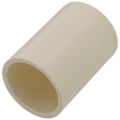
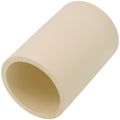
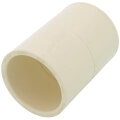
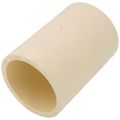
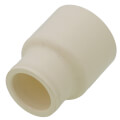
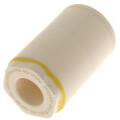
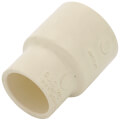
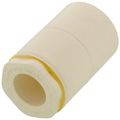
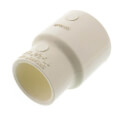
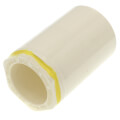
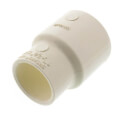
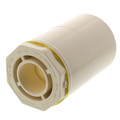
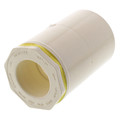
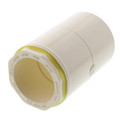
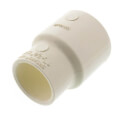
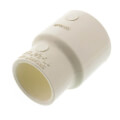
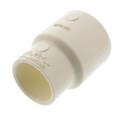
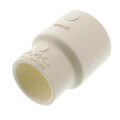
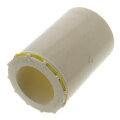

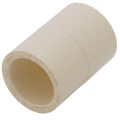
CPVC Couplings join two lengths of CTS (copper tube size) CPVC pipe with a solvent-weld socket connection on each end, letting plumbers extend a run or repair a damaged section without changing pipe diameter. Manufactured to meet ASTM D2846, the standard covering CPVC hot and cold water distribution piping, these couplings hold up under the higher temperatures common in domestic hot water lines. Sizes typically range from 1/2 inch through 2 inches to match standard CTS pipe, and Schedule 80 versions add wall thickness for higher-pressure applications alongside standard Schedule 40 fittings. Properly solvent-welded CPVC systems built with couplings like these carry a continuous pressure rating up to 100 psi at 180 degrees Fahrenheit. Picking a coupling that matches the pipe schedule and size keeps the joint at full rated pressure and avoids a weak point in an otherwise solid water distribution run.
Subcategories
- Standard Schedule 40 Socket Couplings: Schedule 40 socket couplings are the standard choice for residential hot and cold water distribution built to ASTM D2846. Plumbers use them to join straight runs of CTS CPVC pipe in the same size, typically from 1/2 inch up to 2 inches. The socket ends accept solvent cement on both sides for a permanent, non-mechanical joint. The 1/2 inch through 2 inch range covers most supply line repairs and extensions in single-family and light commercial jobs.
- Schedule 80 Socket Couplings: Schedule 80 socket couplings add thicker pipe walls than Schedule 40 for jobs running higher water pressure or requiring extra physical durability. Commercial plumbers and installers on industrial water lines reach for Schedule 80 fittings when the added wall thickness improves the margin against pressure spikes. Both schedules share the same ASTM F441 pipe standard family, so sizing stays consistent across a job that mixes the two. The heavier wall means Schedule 80 couplings generally cost more per fitting than their Schedule 40 counterparts.
- Reducing Couplings: Reducing couplings connect two different pipe sizes within the same CTS CPVC line, stepping a run down from a larger main to a smaller branch without an extra fitting. Plumbers use them anywhere a water heater supply or fixture branch needs a smaller diameter than the main distribution line. Both socket openings are sized to accept standard CTS CPVC pipe, just in two different diameters on the same fitting. Reducing couplings keep transitions compact compared to using a coupling plus a separate bushing.
- Repair and Slip Couplings: Repair couplings, sometimes called slip couplings, don't have the internal pipe stop found in standard couplings, which lets them slide fully onto one side of a cut pipe before centering over the repair point. Plumbers reach for this style specifically for cutting into an existing line without needing to cut out extra pipe to make room for a standard fitting. They're built to the same CTS sizing and solvent-weld socket ends as standard couplings. Repair couplings show up most often on emergency leak repairs and mid-run modifications on finished CPVC systems.
Buying Guide
Start by matching the CTS size marked on the existing pipe, since CPVC Couplings for CTS systems use different outside diameters than IPS (iron pipe size) CPVC, and mixing the two will produce a joint that won't seat correctly. Once the size is confirmed, check whether the existing line is Schedule 40 or Schedule 80. Standard Schedule 40 couplings handle typical residential hot and cold water pressure, while Schedule 80 fittings add wall thickness for runs carrying higher pressure or seeing more physical wear. For repairing a straight run without cutting out a long section, a slip or repair coupling installs directly over the cut ends without needing the pipe stop found in a standard coupling, which saves time on emergency calls. When a branch line needs to step down to a smaller diameter than the main run, a reducing coupling handles the transition in one fitting instead of stacking a standard coupling with a bushing. Always confirm the coupling and pipe share the same CPVC formulation and rated pressure, since mixing compatible-looking fittings from different pressure classes can leave a joint under-rated for the system it's tied into. Solvent cement compatible with CPVC is required for a proper joint, since standard PVC cement won't bond CPVC correctly. Checking size, schedule, and joint style against the existing line before ordering avoids a return trip for the wrong fitting.
Frequently Asked Questions
What size range do CPVC couplings come in?
CTS CPVC couplings are commonly available from 1/2 inch through 2 inches to match standard copper tube size CPVC pipe used in residential and light commercial water distribution. Larger diameters exist for bigger commercial mains, but 1/2 inch through 2 inch fittings cover the bulk of typical supply line work. Confirming the CTS designation on both the pipe and fitting keeps sizes matched correctly.
Can a CPVC coupling join CPVC to PVC pipe?
Standard CPVC couplings are designed to join CPVC pipe to CPVC pipe using CPVC solvent cement, and they aren't rated for a direct joint to PVC. Transitioning between the two materials calls for a listed transition fitting and, in many cases, a mechanical or threaded connection rather than a solvent-welded socket joint.
What's the difference between a standard coupling and a repair coupling?
Standard couplings include an internal pipe stop that centers each pipe end inside the fitting, while repair couplings, also called slip couplings, remove that stop so the fitting can slide fully onto one pipe before centering over a cut section. Repair couplings are built for cutting into an existing line without removing extra pipe to make room for a standard fitting.
Do Schedule 40 and Schedule 80 CPVC couplings fit the same pipe?
Schedule 40 and Schedule 80 CPVC couplings are sized to the same CTS outside diameter, but wall thickness and pressure rating differ between the two schedules. Matching the coupling schedule to the pipe schedule already installed keeps the pressure rating consistent through the joint rather than mixing a heavier or lighter fitting into the run.
What cement is required for CPVC coupling joints?
CPVC couplings require a solvent cement formulated specifically for CPVC rather than standard PVC cement, since the two plastics have different chemical formulations. Using the correct CPVC-rated cement and primer where required is what allows the joint to reach its full rated pressure once cured.
