




Copper Bushings (FTGxF)

 --%3E %3Csvg version='1.1' id='Fill' xmlns='http://www.w3.org/2000/svg' xmlns:xlink='http://www.w3.org/1999/xlink' x='0px' y='0px' viewBox='0 0 100 100' enable-background='new 0 0 100 100' xml:space='preserve'%3E %3Cpath fill='%23F15C02' d='M79.44,0.95H20.56C9.78,0.95,0.95,9.78,0.95,20.56v58.87c0,10.79,8.82,19.61,19.61,19.61h58.87 c10.79,0,19.61-8.83,19.61-19.61V20.56C99.05,9.78,90.22,0.95,79.44,0.95z M65.38,58.24l9.38,29.58L49.69,69.78L24.5,87.82 l9.34-29.6L8.8,39.6l30.73-0.17c0,0,6.98-19.61,10-28.93c0.54,1.36,9.88,29.1,9.88,29.1H91.2L65.38,58.24z'/%3E %3C/svg%3E)

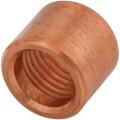

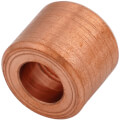
Copper Bushings (FTGxF) are wrot copper reducing fittings that combine a sweat (FTG) end with a female threaded (FPT) end in one piece, letting installers step down pipe size and switch from a soldered joint to a threaded connection without adding a separate coupling and adapter. The FTG end fits inside a copper tube or fitting cup for soldering, while the opposite end carries female NPT threads sized smaller than the sweat connection, as seen in Elkhart's 30600 model, a 1/2 inch by 1/4 inch FTGxF bushing. Wrot copper construction keeps the fitting thin walled and easy to solder compared to cast bronze alternatives, and the reduced female thread accepts gauges, small valves, or sensor wells directly into a larger copper system. Plumbers and mechanical contractors reach for these bushings whenever a larger water, hydronic, or refrigeration line needs a smaller threaded tap point, since the single fitting replaces two separate connections and cuts down on solder joints that could leak.
Subcategories
- Small NPT Reduction Bushings: Small reduction bushings step a copper line down to a narrow female thread, such as Elkhart's 30600 bushing, which reduces a 1/2 inch sweat connection to a 1/4 inch FPT outlet. Contractors use this size range to add pressure gauges, thermometers, or small isolation valves onto an existing copper run without cutting in a full tee and reducer. The compact body keeps the added weight and solder area to a minimum, which matters on tight refrigeration or hydronic manifolds. Any threaded accessory rated for standard NPT threads screws directly into the fitting once it's soldered in place.
- Wrot Copper Reducing Bushings: Wrot copper bushings are formed from drawn copper tube rather than cast bronze, keeping wall thickness consistent and solder joints reliable across the reduction. Elkhart manufactures its FTGxF line to conform to lead-free wrot copper fitting standards, so the bushings suit potable water systems as well as mechanical piping. Mechanical contractors specify wrot construction when a system calls for a lighter, more solderable fitting than a cast reducer. The consistent wall thickness also makes the sweat end easier to heat evenly during installation.
- HVAC and Refrigeration Tie-In Bushings: Copper FTGxF bushings also serve air conditioning and refrigeration lines, where a technician needs to add a smaller threaded port, such as a sensor well or gauge port, onto a larger sweat line. Elkhart's copper fitting line covers potable water, air conditioning, and refrigeration applications with the same bushing body. Refrigeration techs favor the FTGxF configuration because the female thread accepts standard threaded service fittings without a secondary adapter. The single-piece design also reduces the number of brazed or soldered joints exposed to system pressure.
Buying Guide
Choosing the right copper bushing starts with the two connection sizes: the sweat (FTG) end must match the outside diameter of the existing copper tube or fitting cup, and the female threaded end must match the NPT size of the valve, gauge, or accessory being installed. Measure both ends before ordering, since a bushing sized for the wrong sweat diameter won't seat inside the tube, and a mismatched thread pitch on the FPT side won't accept a standard fitting. Copper Bushings (FTGxF) work best when the reduction is moderate, stepping down one or two nominal pipe sizes rather than combining an oversized sweat end with a tiny thread, which can leave too little wall thickness at the reduction point. Confirm the fitting is rated for the system it's entering; a bushing built for potable water and air conditioning duty, like Elkhart's wrot copper line, suits most residential and light commercial jobs, but higher pressure industrial systems may call for a heavier cast fitting instead. Check that the female thread is standard NPT so any valve, thermometer well, or pressure gauge already spec'd for the job threads in without an extra adapter. Order the exact reduction needed rather than stacking two separate reducers to reach an odd size, since doing so adds joints and failure points that a single properly sized bushing avoids. Confirm lead-free certification when the line carries potable water.
Frequently Asked Questions
What's the difference between FTGxF and FTGxC copper bushings?
FTGxF bushings pair a sweat (FTG) end with a female threaded (FPT) end, while FTGxC bushings connect two sweat ends in different sizes. Choosing FTGxF makes sense whenever the smaller side needs to accept a threaded valve, gauge, or accessory instead of another length of copper tube. Both styles use the same wrot copper body and solder the same way on the FTG end.
Can a copper FTGxF bushing be used on a potable water line?
Lead-free wrot copper bushings, like those Elkhart manufactures, are built for potable water, air conditioning, and refrigeration systems. Checking the stamped markings on the fitting body before installation confirms lead-free certification, since not every copper fitting carries the same rating. Confirmed lead-free bushings are safe for drinking water applications.
How is a copper bushing sized?
Copper Bushings (FTGxF) are sized by two numbers: the larger sweat (FTG) diameter first, followed by the smaller female thread (FPT) size, such as Elkhart's 30600 bushing in a 1/2 inch by 1/4 inch configuration. Matching both dimensions to the existing tube and the incoming threaded accessory keeps the joint tight. Ordering the wrong FTG diameter means the fitting won't seat inside the tube for soldering.
Do copper FTGxF bushings work for refrigeration lines?
Copper FTGxF bushings suit refrigeration and air conditioning tie-ins as well as plumbing, since Elkhart's wrot copper fitting line covers all three applications. Technicians use the female thread side to add a sensor well or gauge port onto a larger sweat line. The single-piece design keeps the joint count low on a refrigerant circuit where every brazed connection is a potential leak point.
Why use a bushing instead of a reducer and adapter?
A single FTGxF bushing combines a reduction and a thread transition in one fitting, cutting the joint count compared to soldering a separate reducer and adapter together. Fewer joints mean fewer potential leak points on a copper system. Copper Bushings (FTGxF) also take up less physical space than two stacked fittings, which helps in tight mechanical rooms or wall cavities.
