




Copper Saddle Valves


 --%3E %3Csvg version='1.1' id='No-RB' xmlns='http://www.w3.org/2000/svg' xmlns:xlink='http://www.w3.org/1999/xlink' x='0px' y='0px' viewBox='0 0 100 100' enable-background='new 0 0 100 100' xml:space='preserve'%3E %3Cpath fill='%23CECECE' d='M79.44,0.95H20.56C9.78,0.95,0.95,9.78,0.95,20.56v58.87c0,10.79,8.82,19.61,19.61,19.61h58.87 c10.79,0,19.61-8.83,19.61-19.61V20.56C99.05,9.78,90.22,0.95,79.44,0.95z M65.38,58.24l9.38,29.58L49.69,69.78L24.5,87.82 l9.34-29.6L8.8,39.6l30.73-0.17c0,0,6.98-19.61,10-28.93c0.54,1.36,9.88,29.1,9.88,29.1H91.2L65.38,58.24z'/%3E %3C/svg%3E)




 --%3E %3Csvg version='1.1' id='Fill' xmlns='http://www.w3.org/2000/svg' xmlns:xlink='http://www.w3.org/1999/xlink' x='0px' y='0px' viewBox='0 0 100 100' enable-background='new 0 0 100 100' xml:space='preserve'%3E %3Cpath fill='%23F15C02' d='M79.44,0.95H20.56C9.78,0.95,0.95,9.78,0.95,20.56v58.87c0,10.79,8.82,19.61,19.61,19.61h58.87 c10.79,0,19.61-8.83,19.61-19.61V20.56C99.05,9.78,90.22,0.95,79.44,0.95z M65.38,58.24l9.38,29.58L49.69,69.78L24.5,87.82 l9.34-29.6L8.8,39.6l30.73-0.17c0,0,6.98-19.61,10-28.93c0.54,1.36,9.88,29.1,9.88,29.1H91.2L65.38,58.24z'/%3E %3C/svg%3E)
 --%3E %3Csvg version='1.1' id='With-RB' xmlns='http://www.w3.org/2000/svg' xmlns:xlink='http://www.w3.org/1999/xlink' x='0px' y='0px' viewBox='0 0 100 100' enable-background='new 0 0 100 100' xml:space='preserve'%3E %3Cpath fill='%23FBC8B4' d='M79.44,0.95H20.56C9.78,0.95,0.95,9.78,0.95,20.56v58.87c0,10.79,8.82,19.61,19.61,19.61h58.87 c10.79,0,19.61-8.83,19.61-19.61V20.56C99.05,9.78,90.22,0.95,79.44,0.95z M65.38,58.24l9.38,29.58L49.69,69.78L24.5,87.82 l9.34-29.6L8.8,39.6l30.73-0.17c0,0,6.98-19.61,10-28.93c0.54,1.36,9.88,29.1,9.88,29.1H91.2L65.38,58.24z'/%3E %3C/svg%3E)


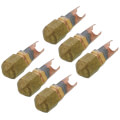
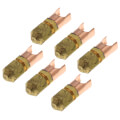
Copper Saddle Valves clamp around an existing copper or galvanized line and pierce it to add a low-flow branch connection without cutting the pipe or shutting down the main supply. Supco's STV2LL model fits copper tubing from 3/8 inch up to 1-3/8 inch OD and delivers a 1/4 inch compression outlet at a 1 GPM flow rate, sized for the small branch lines these valves typically feed. Contractors reach for a saddle valve most often to add a supply line for an ice maker, humidifier, or water filtration system where running a dedicated line back to a main isn't practical. Because a saddle valve's piercing needle punches directly into the pipe wall, matching the valve to the correct pipe size and material keeps the seal tight and prevents a slow leak at the tap point.
Subcategories
- Copper Tube Saddle Valves: Copper tube saddle valves clamp onto copper tubing and use a piercing needle to tap a small branch line without cutting the main run. Supco's STV2LL model adjusts to fit tubing from 3/8 inch to 1-3/8 inch OD, delivering water through a 1/4 inch compression outlet at 1 GPM with a maximum rated temperature of 180 degrees Fahrenheit. A stainless steel piercing needle and a molded, dual-stage gasket seal both the tubing and the valve body at the tap point. Ice maker and humidifier supply lines run off an existing copper water line commonly use this style.
- Galvanized Pipe Saddle Valves: Galvanized pipe saddle valves are built to clamp onto 1/2 inch or 3/4 inch galvanized iron pipe rather than copper tubing, using the same single-outlet, 1/4 inch compression design. Supco's STV2DLL model is rated for a maximum of 35 PSI and 180 degrees Fahrenheit, with a 1 GPM flow rate through the tap. Older homes with galvanized supply lines need this specific pipe-size and material match, since a copper-rated saddle valve's clamp radius won't seat correctly on iron pipe. Confirming the pipe material before selecting a valve avoids a mismatch that won't seal.
- Lead-Free Brass Saddle Valves: Lead-free brass saddle valves use a corrosion-resistant, lead-free brass body to meet current plumbing code requirements for potable water branch connections. BK Products' brass 1/4 inch OD saddle valve is rated for 100 PSI working pressure, 125 PSI maximum pressure, and a maximum temperature of 180 degrees Fahrenheit, and includes ferrules and inserts for aluminum, brass, copper, and polyethylene tubing. Ice maker, water softener, and small air system installs commonly spec this style where local code requires lead-free fittings on any water-contact component. The rubber gasket seal works the same way as other saddle valve designs, sealing directly against the tapped pipe surface.
Buying Guide
Pipe material comes before anything else when sourcing Copper Saddle Valves, since a valve clamp built for copper tubing won't seat correctly on galvanized iron pipe, and vice versa. Supco's STV2LL model covers copper tubing from 3/8 inch to 1-3/8 inch OD, while the STV2DLL model is built specifically for 1/2 inch or 3/4 inch galvanized iron pipe at a lower 35 PSI maximum rating. Flow rate matters less than fit for most applications, since these valves are built for the small draw an ice maker, humidifier, or water filter needs rather than a full fixture supply, and 1 GPM covers that range across most models. Lead-free brass construction is worth confirming on any job where local code requires it for potable water branch connections, since not every saddle valve on the shelf carries that certification even though most modern models do. Maximum working pressure and temperature also vary by model, so checking the valve's rating against the actual line pressure prevents a seal failure at the tap point down the road. Installation itself is straightforward across all these valve types: clamp the valve body around the pipe, tighten evenly to seat the gasket, and turn the valve stem to drive the piercing needle through the pipe wall. Because the tap happens with the line still pressurized, working slowly through that last step avoids water spraying back before the valve seats fully closed.
Frequently Asked Questions
Can a saddle valve be installed without shutting off the water?
Yes. A saddle valve clamps around the outside of an existing line and pierces it when the valve stem is turned, so the main water supply doesn't need to be shut off for installation. Working the piercing needle through slowly still matters, since the line stays pressurized the entire time. Once seated, the valve controls flow to the new branch line on its own.
What size copper tubing do saddle valves fit?
Supco's STV2LL saddle valve adjusts to fit copper tubing from 3/8 inch up to 1-3/8 inch OD, covering the range most residential water lines fall into. Checking the actual outside diameter of the line, not the nominal pipe size, is what determines fit. A valve sized for the wrong OD range won't clamp tightly enough to seal against the piercing needle.
Do saddle valves work on galvanized iron pipe?
Some saddle valves are built specifically for galvanized iron pipe rather than copper tubing. Supco's STV2DLL model fits 1/2 inch or 3/4 inch galvanized iron pipe and is rated for a maximum of 35 PSI. Using a copper-rated valve on iron pipe, or the reverse, typically results in a clamp that doesn't seat evenly around the pipe.
Are lead-free saddle valves required by code?
Many local plumbing codes require lead-free brass construction on any fitting that contacts potable water, which includes saddle valves feeding an ice maker or humidifier line. BK Products' brass saddle valve line is built lead-free specifically to meet that requirement. Checking local code before a job, rather than assuming a valve on hand is compliant, avoids a failed inspection.
What's the maximum flow rate through a typical saddle valve?
Most saddle valves, including Supco's STV2LL and STV2DLL models, are rated for 1 GPM through their compression outlet. A 1 GPM rating is sized for small appliance branch lines like ice makers and humidifiers rather than a full fixture supply. Running a higher-demand fixture off a saddle valve tap typically means the flow rate isn't adequate for the application.
