




Dryer Parts


 --%3E %3Csvg version='1.1' id='No-RB' xmlns='http://www.w3.org/2000/svg' xmlns:xlink='http://www.w3.org/1999/xlink' x='0px' y='0px' viewBox='0 0 100 100' enable-background='new 0 0 100 100' xml:space='preserve'%3E %3Cpath fill='%23CECECE' d='M79.44,0.95H20.56C9.78,0.95,0.95,9.78,0.95,20.56v58.87c0,10.79,8.82,19.61,19.61,19.61h58.87 c10.79,0,19.61-8.83,19.61-19.61V20.56C99.05,9.78,90.22,0.95,79.44,0.95z M65.38,58.24l9.38,29.58L49.69,69.78L24.5,87.82 l9.34-29.6L8.8,39.6l30.73-0.17c0,0,6.98-19.61,10-28.93c0.54,1.36,9.88,29.1,9.88,29.1H91.2L65.38,58.24z'/%3E %3C/svg%3E)

 --%3E %3Csvg version='1.1' id='Fill' xmlns='http://www.w3.org/2000/svg' xmlns:xlink='http://www.w3.org/1999/xlink' x='0px' y='0px' viewBox='0 0 100 100' enable-background='new 0 0 100 100' xml:space='preserve'%3E %3Cpath fill='%23F15C02' d='M79.44,0.95H20.56C9.78,0.95,0.95,9.78,0.95,20.56v58.87c0,10.79,8.82,19.61,19.61,19.61h58.87 c10.79,0,19.61-8.83,19.61-19.61V20.56C99.05,9.78,90.22,0.95,79.44,0.95z M65.38,58.24l9.38,29.58L49.69,69.78L24.5,87.82 l9.34-29.6L8.8,39.6l30.73-0.17c0,0,6.98-19.61,10-28.93c0.54,1.36,9.88,29.1,9.88,29.1H91.2L65.38,58.24z'/%3E %3C/svg%3E)

Dryer parts are the replacement components technicians and homeowners use to repair clothes dryers when a drum stops turning, heat drops off, or airflow gets restricted. A dryer's thermal fuse, one of the most commonly replaced parts, typically opens at around 196 degrees Fahrenheit as a one-time safety device that trips when the appliance overheats, often because a vent is blocked with lint. Appliance repair technicians and property maintenance crews stock drive belts, drum support rollers, heating elements, and vent kits to keep dryers running safely and efficiently. Knowing which component is failing before ordering saves a return trip and gets the unit back in service faster.
Subcategories
- Drive Belts: Drive belts wrap around the dryer drum, a tension pulley, and the drive motor pulley to keep the drum turning during operation. Technicians replace belts when a dryer runs but the drum doesn't spin, or when a burning rubber smell shows up during a cycle. Belts are typically a narrow, ribbed design that must match the drum and pulley layout of the specific dryer model.
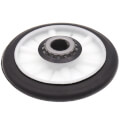
- Drum Rollers: Drum rollers are small wheels that support the dryer drum so it can rotate smoothly inside the cabinet. Technicians replace rollers when a dryer starts making a loud rumbling or squeaking noise, and best practice is to replace both rollers at the same time even if only one shows wear. Worn rollers can eventually let the drum sag out of alignment, which stresses the belt and motor.
- Heating Elements: Heating elements generate the heat that dries clothes, using a coil or wire located behind the drum or in the back panel depending on the dryer design. Technicians replace heating elements when a dryer runs a full cycle but clothes come out damp or cold. This part carries continuous electrical current during operation, so proper installation and secure connections matter for safe operation.
- Thermal Fuses: Thermal fuses are one-time safety devices that trip and cut power to the dryer when internal temperatures reach roughly 196 degrees Fahrenheit. Technicians replace a blown thermal fuse most often when a vent restriction caused the unit to overheat, and it's standard practice to clear the vent line at the same time to prevent a repeat failure. This is one of the most frequently replaced dryer parts in the field.
- Vent Kits: Vent kits include the ducting and connectors used to route dryer exhaust safely to the exterior of a building. Installers and technicians use vent kits both for new dryer installations and to replace damaged or restrictive ductwork that's causing overheating or slow drying times. Proper vent routing reduces strain on the heating element and lowers fire risk from trapped lint.
Buying Guide
Start diagnosis with the symptom the dryer is showing before ordering dryer parts. A drum that won't turn while the motor runs usually points to a broken belt, while a loud rumbling noise during operation typically means worn drum rollers. A dryer that runs but doesn't heat often has a failed heating element or a tripped thermal fuse, and a unit that overheats repeatedly usually has a restricted vent line rather than a bad component.
Match the part number to the specific dryer model rather than assuming universal fit. Belts, rollers, and heating elements vary by manufacturer and model, and installing the wrong length or profile of belt or the wrong wattage heating element can cause premature failure or an unsafe installation.
When a thermal fuse has blown, check the vent line at the same time. A thermal fuse trips because internal temperatures got too high, and that's most often caused by lint buildup restricting airflow through the vent. Replacing just the fuse without clearing the vent usually leads to a repeat failure within a short time.
For rollers, replace both at once even if only one is visibly worn. Rollers wear at close to the same rate, and replacing just one leaves the drum unevenly supported, which shortens the life of the new part and can throw off drum alignment again soon after the repair.
Frequently Asked Questions
What causes a dryer drum to stop turning?
A drum that stops turning while the motor still runs is most often caused by a broken or slipped drive belt. Drive belts wrap around the drum, a tension pulley, and the motor pulley, and wear over time until they snap or come loose.
Why does a dryer make a loud rumbling noise?
Loud rumbling or squeaking during a cycle usually points to worn drum support rollers. Rollers are small wheels that hold the drum in place as it spins, and both should be replaced together once one shows signs of wear.
At what temperature does a dryer thermal fuse trip?
A dryer thermal fuse typically opens at around 196 degrees Fahrenheit. It's a one-time safety device that cuts power when the dryer overheats, most commonly due to a lint-blocked vent line restricting airflow.
Why does a dryer run without producing heat?
A dryer that runs a full cycle without heating clothes usually has a failed heating element or a tripped thermal fuse. The heating element is the coil or wire that generates heat, located behind the drum or in the back panel depending on the model.
Should both dryer drum rollers be replaced at the same time?
Replacing both drum rollers together, even when only one shows visible wear, is standard practice. Rollers tend to wear at a similar rate, and leaving an old roller in place after replacing the other can leave the drum unevenly supported.
