




Field Controls Dehumidifiers

 --%3E %3Csvg version='1.1' id='No-RB' xmlns='http://www.w3.org/2000/svg' xmlns:xlink='http://www.w3.org/1999/xlink' x='0px' y='0px' viewBox='0 0 100 100' enable-background='new 0 0 100 100' xml:space='preserve'%3E %3Cpath fill='%23CECECE' d='M79.44,0.95H20.56C9.78,0.95,0.95,9.78,0.95,20.56v58.87c0,10.79,8.82,19.61,19.61,19.61h58.87 c10.79,0,19.61-8.83,19.61-19.61V20.56C99.05,9.78,90.22,0.95,79.44,0.95z M65.38,58.24l9.38,29.58L49.69,69.78L24.5,87.82 l9.34-29.6L8.8,39.6l30.73-0.17c0,0,6.98-19.61,10-28.93c0.54,1.36,9.88,29.1,9.88,29.1H91.2L65.38,58.24z'/%3E %3C/svg%3E)

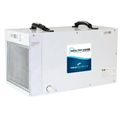

Field Controls Dehumidifiers are whole-house units designed to tie into a home's ductwork and remove excess moisture across an entire living space rather than a single room. The lineup spans three models, from the FC-60DH-2 at 60 pints per day up to the FC-120DH-2 at 120 pints per day, so installers can match capacity to home size and regional humidity load. All models use R410A refrigerant and aluminum coils built to resist the corrosion that comes with constant moisture exposure. The two larger models, FC-85DH-2 and FC-120DH-2, carry Energy Star certification, which matters for utility rebate programs in many regions. Field Controls recommends installation by a licensed contractor, since the units tie into supply and return ductwork and require correct airflow balancing. For homes with chronic humidity problems that portable units can't keep up with, a ducted whole-house model addresses the entire structure from one central location.
Subcategories
- FC-60DH-2 (60 Pint): The FC-60DH-2 is the entry point in the Field Controls whole-house lineup, rated to remove 60 pints of moisture per day at 155 CFM airflow. Sound output measures 59 dBA, quiet enough for installation near living spaces. Installers spec this model for smaller homes or additions where moisture load is moderate rather than severe. It uses the same R410A refrigerant and aluminum coil construction as the rest of the lineup.
- FC-85DH-2 (85 Pint): The FC-85DH-2 sits in the middle of the lineup, removing 85 pints of moisture per day at 185 CFM. It carries Energy Star certification, which can factor into utility rebate eligibility. Sound output holds at 59 dBA, the same as the smaller FC-60DH-2. Installers typically spec this model for mid-size homes with consistent humidity problems rather than occasional spikes.
- FC-120DH-2 (120 Pint): The FC-120DH-2 is the largest model in the Field Controls lineup, rated for 120 pints of moisture removal per day at 300 CFM airflow. It carries Energy Star certification and operates at 60 dBA. Installers spec this model for larger homes, whole-building applications, or regions with heavy year-round humidity loads. The higher airflow moves dehumidified air through more of the ductwork per cycle than the smaller models.
Buying Guide
Sizing starts with square footage and regional humidity load rather than guesswork. A home in a consistently humid climate needs more removal capacity per day than the same square footage in a drier region, so local humidity data matters as much as house size. The FC-60DH-2 covers smaller homes and additions at 60 pints per day, the FC-85DH-2 steps up to 85 pints for mid-size homes, and the FC-120DH-2 handles 120 pints for larger homes or buildings with persistent moisture problems. Field Controls Dehumidifiers all tie into existing ductwork, so confirm the supply and return runs can handle the added airflow before specifying a model, since undersized ductwork limits how effectively any of these units perform. Energy Star certification on the FC-85DH-2 and FC-120DH-2 can affect utility rebate eligibility, which is worth checking before finalizing a bid in regions with active efficiency programs. All three models share R410A refrigerant and aluminum coil construction, so the choice between them comes down almost entirely to capacity and airflow rather than material differences. Sound level stays close across the lineup, at 59 to 60 dBA, so noise isn't typically a deciding factor between models. Because these units connect directly into a home's duct system, installation calls for a licensed contractor who can verify airflow balance and confirm the unit is sized correctly for the space it serves.
Frequently Asked Questions
How much moisture can a Field Controls whole-house dehumidifier remove per day?
Capacity ranges across the three-model lineup, from 60 pints per day on the FC-60DH-2 up to 120 pints per day on the FC-120DH-2. The FC-85DH-2 sits in between at 85 pints per day. Actual removal in the field depends on indoor humidity levels, temperature, and how well the unit ties into the home's ductwork. Matching model capacity to home size and regional humidity load is the main sizing factor.
Are Field Controls dehumidifiers Energy Star certified?
The FC-85DH-2 and FC-120DH-2 carry Energy Star certification, while the smaller FC-60DH-2 does not. Certification can factor into utility rebate programs in regions that offer them. All three models share the same R410A refrigerant and aluminum coil construction regardless of certification status. Checking current rebate program rules locally is worth doing before finalizing a bid.
Can these dehumidifiers connect to a home's existing ductwork?
Field Controls whole-house dehumidifiers are designed to tie into supply and return ductwork rather than operate as standalone portable units. Airflow ranges from 155 CFM on the FC-60DH-2 up to 300 CFM on the FC-120DH-2, so the ductwork needs to be sized to handle that additional airflow. Field Controls recommends installation by a licensed contractor for this reason. Correct ductwork sizing keeps the unit operating at its rated capacity.
How loud are Field Controls whole-house dehumidifiers?
Sound levels stay close across the lineup, at 59 dBA for the FC-60DH-2 and FC-85DH-2 and 60 dBA for the FC-120DH-2. Sound output is not a major differentiator between models, since it barely changes as capacity increases. Placement in a mechanical room or away from living spaces further reduces perceived noise. Sound level alone rarely determines model selection compared to capacity and airflow needs.
What coil material do Field Controls dehumidifiers use, and why does it matter?
All three models in the lineup use aluminum coils built to resist corrosion from constant moisture exposure. Aluminum construction matters in a dehumidifier specifically because the coil operates in a consistently humid, sometimes condensing environment. The coils pair with R410A refrigerant across the FC-60DH-2, FC-85DH-2, and FC-120DH-2. Corrosion-resistant construction supports a longer service life in continuous whole-house operation.
