




Galvanized Couplings


 --%3E %3Csvg version='1.1' id='No-RB' xmlns='http://www.w3.org/2000/svg' xmlns:xlink='http://www.w3.org/1999/xlink' x='0px' y='0px' viewBox='0 0 100 100' enable-background='new 0 0 100 100' xml:space='preserve'%3E %3Cpath fill='%23CECECE' d='M79.44,0.95H20.56C9.78,0.95,0.95,9.78,0.95,20.56v58.87c0,10.79,8.82,19.61,19.61,19.61h58.87 c10.79,0,19.61-8.83,19.61-19.61V20.56C99.05,9.78,90.22,0.95,79.44,0.95z M65.38,58.24l9.38,29.58L49.69,69.78L24.5,87.82 l9.34-29.6L8.8,39.6l30.73-0.17c0,0,6.98-19.61,10-28.93c0.54,1.36,9.88,29.1,9.88,29.1H91.2L65.38,58.24z'/%3E %3C/svg%3E)


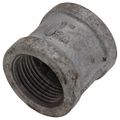


Galvanized couplings are threaded pipe fittings used to join two lengths of galvanized steel pipe in a straight run, restoring a continuous water or gas line without welding. Contractors reach for them on repair jobs, when extending an existing pipe run, or when splicing new sections into an older galvanized system where matching material prevents corrosion at the joint. The zinc coating that gives galvanized pipe its name protects the underlying steel from rust, and a properly rated galvanized coupling maintains that same corrosion resistance at the connection point.
Most couplings are sized to match standard pipe diameters and use standard NPT threads, so fit is generally straightforward once the pipe size is confirmed. Because galvanized systems are common in older buildings, having the right coupling on hand can mean finishing a repair in one visit instead of making a second trip for parts.
Subcategories
- Standard Couplings: Standard galvanized couplings join two pipe sections of the same diameter in a straight run, with tapered NPT threads on both ends for a secure, sealant-assisted connection. They are the most common size and style contractors keep in stock for general repair and extension work. Wall thickness matches the schedule of the pipe it is paired with, so confirming schedule as well as diameter avoids a loose or over-tight fit.
- Reducing Couplings: Reducing couplings connect two pipe sections of different diameters within the same straight run, removing the need for a separate reducer bushing at a coupling joint. They come in a range of common size combinations to step a line down as it moves toward a fixture or appliance. Contractors use them when transitioning from a larger supply line to a smaller branch line.
- Merchant Couplings: Merchant couplings, sometimes called half couplings, use a lighter wall thickness than standard couplings and suit lower-pressure or non-critical connections rather than full-pressure water or gas mains. They cost less and thread on quickly, making them a common choice for temporary repairs or low-stress branch lines. They should not replace standard couplings on a primary supply run.
Buying Guide
Selecting a galvanized coupling starts with confirming the pipe diameter and schedule of the line being joined, since a coupling sized for the wrong schedule can leave threads that do not seat fully or a joint prone to leaking under pressure. Matching material matters just as much as size: pairing a galvanized coupling with black steel or another dissimilar metal pipe sets up galvanic corrosion at the joint over time, so the fitting and the pipe it is joining should both be galvanized.
Next, decide whether the run needs a standard coupling, a reducing coupling, or a lighter-duty merchant coupling. A straight repair or extension on matched pipe sizes calls for a standard coupling, while a transition between two different diameters calls for a reducing coupling instead. Merchant couplings suit low-pressure, non-critical connections rather than a primary water or gas supply line, since their thinner wall is not rated for the same pressure as a standard coupling.
Thread sealant is part of the installation, not an afterthought. Galvanized fittings use tapered NPT threads that rely on pipe dope or PTFE tape to seal fully, and skipping sealant or applying it inconsistently is a common cause of a slow leak at the joint.
Finally, ordering a few extra couplings is worth it for any job where matching an older system's exact pipe size stays uncertain until pipe is pulled and measured on site, since running short mid-repair on an older building can mean tracking down a size that is no longer common in new construction.
Frequently Asked Questions
What's the difference between a standard and a reducing galvanized coupling?
A standard coupling joins two pipe sections of the same diameter, while a reducing coupling joins two different diameters in the same straight run, removing the need for a separate reducer fitting.
Can a galvanized coupling be used with black steel pipe?
It is not recommended. Joining galvanized and black steel pipe at a coupling sets up dissimilar-metal corrosion at the joint over time, so matching pipe material to the fitting material is the safer choice.
Are merchant couplings rated for the same pressure as standard couplings?
No. Merchant couplings use a thinner wall and suit lower-pressure or non-critical connections, not a primary water or gas supply line.
Do galvanized couplings need thread sealant?
Yes. Galvanized fittings use tapered NPT threads that need pipe dope or PTFE tape to seal fully; skipping sealant is a common cause of a slow leak at the joint.
How do I know what size coupling is needed?
Measuring the outside diameter and confirming the schedule of the pipe being joined matters, since a coupling sized for the wrong schedule may not seat fully even if the nominal diameter looks right.
