




Honeywell Home Dampers
Honeywell Home dampers are the motorized components that direct conditioned air to specific zones within a Honeywell zoning system, opening and closing round duct runs in response to signals from the zone control panel. The lineup spans standard automatic dampers, modulating dampers for finer airflow control, retrofit dampers for adding zoning to existing ductwork, and bypass dampers that manage system pressure when zones close.
Selecting the right damper type depends on where it sits in the system and how much control the zoning design calls for. A basic zone typically needs only a standard automatic damper, while a system with tighter airflow balancing requirements or an existing duct system being retrofitted for zoning calls for a more specific damper type.


Subcategories
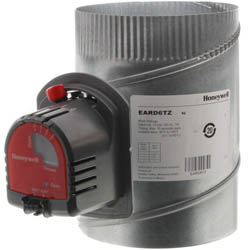
- Honeywell Home Automatic Round Dampers (ARD): Honeywell Home Automatic Round Dampers open and close a duct run automatically as part of a zoned HVAC system, directing conditioned air to the zone calling for it. Contractors install ARD dampers inline on round duct as part of a multi-zone control system tied to zone panel controls. Duct diameter needs to match the damper size for a proper seal when closed.
- Honeywell Home Fresh Air Dampers: Honeywell Home Fresh Air Dampers introduce outside air into a duct system on a controlled basis, typically as part of a ventilation strategy paired with the HVAC system's air handler. Contractors use fresh air dampers where a building's ventilation design calls for controlled outdoor air intake rather than passive infiltration. Motorized operation lets the damper open and close on a schedule or in response to a control signal.
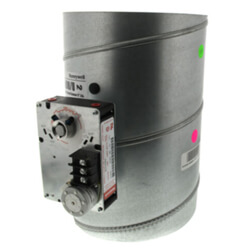
- Honeywell Home Modulating Automatic Round Dampers (MARD): Modulating automatic round dampers adjust airflow in incremental steps rather than simply opening or closing fully, giving finer control over air distribution across a zoned system. Contractors specify MARD dampers on systems designed for more precise zone balancing than a standard open or closed damper provides. The modulating actuator responds to a variable control signal from the zoning system.
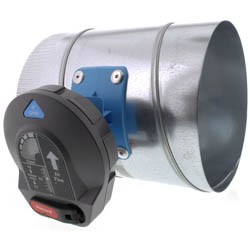
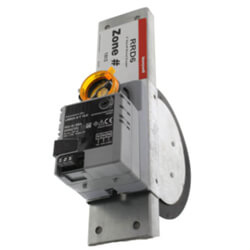
- Honeywell Home Retrofit Round Dampers (RRD): Retrofit round dampers install into existing round duct without requiring the duct section to be cut and replaced, simplifying the addition of zoning to a system that wasn't originally zoned. Contractors use RRD dampers when adding zone control to an existing home's ductwork after the initial installation. The retrofit design clamps onto the existing duct rather than requiring a full duct section replacement.
- Honeywell Home TrueZONE Bypass Dampers (CPRD): TrueZONE bypass dampers regulate airflow and pressure in a zoned system by diverting excess conditioned air back to the return side when one or more zones close off. Contractors install bypass dampers to prevent excess duct pressure and airflow noise that can occur when a zoning system closes dampers in multiple zones simultaneously. Proper sizing to the system's total airflow keeps pressure within a safe range.
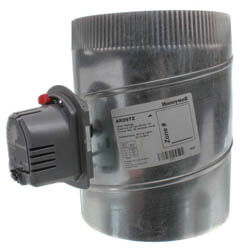
- Honeywell Home ZD Dampers: Honeywell Home ZD dampers provide basic automatic zone control for round duct systems, opening and closing based on signals from the zone control panel. Contractors use ZD dampers as the standard zoning damper for residential multi-zone HVAC installations. Correct duct sizing and orientation during installation keep the damper sealing fully when closed.
Buying Guide
Matching damper type to its role in the zoning system is the starting point. Standard ZD and ARD dampers handle basic open or closed zone control, while MARD modulating dampers suit systems needing finer airflow adjustment across zones with different demand levels.
Retrofit dampers solve the specific problem of adding zoning to a duct system that wasn't originally designed for it, clamping onto existing round duct rather than requiring a cut-in replacement section. Choosing a retrofit damper over a standard one saves labor on an existing home where accessing and modifying ductwork is more disruptive.
Bypass dampers become necessary anytime a zoning system can close off enough zones simultaneously to create excess duct pressure, diverting extra conditioned air back to the return side rather than forcing it through closed zones. Sizing a bypass damper to the system's total airflow keeps pressure within a safe operating range.
Duct diameter compatibility matters across every damper type in this lineup, since a damper sized incorrectly for the duct won't seal fully when closed, allowing air to leak past into a zone that's supposed to be shut off. Confirming duct diameter before ordering avoids an improper fit.
Fresh air dampers serve a different purpose than the zoning-focused dampers in this category, controlling outdoor air intake into the system rather than directing air between zones. Including a fresh air damper in a system's design depends on the building's ventilation strategy and whether controlled outdoor air intake is part of the plan.
Frequently Asked Questions
What's the difference between a standard damper and a modulating damper?
A standard damper like the ARD or ZD only opens fully or closes fully, while a modulating damper like the MARD adjusts to intermediate positions in response to a variable control signal. Modulating dampers suit systems that need finer control over airflow distribution across zones with different demand.
Can a retrofit damper be installed without replacing a section of ductwork?
Retrofit round dampers are designed to clamp onto existing round duct without requiring the duct section to be cut and replaced, which simplifies adding zoning to a home's existing ductwork. The clamp-on design makes the retrofit damper the practical choice for zoning added after a system's original installation.
Why would a zoning system need a bypass damper?
A bypass damper prevents excess duct pressure and airflow noise that can build up when a zoning system closes several zones at once, diverting the extra conditioned air back to the return side instead of forcing it through closed zones. Systems with more than two or three zones commonly need one.
How is the correct damper size determined for a duct run?
Damper size needs to match the duct's diameter exactly, since an undersized or oversized damper won't seal completely when closed and will leak air into a zone that's supposed to be shut off. Measuring the existing duct diameter before ordering is the most reliable way to confirm the correct size.
What does a fresh air damper do differently from a zoning damper?
A fresh air damper controls outdoor air intake into the HVAC system as part of a ventilation strategy, while zoning dampers direct conditioned air between different zones within the building. The two serve separate functions and often coexist in the same system.
Resources
Subcategories
- Honeywell Home Automatic Round Dampers (ARD): Honeywell Home Automatic Round Dampers open and close a duct run automatically as part of a zoned HVAC system, directing conditioned air to the zone calling for it. Contractors install ARD dampers inline on round duct as part of a multi-zone control system tied to zone panel controls. Duct diameter needs to match the damper size for a proper seal when closed.
- Honeywell Home Fresh Air Dampers: Honeywell Home Fresh Air Dampers introduce outside air into a duct system on a controlled basis, typically as part of a ventilation strategy paired with the HVAC system's air handler. Contractors use fresh air dampers where a building's ventilation design calls for controlled outdoor air intake rather than passive infiltration. Motorized operation lets the damper open and close on a schedule or in response to a control signal.
- Honeywell Home Modulating Automatic Round Dampers (MARD): Modulating automatic round dampers adjust airflow in incremental steps rather than simply opening or closing fully, giving finer control over air distribution across a zoned system. Contractors specify MARD dampers on systems designed for more precise zone balancing than a standard open or closed damper provides. The modulating actuator responds to a variable control signal from the zoning system.
- Honeywell Home Retrofit Round Dampers (RRD): Retrofit round dampers install into existing round duct without requiring the duct section to be cut and replaced, simplifying the addition of zoning to a system that wasn't originally zoned. Contractors use RRD dampers when adding zone control to an existing home's ductwork after the initial installation. The retrofit design clamps onto the existing duct rather than requiring a full duct section replacement.
- Honeywell Home TrueZONE Bypass Dampers (CPRD): TrueZONE bypass dampers regulate airflow and pressure in a zoned system by diverting excess conditioned air back to the return side when one or more zones close off. Contractors install bypass dampers to prevent excess duct pressure and airflow noise that can occur when a zoning system closes dampers in multiple zones simultaneously. Proper sizing to the system's total airflow keeps pressure within a safe range.
- Honeywell Home ZD Dampers: Honeywell Home ZD dampers provide basic automatic zone control for round duct systems, opening and closing based on signals from the zone control panel. Contractors use ZD dampers as the standard zoning damper for residential multi-zone HVAC installations. Correct duct sizing and orientation during installation keep the damper sealing fully when closed.
Buying Guide
Matching damper type to its role in the zoning system is the starting point. Standard ZD and ARD dampers handle basic open or closed zone control, while MARD modulating dampers suit systems needing finer airflow adjustment across zones with different demand levels.
Retrofit dampers solve the specific problem of adding zoning to a duct system that wasn't originally designed for it, clamping onto existing round duct rather than requiring a cut-in replacement section. Choosing a retrofit damper over a standard one saves labor on an existing home where accessing and modifying ductwork is more disruptive.
Bypass dampers become necessary anytime a zoning system can close off enough zones simultaneously to create excess duct pressure, diverting extra conditioned air back to the return side rather than forcing it through closed zones. Sizing a bypass damper to the system's total airflow keeps pressure within a safe operating range.
Duct diameter compatibility matters across every damper type in this lineup, since a damper sized incorrectly for the duct won't seal fully when closed, allowing air to leak past into a zone that's supposed to be shut off. Confirming duct diameter before ordering avoids an improper fit.
Fresh air dampers serve a different purpose than the zoning-focused dampers in this category, controlling outdoor air intake into the system rather than directing air between zones. Including a fresh air damper in a system's design depends on the building's ventilation strategy and whether controlled outdoor air intake is part of the plan.
Frequently Asked Questions
What's the difference between a standard damper and a modulating damper?
A standard damper like the ARD or ZD only opens fully or closes fully, while a modulating damper like the MARD adjusts to intermediate positions in response to a variable control signal. Modulating dampers suit systems that need finer control over airflow distribution across zones with different demand.
Can a retrofit damper be installed without replacing a section of ductwork?
Retrofit round dampers are designed to clamp onto existing round duct without requiring the duct section to be cut and replaced, which simplifies adding zoning to a home's existing ductwork. The clamp-on design makes the retrofit damper the practical choice for zoning added after a system's original installation.
Why would a zoning system need a bypass damper?
A bypass damper prevents excess duct pressure and airflow noise that can build up when a zoning system closes several zones at once, diverting the extra conditioned air back to the return side instead of forcing it through closed zones. Systems with more than two or three zones commonly need one.
How is the correct damper size determined for a duct run?
Damper size needs to match the duct's diameter exactly, since an undersized or oversized damper won't seal completely when closed and will leak air into a zone that's supposed to be shut off. Measuring the existing duct diameter before ordering is the most reliable way to confirm the correct size.
What does a fresh air damper do differently from a zoning damper?
A fresh air damper controls outdoor air intake into the HVAC system as part of a ventilation strategy, while zoning dampers direct conditioned air between different zones within the building. The two serve separate functions and often coexist in the same system.