



Malco Dampers

 --%3E %3Csvg version='1.1' id='No-RB' xmlns='http://www.w3.org/2000/svg' xmlns:xlink='http://www.w3.org/1999/xlink' x='0px' y='0px' viewBox='0 0 100 100' enable-background='new 0 0 100 100' xml:space='preserve'%3E %3Cpath fill='%23CECECE' d='M79.44,0.95H20.56C9.78,0.95,0.95,9.78,0.95,20.56v58.87c0,10.79,8.82,19.61,19.61,19.61h58.87 c10.79,0,19.61-8.83,19.61-19.61V20.56C99.05,9.78,90.22,0.95,79.44,0.95z M65.38,58.24l9.38,29.58L49.69,69.78L24.5,87.82 l9.34-29.6L8.8,39.6l30.73-0.17c0,0,6.98-19.61,10-28.93c0.54,1.36,9.88,29.1,9.88,29.1H91.2L65.38,58.24z'/%3E %3C/svg%3E)

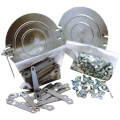
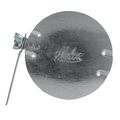
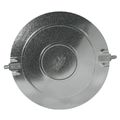
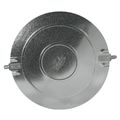
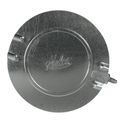
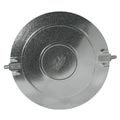
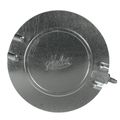
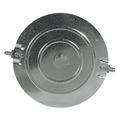
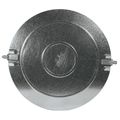
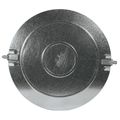
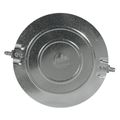

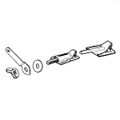
Malco Dampers are volume control dampers installed inside round or rectangular sheet metal ductwork to regulate how much air passes through a given duct branch. Sheet metal contractors install them during ductwork fabrication so a system can be balanced after startup, directing more or less airflow to individual rooms or zones without altering the duct itself. A damper blade pivots inside the duct on a shaft, and an external handle or quadrant lets a technician set and lock the blade at any angle between fully open and fully closed. Because balancing happens after the rest of the ductwork is already installed, a damper needs to be positioned somewhere accessible, typically near a branch takeoff, so it can be adjusted without cutting into finished duct later. Getting damper placement right during rough-in saves a return trip that would otherwise be needed just to adjust airflow balance.
Subcategories
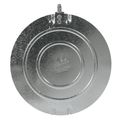
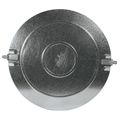
- Round Duct Dampers: Round duct dampers fit inside round sheet metal duct or flexible duct connections and use a single blade on a center shaft to throttle airflow. Sheet metal contractors size them to match the duct diameter exactly, since an undersized damper creates a gap that lets air bypass the blade even when it's closed. An external locking quadrant holds the blade at whatever angle a balancing technician sets.
- Rectangular Duct Dampers: Rectangular duct dampers serve the same balancing function in square or rectangular trunk and branch duct, typically using a single blade for narrower ducts or multiple parallel blades for wider openings. Multi-blade versions distribute airflow resistance more evenly across a wide duct face than a single blade could. Installers select blade count based on duct width rather than airflow volume alone.
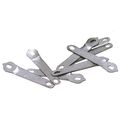
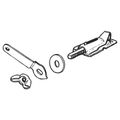
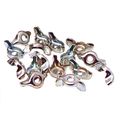
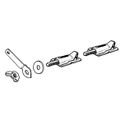
- Damper Quadrants & Hardware: Damper quadrants are the external handle and locking mechanism that let a technician set and hold a damper blade's position from outside the duct. Replacement quadrants and shafts let a contractor service an existing damper without replacing the entire duct section it's installed in. Matching the quadrant to the shaft size is the main fit consideration when ordering a replacement.
Buying Guide
Selecting the right damper starts with duct shape and size. Round duct calls for a round damper sized to the exact duct diameter, while rectangular or square duct calls for a rectangular damper matched to the duct's width and height. An undersized or oversized damper leaves a gap around the blade that lets air leak past even in the fully closed position, undermining the whole point of installing it.
Blade configuration matters most on wider rectangular ducts. A single-blade damper works fine on a narrow branch duct, but a wide trunk duct generally needs a multi-blade damper to control airflow evenly across the full duct face. Malco Dampers in a multi-blade configuration also tend to hold their set position more consistently under higher airflow volumes than a single wide blade would.
Accessibility during and after installation is worth planning for before the duct is closed up. A damper installed behind a finished wall or ceiling with no access panel can't be adjusted during balancing or serviced later without cutting into the duct. Placing dampers near an accessible branch takeoff, and confirming the quadrant handle clears any nearby insulation or framing, avoids a callback just to reach a damper that was installed in an inconvenient spot.
Frequently Asked Questions
How do I know what size damper to order for a duct run?
Measure the actual duct diameter for round duct, or the width and height for rectangular duct, and order a damper sized to match exactly. A damper that's even slightly undersized will leak air around its edges regardless of blade position, which defeats the purpose of installing it.
When should a rectangular duct damper use multiple blades instead of one?
Wider rectangular ducts generally call for multiple parallel blades, since a single blade spanning a wide opening doesn't control airflow as evenly across the full face. Narrower branch ducts typically work fine with a single-blade damper. Duct width, more than airflow volume, is the main factor in that decision.
Where should a damper be installed for easy balancing later?
Placing a damper near an accessible branch takeoff, rather than deep inside a duct run behind finished surfaces, makes it possible to reach the quadrant handle for adjustment during balancing or future service. An access panel nearby is worth adding if the duct will otherwise be fully enclosed.
Can a damper quadrant be replaced without replacing the whole duct section?
Yes. Quadrants and shafts are available as separate replacement parts, so a worn or broken handle mechanism can typically be swapped without disturbing the duct itself. Matching the replacement quadrant to the existing shaft size is the main compatibility check.
Do dampers need to be re-adjusted after a system is initially balanced?
Airflow balance can shift over time as filters load up, equipment ages, or a building's use changes, so periodic rechecking is common practice on systems that get regular maintenance. Keeping dampers accessible during the original installation makes that future adjustment far easier.
