




PEX Pipe Fittings
PEX fittings connect and terminate cross-linked polyethylene (PEX) tubing in plumbing and radiant heat systems. Methods like expansion, press, push-fit, or compression form a permanent, leak-free joint without soldering. Contractors choose a fitting type based on the connection method their crimp, expansion, or press tool supports, along with the specific PEX tubing type installed on the job.
The lineup here spans several connection technologies across multiple manufacturers, including expansion, press, push-fit, and compression style fittings. Fitting choice depends mainly on two factors. One is which connection method matches the tools already on hand. The other is the tubing type being joined: PEX-A, PEX-B, or PEX-AL-PEX. Not every fitting style works with every tubing type.






Subcategories
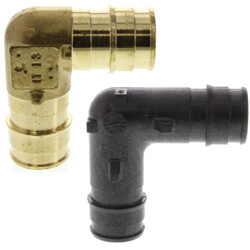
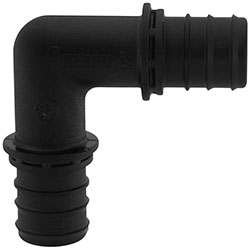
- Bluefin Expansion PEX Fittings: Bluefin expansion fittings join PEX-A tubing using an expansion tool that stretches the tubing and fitting together before the tubing shrinks back to form a tight seal. This method is commonly known as the expansion connection process. They're compatible with PEX-A tubing specifically, since the expansion method relies on that tubing's memory characteristics. Expansion tool compatibility and ring size should be confirmed before use.
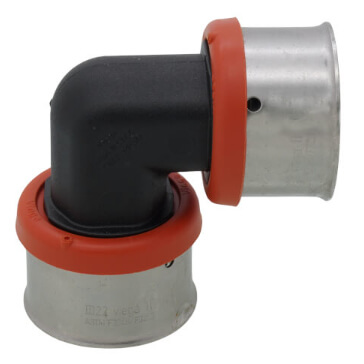
- Bluefin PEX Press Fittings: Bluefin press fittings connect PEX tubing using a press tool with a jaw sized to the fitting. The tool compresses a stainless steel or copper sleeve around the tubing to form the seal. They're an alternative to crimp and expansion methods for contractors who already own or prefer press-style tools. Press jaw compatibility varies by fitting size and should match the press tool being used.
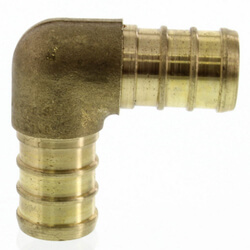
- Bluefin Push-Fit Fittings: Bluefin push-fit fittings join PEX, copper, or CPVC tubing without any tool at all. An internal grab ring and O-ring seal engage when the tubing is pushed into the fitting. They're commonly used for repairs and retrofits where running a crimp, press, or expansion tool isn't practical. Tubing needs to be cut square and deburred for the seal to form properly.
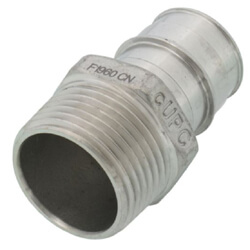
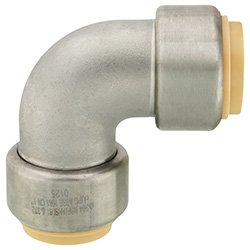
- Boshart Stainless Steel Push-Fit Fittings: Boshart stainless steel push-fit fittings use the same tool-free push-to-connect method as other push-fit designs, joining PEX, copper, or CPVC tubing through an internal grab ring and O-ring seal. The stainless steel body is suited to applications where corrosion resistance or higher pressure and temperature ratings matter compared to a standard fitting material. Tubing preparation, including a clean, square cut, remains necessary for a reliable seal.
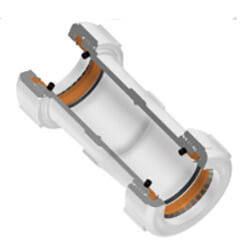
- EVERLOC+ Compression PEX Fittings: EVERLOC+ compression fittings join PEX tubing using a compression ring and nut tightened over the tubing end. This mechanical connection method doesn't require a crimp, press, or expansion tool. They're suited to service and repair work where a specialized connection tool isn't available on site. Proper torque on the compression nut is necessary to achieve a reliable, leak-free seal.
- GripLoc Fittings: GripLoc fittings use a compression-style mechanical connection to join PEX tubing without a crimp, press, or expansion tool, similar in concept to other compression fitting designs. They're suited to repair and retrofit applications where flexibility in connection method matters. As with other compression-style fittings, correct tightening is necessary for the joint to seal properly.
Buying Guide
Choosing a PEX fitting starts with the connection method already supported by the tools on hand: crimp, expansion, press, push-fit, or compression. Each method uses a different tool and, in most cases, a different fitting design. Switching methods mid-project usually means standardizing on one connection type or keeping multiple tool sets on hand.
Tubing type is the next factor. PEX-A tubing supports the expansion connection method because of its memory characteristics, while PEX-B and PEX-AL-PEX tubing typically pair with crimp, press, clamp, or push-fit style fittings instead. Confirming which PEX type is installed, or will be installed, before selecting a fitting avoids a compatibility mismatch.
Tool-free options like push-fit and compression fittings suit repair and retrofit work where a specialized crimp, press, or expansion tool isn't available on site. They generally cost more per fitting than a crimped connection. Larger new-construction jobs with a dedicated tool on hand often favor whichever connection method that tool supports for cost efficiency across a high fitting count.
Material and pressure rating matter for applications beyond standard residential water distribution, such as radiant heat systems or higher-temperature and higher-pressure commercial applications. Stainless steel push-fit fittings suit jobs where a standard fitting's rating isn't sufficient.
Tubing preparation affects every connection method's reliability. A square, clean, deburred cut is necessary whether the fitting is crimped, pressed, expanded, or pushed into place. Skipping that step is one of the more common causes of an early leak at a PEX joint.
Frequently Asked Questions
Do PEX-A and PEX-B tubing use the same fittings?
Not always. PEX-A tubing supports the expansion connection method because of its memory characteristics. PEX-B tubing generally doesn't expand and reshape the same way, so it typically uses crimp, clamp, press, or push-fit fittings instead. Checking the tubing type before selecting a fitting avoids installing an incompatible connection.
What's the advantage of a push-fit PEX fitting over a crimped connection?
A push-fit fitting connects without any tool. An internal grab ring and O-ring seal against the tubing as soon as it's pushed into place. This makes it useful for repairs and tight spaces where a crimp, press, or expansion tool can't be positioned. It typically costs more per fitting than a crimped connection on a large job.
Can a press fitting be installed with a crimp tool?
No. Press fittings require a press tool with a jaw sized to match the fitting, which compresses a sleeve around the tubing differently than a crimp tool's ring-and-jaw action. Using the wrong tool type for a given fitting design won't produce a reliable seal.
How is tubing prepared before installing a compression-style PEX fitting?
The tubing end needs a square, clean cut, free of burrs or debris, before the compression nut and ring are placed over it and tightened onto the fitting body. Skipping proper preparation is one of the more common causes of a leak at a compression joint.
Are stainless steel PEX fittings needed for standard residential plumbing?
Standard residential water distribution generally doesn't require a stainless steel fitting body. Standard-rated fittings are suited to that use. Stainless steel and other higher-rated fitting options are more relevant to applications with elevated pressure, temperature, or corrosion resistance requirements.
Resources

 --%3E %3C!DOCTYPE svg PUBLIC '-//W3C//DTD SVG 1.1//EN' 'http://www.w3.org/Graphics/SVG/1.1/DTD/svg11.dtd'%3E %3Csvg version='1.1' id='Layer_1' xmlns='http://www.w3.org/2000/svg' xmlns:xlink='http://www.w3.org/1999/xlink' x='0px' y='0px' width='90px' height='90px' viewBox='0 0 90 90' enable-background='new 0 0 90 90' xml:space='preserve'%3E %3Crect x='27' y='23' fill='%23FFFFFF' width='43' height='44'/%3E %3Cg%3E %3Cdefs%3E %3Crect id='SVGID_1_' width='90' height='90'/%3E %3C/defs%3E %3CclipPath id='SVGID_2_'%3E %3Cuse xlink:href='%23SVGID_1_' overflow='visible'/%3E %3C/clipPath%3E %3Cpath clip-path='url(%23SVGID_2_)' fill='%234186AD' d='M45,0C20.1,0,0,20.1,0,45c0,24.9,20.1,45,45,45c24.9,0,45-20.1,45-45 C90,20.1,69.9,0,45,0'/%3E %3C/g%3E %3Cpath fill='%23FFFFFF' d='M60.6,47.4l-22.5,14c-0.5,0.3-1,0.399-1.5,0.399s-0.9-0.1-1.4-0.399c-0.9-0.5-1.4-1.4-1.4-2.5v-28 c0-1,0.6-2,1.4-2.5c0.9-0.5,2-0.5,2.9,0.1l22.5,14.1C61.4,43.1,61.9,44,61.9,45S61.4,46.9,60.6,47.4'/%3E %3C/svg%3E)

Subcategories
- Bluefin Expansion PEX Fittings: Bluefin expansion fittings join PEX-A tubing using an expansion tool that stretches the tubing and fitting together before the tubing shrinks back to form a tight seal. This method is commonly known as the expansion connection process. They're compatible with PEX-A tubing specifically, since the expansion method relies on that tubing's memory characteristics. Expansion tool compatibility and ring size should be confirmed before use.
- Bluefin PEX Press Fittings: Bluefin press fittings connect PEX tubing using a press tool with a jaw sized to the fitting. The tool compresses a stainless steel or copper sleeve around the tubing to form the seal. They're an alternative to crimp and expansion methods for contractors who already own or prefer press-style tools. Press jaw compatibility varies by fitting size and should match the press tool being used.
- Bluefin Push-Fit Fittings: Bluefin push-fit fittings join PEX, copper, or CPVC tubing without any tool at all. An internal grab ring and O-ring seal engage when the tubing is pushed into the fitting. They're commonly used for repairs and retrofits where running a crimp, press, or expansion tool isn't practical. Tubing needs to be cut square and deburred for the seal to form properly.
- Boshart Stainless Steel Push-Fit Fittings: Boshart stainless steel push-fit fittings use the same tool-free push-to-connect method as other push-fit designs, joining PEX, copper, or CPVC tubing through an internal grab ring and O-ring seal. The stainless steel body is suited to applications where corrosion resistance or higher pressure and temperature ratings matter compared to a standard fitting material. Tubing preparation, including a clean, square cut, remains necessary for a reliable seal.
- EVERLOC+ Compression PEX Fittings: EVERLOC+ compression fittings join PEX tubing using a compression ring and nut tightened over the tubing end. This mechanical connection method doesn't require a crimp, press, or expansion tool. They're suited to service and repair work where a specialized connection tool isn't available on site. Proper torque on the compression nut is necessary to achieve a reliable, leak-free seal.
- GripLoc Fittings: GripLoc fittings use a compression-style mechanical connection to join PEX tubing without a crimp, press, or expansion tool, similar in concept to other compression fitting designs. They're suited to repair and retrofit applications where flexibility in connection method matters. As with other compression-style fittings, correct tightening is necessary for the joint to seal properly.
Buying Guide
Choosing a PEX fitting starts with the connection method already supported by the tools on hand: crimp, expansion, press, push-fit, or compression. Each method uses a different tool and, in most cases, a different fitting design. Switching methods mid-project usually means standardizing on one connection type or keeping multiple tool sets on hand.
Tubing type is the next factor. PEX-A tubing supports the expansion connection method because of its memory characteristics, while PEX-B and PEX-AL-PEX tubing typically pair with crimp, press, clamp, or push-fit style fittings instead. Confirming which PEX type is installed, or will be installed, before selecting a fitting avoids a compatibility mismatch.
Tool-free options like push-fit and compression fittings suit repair and retrofit work where a specialized crimp, press, or expansion tool isn't available on site. They generally cost more per fitting than a crimped connection. Larger new-construction jobs with a dedicated tool on hand often favor whichever connection method that tool supports for cost efficiency across a high fitting count.
Material and pressure rating matter for applications beyond standard residential water distribution, such as radiant heat systems or higher-temperature and higher-pressure commercial applications. Stainless steel push-fit fittings suit jobs where a standard fitting's rating isn't sufficient.
Tubing preparation affects every connection method's reliability. A square, clean, deburred cut is necessary whether the fitting is crimped, pressed, expanded, or pushed into place. Skipping that step is one of the more common causes of an early leak at a PEX joint.
Frequently Asked Questions
Do PEX-A and PEX-B tubing use the same fittings?
Not always. PEX-A tubing supports the expansion connection method because of its memory characteristics. PEX-B tubing generally doesn't expand and reshape the same way, so it typically uses crimp, clamp, press, or push-fit fittings instead. Checking the tubing type before selecting a fitting avoids installing an incompatible connection.
What's the advantage of a push-fit PEX fitting over a crimped connection?
A push-fit fitting connects without any tool. An internal grab ring and O-ring seal against the tubing as soon as it's pushed into place. This makes it useful for repairs and tight spaces where a crimp, press, or expansion tool can't be positioned. It typically costs more per fitting than a crimped connection on a large job.
Can a press fitting be installed with a crimp tool?
No. Press fittings require a press tool with a jaw sized to match the fitting, which compresses a sleeve around the tubing differently than a crimp tool's ring-and-jaw action. Using the wrong tool type for a given fitting design won't produce a reliable seal.
How is tubing prepared before installing a compression-style PEX fitting?
The tubing end needs a square, clean cut, free of burrs or debris, before the compression nut and ring are placed over it and tightened onto the fitting body. Skipping proper preparation is one of the more common causes of a leak at a compression joint.
Are stainless steel PEX fittings needed for standard residential plumbing?
Standard residential water distribution generally doesn't require a stainless steel fitting body. Standard-rated fittings are suited to that use. Stainless steel and other higher-rated fitting options are more relevant to applications with elevated pressure, temperature, or corrosion resistance requirements.