




PVC Barbed Insert Hose Adapters

 --%3E %3Csvg version='1.1' id='Fill' xmlns='http://www.w3.org/2000/svg' xmlns:xlink='http://www.w3.org/1999/xlink' x='0px' y='0px' viewBox='0 0 100 100' enable-background='new 0 0 100 100' xml:space='preserve'%3E %3Cpath fill='%23F15C02' d='M79.44,0.95H20.56C9.78,0.95,0.95,9.78,0.95,20.56v58.87c0,10.79,8.82,19.61,19.61,19.61h58.87 c10.79,0,19.61-8.83,19.61-19.61V20.56C99.05,9.78,90.22,0.95,79.44,0.95z M65.38,58.24l9.38,29.58L49.69,69.78L24.5,87.82 l9.34-29.6L8.8,39.6l30.73-0.17c0,0,6.98-19.61,10-28.93c0.54,1.36,9.88,29.1,9.88,29.1H91.2L65.38,58.24z'/%3E %3C/svg%3E)

 --%3E %3Csvg version='1.1' id='No-RB' xmlns='http://www.w3.org/2000/svg' xmlns:xlink='http://www.w3.org/1999/xlink' x='0px' y='0px' viewBox='0 0 100 100' enable-background='new 0 0 100 100' xml:space='preserve'%3E %3Cpath fill='%23CECECE' d='M79.44,0.95H20.56C9.78,0.95,0.95,9.78,0.95,20.56v58.87c0,10.79,8.82,19.61,19.61,19.61h58.87 c10.79,0,19.61-8.83,19.61-19.61V20.56C99.05,9.78,90.22,0.95,79.44,0.95z M65.38,58.24l9.38,29.58L49.69,69.78L24.5,87.82 l9.34-29.6L8.8,39.6l30.73-0.17c0,0,6.98-19.61,10-28.93c0.54,1.36,9.88,29.1,9.88,29.1H91.2L65.38,58.24z'/%3E %3C/svg%3E)

PVC Barbed Insert Hose Adapters are rigid PVC fittings with a ribbed barbed end that grips flexible tubing or hose and a threaded end that connects to PVC pipe or other fittings. Insert fittings are designed for use with ASTM D2104 Schedule 40 or ASTM D2239 SIDR pressure-rated polyethylene pipe, covering sizes from 1/2 inch through 4 inches, plus 6 and 8 inch couplings and adapters sized for lay-flat irrigation hose. Insert fittings carry NSF International certification for use in potable water systems, which matters on any job connecting to a drinking water supply. Installers push the barbed end into the tubing and secure it with a hose clamp rather than solvent welding or threading directly into the hose material. Because the fitting bridges rigid PVC pipe and flexible tubing without special tools, it shows up across irrigation, agricultural, and general water-transfer piping where a quick, serviceable connection matters more than a permanent solvent-welded joint.
Subcategories
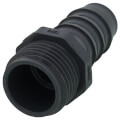
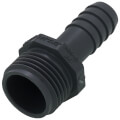
- Male Threaded (MPT) Insert Adapters: Male threaded insert adapters pair a barbed insert end with male pipe threads, letting installers connect flexible polyethylene tubing directly into a female-threaded fitting, valve, or pump port. Sizes run from 1/2 inch through 4 inches to match standard polyethylene pipe dimensions. Installers use this style where the connection point already has female threads, such as a pump discharge or a threaded tee. Because the fitting is rigid PVC, it holds thread engagement better than a barbed fitting threaded directly into soft tubing.
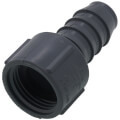
- Female Threaded (FPT) Insert Adapters: Female threaded insert adapters combine a barbed insert end with female pipe threads, used where the mating connection is male-threaded, such as a threaded nipple or male-threaded valve body. Sizes match the same 1/2 inch through 4 inch range used across the insert fitting line. Contractors reach for FPT insert adapters on irrigation manifolds and water-transfer setups where the rest of the system already runs male-threaded fittings. NSF certification on these adapters applies when the job also carries potable water.
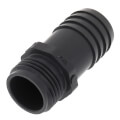
- Insert Couplings: Insert couplings join two lengths of polyethylene tubing or hose without any pipe threads, using a barbed insert on each end secured with hose clamps. Sizes extend up to 6 and 8 inch couplings built for lay-flat irrigation hose in addition to the standard 1/2 inch through 4 inch range. Installers use couplings to repair a damaged section of tubing or to extend a run without introducing a threaded connection point. Skipping the thread interface makes couplings install faster than adapters on irrigation repair jobs where speed matters.
- Reducing Insert Adapters: Reducing insert adapters step down or step up between two different tubing or pipe sizes within the 1/2 inch through 4 inch range, using a different barb size on each end. Installers use reducing adapters when a main line runs a larger polyethylene pipe size than the branch lines feeding individual zones or fixtures. A reducing adapter avoids the need for a separate bushing or double adapter setup at a size transition. NSF-certified reducing adapters are available for jobs that carry potable water alongside irrigation or process lines.
Buying Guide
Picking the right PVC barbed insert hose adapter starts with matching the fitting to the pipe standard already in the ground or in the tank. Confirm whether the polyethylene tubing on the job is rated to ASTM D2104 Schedule 40 or ASTM D2239 SIDR before ordering, since insert fittings are sized around those two pipe standards and a mismatch leads to a loose or overly tight barb fit. Next, match thread gender to the mating connection: use a male-threaded adapter when connecting into a female-threaded port like a pump discharge, and a female-threaded adapter when the mating fitting is already male-threaded. For jobs that just join two lengths of tubing without any threaded connection, a plain insert coupling skips the thread interface entirely and installs faster. Size range matters on larger jobs: standard insert fittings cover 1/2 inch through 4 inch pipe, but lay-flat irrigation hose runs need the larger 6 and 8 inch couplings and adapters built specifically for that hose type. On any job tied into a drinking water supply, confirm the PVC Barbed Insert Hose Adapters carry NSF International certification for potable water use before installing. Finally, plan on securing every barbed connection with a hose clamp rather than relying on the barb alone, since clamp pressure is what keeps the joint from working loose under flow and pressure cycling.
Frequently Asked Questions
What pipe standard do PVC barbed insert adapters fit?
PVC barbed insert hose adapters are sized for polyethylene tubing rated to ASTM D2104 Schedule 40 or ASTM D2239 SIDR. Checking which standard the tubing on the job meets before ordering keeps the barb size matched to the tubing's actual inside diameter. A mismatched barb size leads to a loose connection that can work free under pressure.
Are PVC barbed insert adapters safe for drinking water lines?
Insert fittings that carry NSF International certification are rated for use in potable water systems. Confirming certification before installing matters on any job tied into a drinking water supply rather than assuming every insert fitting qualifies. Non-certified fittings still work fine on irrigation or non-potable water-transfer lines.
What size range do PVC barbed insert adapters cover?
Standard insert fittings cover polyethylene pipe from 1/2 inch through 4 inches. Larger 6 and 8 inch couplings and adapters are built specifically for lay-flat irrigation hose rather than rigid pipe. Picking the right size starts with measuring the tubing's actual inside diameter rather than assuming a nominal size matches.
How does a barbed insert adapter get installed?
Installing a barbed insert adapter starts with pushing the ribbed barb end into the tubing until it seats fully. Securing the joint with a hose clamp keeps the connection from working loose under flow and pressure cycling. No solvent welding or special tools are needed on the barbed side of the fitting.
What's the difference between an MPT and FPT insert adapter?
An MPT insert adapter has male pipe threads on the non-barbed end, made to thread into a female-threaded port such as a pump discharge or valve body. An FPT insert adapter has female pipe threads instead, made to thread onto a male-threaded nipple or fitting. Matching thread gender to the mating connection avoids needing an extra bushing or adapter at the joint.
