




PVC DWV Expansion Joints

 --%3E %3Csvg version='1.1' id='No-RB' xmlns='http://www.w3.org/2000/svg' xmlns:xlink='http://www.w3.org/1999/xlink' x='0px' y='0px' viewBox='0 0 100 100' enable-background='new 0 0 100 100' xml:space='preserve'%3E %3Cpath fill='%23CECECE' d='M79.44,0.95H20.56C9.78,0.95,0.95,9.78,0.95,20.56v58.87c0,10.79,8.82,19.61,19.61,19.61h58.87 c10.79,0,19.61-8.83,19.61-19.61V20.56C99.05,9.78,90.22,0.95,79.44,0.95z M65.38,58.24l9.38,29.58L49.69,69.78L24.5,87.82 l9.34-29.6L8.8,39.6l30.73-0.17c0,0,6.98-19.61,10-28.93c0.54,1.36,9.88,29.1,9.88,29.1H91.2L65.38,58.24z'/%3E %3C/svg%3E)
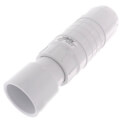

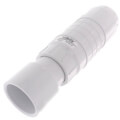

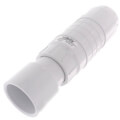
PVC DWV expansion joints absorb the linear movement that plastic drain, waste, and vent piping experiences as it heats and cools, preventing a rigid run from cracking a fitting or pulling a joint apart. A typical expansion joint uses a telescoping slip design with an internal seal, letting one end of the pipe move independently while the joint itself stays fixed to the structure. Codes generally require an expansion joint wherever a long vertical DWV run passes through multiple floors, since PVC's coefficient of thermal expansion is higher than the cast iron or copper it often replaces. Installing one at the right interval keeps a stack from developing stress cracks at the hub of a fitting, particularly in a chase or mechanical shaft where hot water discharge cycles the pipe temperature repeatedly. Getting the spacing and orientation right the first time avoids a costly repair inside a finished wall later.
Subcategories
- 4 Inch PVC DWV Expansion Joints: The 4 inch size is the most common expansion joint used on primary vertical stacks in multi-story residential and light commercial buildings. It handles the movement of a full-diameter waste stack running through several floors before tying into the building drain. Plumbers typically install one per floor transition on a tall stack to keep cumulative expansion from concentrating at a single joint. The slip design allows service access if the joint ever needs to be inspected.
- 3 Inch PVC DWV Expansion Joints: 3 inch expansion joints serve secondary waste branches and smaller vertical runs that still pass through multiple floor penetrations. They're sized to match 3 inch DWV pipe and fittings without requiring a bushing or reducer at the connection. Contractors use them on branch lines feeding into a larger 4 inch stack where the branch itself runs a long vertical distance. The joint's seal accommodates the same thermal cycling as the larger sizes, just at a smaller diameter.
- 2 Inch PVC DWV Expansion Joints: 2 inch expansion joints are used on smaller branch drains and vent lines where a long unsupported run still needs room to move. They fit fixture drain branches that travel a long horizontal or vertical distance before tying into a main stack. Because the diameter is smaller, the joint itself takes up less space in tight chase or ceiling cavities. Plumbers still need to follow the same support-interval spacing as larger sizes to keep the joint from taking on more movement than it's rated for.
- Expansion Joint Repair Kits & Seals: Repair kits and replacement seals let a plumber service an existing expansion joint without cutting out and replacing the entire fitting. A worn or hardened seal is a common source of a slow leak at a joint that otherwise still functions correctly. Replacing just the seal is faster and less invasive than removing a section of stack. Repair kit sizing matches the joint's original diameter, so confirming the pipe size before ordering avoids a mismatched seal.
Buying Guide
Match the expansion joint's diameter exactly to the DWV pipe it's installed on, since a joint that's undersized or oversized for the run won't seal properly even with the correct fittings on either side. Check local plumbing code for the required spacing between joints on a vertical stack before finalizing a takeoff, since requirements vary by jurisdiction and by how many floors the stack passes through. On a retrofit into an existing chase, measure the available vertical clearance first, since PVC DWV Expansion Joints need room to travel as the pipe expands and contracts, not just room to sit in place. Confirm which end of the joint is fixed to the structure and which end is free to slide, since installing it backward defeats the purpose and can put stress on the nearest fitting instead of absorbing it at the joint. For a job with heavy hot-water discharge cycling, like a commercial kitchen or laundry facility, plan for a shorter interval between expansion joints than a typical residential stack would need. Keep a small stock of repair seals on hand if the building has older joints already in service, since a hardened seal is a common callback and having the part on the truck saves a second trip. Order joints in the same batch as the rest of the DWV takeoff to avoid a mismatched lot delaying rough-in.
Frequently Asked Questions
How far apart should PVC DWV expansion joints be spaced on a stack?
Spacing depends on the local plumbing code adopted in the jurisdiction, since requirements vary by pipe diameter and total stack height. A common approach is one joint per floor penetration on a multi-story stack, but the exact interval should be checked against the code section governing thermal expansion before rough-in.
What happens if an expansion joint isn't installed on a long PVC stack?
Without room to expand and contract, the stack can develop stress cracks at the nearest rigid fitting, usually where it's anchored to the structure. Repeated hot-water discharge cycles make this worse over time, since each cycle adds another round of expansion and contraction against a joint that has nowhere to move.
Can a PVC DWV expansion joint be used on a vent stack?
Yes, a vent stack that runs through multiple floors experiences the same thermal cycling as a waste stack and can benefit from an expansion joint at the same intervals. Sizing follows the vent pipe's diameter rather than the waste stack's.
How do I know which end of the joint should be fixed?
The installation instructions printed on the joint or its packaging specify which end is fixed to the structure and which end floats free. Installing it backward removes its ability to absorb movement, so checking this before setting the joint saves a rework later.
Is a PVC DWV expansion joint the same as a slip coupling?
No, a slip coupling is a rigid connector used to join two pipe ends without expansion allowance, while an expansion joint is built specifically to let one end travel as the pipe moves. Using a slip coupling in place of an expansion joint on a long stack removes the movement allowance the run needs.
