




Filters
SORT
Product Availability –
Size –
Review Score –
 --%3E %3Csvg version='1.1' id='Fill' xmlns='http://www.w3.org/2000/svg' xmlns:xlink='http://www.w3.org/1999/xlink' x='0px' y='0px' viewBox='0 0 100 100' enable-background='new 0 0 100 100' xml:space='preserve'%3E %3Cpath fill='%23F15C02' d='M79.44,0.95H20.56C9.78,0.95,0.95,9.78,0.95,20.56v58.87c0,10.79,8.82,19.61,19.61,19.61h58.87 c10.79,0,19.61-8.83,19.61-19.61V20.56C99.05,9.78,90.22,0.95,79.44,0.95z M65.38,58.24l9.38,29.58L49.69,69.78L24.5,87.82 l9.34-29.6L8.8,39.6l30.73-0.17c0,0,6.98-19.61,10-28.93c0.54,1.36,9.88,29.1,9.88,29.1H91.2L65.38,58.24z'/%3E %3C/svg%3E)
Price Range –
PVC DWV Sanitary Tees with Inlets

 --%3E %3Csvg version='1.1' id='No-RB' xmlns='http://www.w3.org/2000/svg' xmlns:xlink='http://www.w3.org/1999/xlink' x='0px' y='0px' viewBox='0 0 100 100' enable-background='new 0 0 100 100' xml:space='preserve'%3E %3Cpath fill='%23CECECE' d='M79.44,0.95H20.56C9.78,0.95,0.95,9.78,0.95,20.56v58.87c0,10.79,8.82,19.61,19.61,19.61h58.87 c10.79,0,19.61-8.83,19.61-19.61V20.56C99.05,9.78,90.22,0.95,79.44,0.95z M65.38,58.24l9.38,29.58L49.69,69.78L24.5,87.82 l9.34-29.6L8.8,39.6l30.73-0.17c0,0,6.98-19.61,10-28.93c0.54,1.36,9.88,29.1,9.88,29.1H91.2L65.38,58.24z'/%3E %3C/svg%3E)
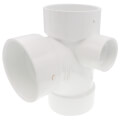

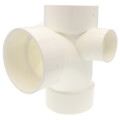
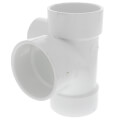
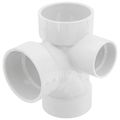
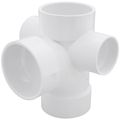
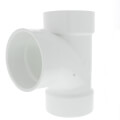

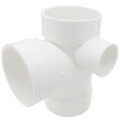

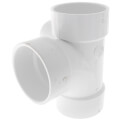
PVC DWV sanitary tees with inlets are drain waste and vent fittings that combine a standard sanitary tee body with one or more additional side inlets for tying in secondary drain lines. Plumbers use them where a single tee alone will not accommodate every line entering a stack, such as combining a fixture branch with a vent or an additional drain without adding a second fitting and extra joints. Fewer joints in a DWV run means fewer potential leak points and a more compact fitting layout inside a wall or floor cavity. Sanitary tees are designed with a gradual sweep on the inlet side to keep waste flowing in the right direction and reduce the chance of clogs at the junction. Sizing and inlet configuration vary by application, so matching the tee to the specific combination of lines entering that point in the system is the main consideration during rough-in.
Subcategories
- Single Inlet Sanitary Tees: Single inlet sanitary tees add one extra side connection to a standard sanitary tee body, giving plumbers a way to tie in a secondary line without a separate fitting. Plumbers use them most often where a vent branch or small fixture drain joins the main line close to an existing tee. Combining connections at a single fitting point reduces the number of joints in that section of the stack. Rough-in layout should account for the added inlet's orientation so the secondary line lines up with its intended fixture or vent run.
- Double Inlet (Cross) Sanitary Tees: Double inlet sanitary tees, sometimes called sanitary crosses, add inlets on both sides of the main tee body for jobs where two secondary lines converge at the same point in the stack. Plumbers reach for these in bathroom groups where multiple fixtures drain into a shared section of pipe. Using one double inlet fitting instead of two single tees keeps the fitting count down and simplifies the layout inside a wall or floor cavity. Confirming that both inlet sizes match the incoming branch lines avoids needing a bushing or reducer at rough-in.
- Reducing Sanitary Tees with Inlets: Reducing sanitary tees with inlets step down to a smaller pipe size on the branch or inlet side while keeping the main run at full size. Plumbers use them when a smaller fixture drain, like a lavatory or vent line, needs to join a larger main stack without a separate reducing coupling. Built-in size transitions mean one fitting handles both the direction change and the size change at that point in the system. Matching the reducing tee's inlet size to the branch line size prevents needing an additional adapter.
Buying Guide
Selecting the right sanitary tee with inlets starts with counting how many lines actually converge at that point in the stack. A single secondary line calls for a basic single inlet tee, while two lines meeting at the same section point toward a double inlet or cross configuration instead of stacking two separate fittings. Pipe size matching comes next. Main run size and each inlet size need to match the connecting lines, and a reducing configuration handles cases where a smaller fixture drain or vent ties into a larger stack without a separate reducing coupling. Orientation matters during rough-in too. Inlets are positioned to keep waste flow moving toward the stack at the correct angle, so confirming the fitting's inlet orientation against the planned layout before gluing avoids a rework. Code requirements around vent and drain connections vary by jurisdiction, so checking local plumbing code before finalizing the fitting selection is worth the extra step, particularly on combination waste and vent arrangements. Contractors choosing PVC DWV Sanitary Tees with Inlets over multiple separate fittings usually do so to cut down on joint count and simplify layout in tight wall or floor cavities. Fewer joints in a DWV run generally means fewer future leak points, which is the main practical benefit driving the choice on remodel and new construction jobs alike.
Frequently Asked Questions
When should I use a sanitary tee with an inlet instead of two separate fittings?
A sanitary tee with an inlet makes sense when two lines need to join the stack at roughly the same point, since it cuts down on joint count and simplifies the layout in a tight cavity. Two separate fittings still work, but add extra joints and take up more space.
What's the difference between a single inlet tee and a sanitary cross?
A single inlet tee adds one extra connection to the main tee body, while a sanitary cross, or double inlet tee, adds connections on both sides for two secondary lines meeting at the same point. Choosing between them comes down to how many lines actually converge at that section of the stack.
Can I use a reducing sanitary tee to tie in a smaller vent line?
Yes. A reducing sanitary tee with inlets steps down the inlet side to match a smaller vent or fixture drain while keeping the main run at full size, which avoids needing a separate reducing coupling at that joint.
Does inlet orientation matter when installing these fittings?
It does. Inlets are angled to keep waste flow moving toward the stack correctly, so checking the fitting's orientation against the planned rough-in layout before gluing prevents having to cut it back out later.
Do local codes affect which sanitary tee configuration I can use?
Requirements around combination waste and vent connections vary by jurisdiction, so checking local plumbing code before finalizing fitting selection is worth doing, especially on any combined waste and vent arrangement.
