




Filters
SORT
Product Availability –
Size –
Review Score –
 --%3E %3Csvg version='1.1' id='Fill' xmlns='http://www.w3.org/2000/svg' xmlns:xlink='http://www.w3.org/1999/xlink' x='0px' y='0px' viewBox='0 0 100 100' enable-background='new 0 0 100 100' xml:space='preserve'%3E %3Cpath fill='%23F15C02' d='M79.44,0.95H20.56C9.78,0.95,0.95,9.78,0.95,20.56v58.87c0,10.79,8.82,19.61,19.61,19.61h58.87 c10.79,0,19.61-8.83,19.61-19.61V20.56C99.05,9.78,90.22,0.95,79.44,0.95z M65.38,58.24l9.38,29.58L49.69,69.78L24.5,87.82 l9.34-29.6L8.8,39.6l30.73-0.17c0,0,6.98-19.61,10-28.93c0.54,1.36,9.88,29.1,9.88,29.1H91.2L65.38,58.24z'/%3E %3C/svg%3E)
Price Range –
PVC DWV Long Sweep 90° Elbow

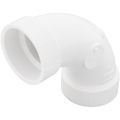

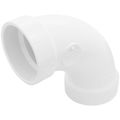
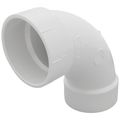
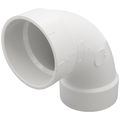
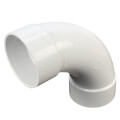

PVC DWV Long Sweep 90° Elbow is a drain, waste, and vent fitting that changes the direction of a horizontal or vertical run using a gradual bend rather than a tight corner. Common sizes run from 1-1/2 inch to 4 inch in a standard hub by hub connection, with larger fabricated versions available up to 10 inches for bigger commercial mains. Manufacturers build these fittings from PVC prized for its light weight, corrosion resistance, and chemical resistance compared to metal drain pipe, and most versions join with solvent cement rather than threading. Plumbers reach for the long sweep style specifically where code calls for a gentler change of direction in a drain line, since a standard short radius 90 can trap solids and slow drainage on horizontal runs. Because the fitting installs the same way as a standard 90 elbow, swapping to the long sweep version doesn't add labor time, only a slightly larger footprint in the wall or floor cavity where it sits.
Subcategories
- 1-1/2 to 2 Inch Elbows: Smaller diameter long sweep elbows in this range connect to individual fixture drains and branch lines feeding into a larger stack. NIBCO's 4807-LT series covers this range in a hub by hub connection that joins with standard solvent cement. Plumbers use this size range on sink, tub, and toilet branch lines where a gradual direction change keeps waste moving without trapping solids at the bend.
- 3 to 4 Inch Elbows: 3 and 4 inch long sweep elbows handle building drains and vertical stacks carrying waste from multiple fixtures at once. The same NIBCO 4807-LT hub by hub design extends into this size range, keeping the connection method consistent across the smaller and larger sizes. Larger diameter runs benefit even more from the gradual sweep, since a sharper turn on a high-volume line increases the chance of a blockage.
- Large Diameter Fabricated Elbows: Fabricated long sweep elbows from 2-1/2 inch to 10 inch, available in both Schedule 40 and Schedule 80 wall thickness, cover commercial and industrial DWV mains beyond standard residential sizing. Spears builds this range with a socket by socket connection rather than the hub by hub style used on smaller fittings. Contractors working on multi-story commercial buildings or large horizontal collector lines typically need this fabricated size range rather than the standard catalog sizes.
Buying Guide
Sizing starts with matching the fitting to the pipe already run rather than the fixture being served, since a branch line and a building drain often share the same nominal pipe size but carry very different volumes. Standard sizes from 1-1/2 inch through 4 inch cover most residential and light commercial work, while larger diameter runs need the fabricated sizes that extend up to 10 inches. Connection style is the next check. Most catalog sizes use a hub by hub connection that joins with solvent cement on both ends, while a street-style version has one spigot end designed to insert directly into the previous fitting's hub. Choosing PVC DWV Long Sweep 90° Elbow fittings over a standard short-radius 90 usually comes down to code requirements on horizontal drain runs, where a gradual direction change reduces the chance of solids catching at the bend. Vertical stacks can often use either style, so check the local plumbing code before defaulting to the long sweep version if space is tight. Wall thickness matters on larger commercial runs. Schedule 40 covers most standard DWV applications, while Schedule 80 adds wall thickness for runs that need extra strength or are exposed to more mechanical stress. Confirm the exact connection type, hub by hub or spigot by hub, against the fittings already in the run before ordering, since mixing connection styles on the same joint doesn't work without an additional adapter.
Frequently Asked Questions
What's the difference between a long sweep elbow and a standard 90 degree elbow?
A long sweep elbow uses a gradual, wide radius bend to change direction, while a standard short-radius 90 turns more sharply in a tighter space. Plumbing code often requires the long sweep style on horizontal drain runs because the gentler bend reduces the chance of solids catching at the turn. Vertical stacks have more flexibility on which style to use, depending on local code.
What sizes does a PVC DWV long sweep elbow come in?
Standard catalog sizes run from 1-1/2 inch through 4 inch in a hub by hub connection, covering most residential and light commercial branch lines and stacks. Larger fabricated versions extend from 2-1/2 inch to 10 inch for commercial and industrial DWV mains. Matching the size to the pipe already run, not just the fixture being served, avoids ordering the wrong diameter.
Can a long sweep elbow use a street connection instead of hub by hub?
Yes, street-style long sweep elbows have one spigot end that inserts directly into the hub of the previous fitting, skipping a separate coupling. Saving a joint like this helps on tight layouts where space is limited. Standard hub by hub versions remain the more common choice on new construction runs with more room to work.
Is Schedule 80 available for larger PVC long sweep elbows?
Yes, fabricated long sweep elbows in the larger diameter range are available in both Schedule 40 and Schedule 80 wall thickness. Schedule 80 adds wall thickness for runs that need extra strength or face more mechanical stress. Most standard residential and light commercial DWV work uses Schedule 40, reserving Schedule 80 for higher-demand applications.
How does a long sweep elbow connect to PVC DWV pipe?
Most long sweep elbows join with solvent cement on a hub by hub connection, the same method used on standard PVC DWV fittings. Fabricated large-diameter versions instead use a socket by socket connection, which still joins with solvent cement. Confirming the connection style before ordering keeps the fitting consistent with the rest of the run.
