




PVC Sch 40 Compression Coupling Nut Wrenches

 --%3E %3Csvg version='1.1' id='No-RB' xmlns='http://www.w3.org/2000/svg' xmlns:xlink='http://www.w3.org/1999/xlink' x='0px' y='0px' viewBox='0 0 100 100' enable-background='new 0 0 100 100' xml:space='preserve'%3E %3Cpath fill='%23CECECE' d='M79.44,0.95H20.56C9.78,0.95,0.95,9.78,0.95,20.56v58.87c0,10.79,8.82,19.61,19.61,19.61h58.87 c10.79,0,19.61-8.83,19.61-19.61V20.56C99.05,9.78,90.22,0.95,79.44,0.95z M65.38,58.24l9.38,29.58L49.69,69.78L24.5,87.82 l9.34-29.6L8.8,39.6l30.73-0.17c0,0,6.98-19.61,10-28.93c0.54,1.36,9.88,29.1,9.88,29.1H91.2L65.38,58.24z'/%3E %3C/svg%3E)

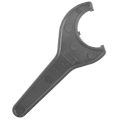
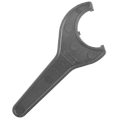
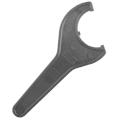
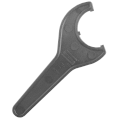
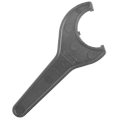
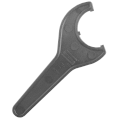


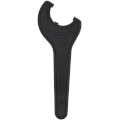
PVC Sch 40 Compression Coupling Nut Wrenches are spanner-style hand tools built to tighten the nut on a PVC Schedule 40 compression coupling during a pipe repair or DWV installation. Spears manufactures the line in sizes to match specific coupling diameters, including a 1-1/2 inch wrench, a 2 inch wrench, and a 6 inch wrench, each engineered to grip its matching nut without slipping. The two-point design gives a plumber push-pull leverage on the nut, which is important since compression couplings rely on even nut torque to seat the gasket and seal the joint. A crew working DWV repairs or retrofit jobs where solvent welding is not practical keeps a matched set of these wrenches on hand rather than improvising with channel locks, since the correct wrench reduces the risk of cracking the nut or under-tightening the seal.
Subcategories
- 1-1/2 Inch Nut Wrench: The 1-1/2 inch PVC Sch 40 Compression Coupling Nut Wrench, sold as the CCW-015, is sized to grip the nut on a 1-1/2 inch compression coupling used in residential and light commercial DWV repairs. Plumbers reach for this size when repairing a cracked section of 1-1/2 inch drain line without cutting back to a clean joint for solvent welding. The wrench's two-point design seats against the nut's flats to apply even torque during tightening. Keeping this size on the truck covers one of the more common drain line diameters found in residential plumbing.
- 2 Inch Nut Wrench: The 2 inch PVC Sch 40 Compression Coupling Nut Wrench, sold as the CCW-020, matches the nut on a 2 inch compression coupling commonly found on larger drain and waste lines. Its sizing follows the same two-point spanner design as the smaller wrenches in the line, giving a plumber consistent leverage regardless of coupling diameter. Commercial plumbers use this size on repair calls involving larger branch or stack lines where a 1-1/2 inch wrench will not fit the nut. Matching wrench size to coupling size prevents rounding off the nut during tightening.
- 6 Inch Nut Wrench: The 6 inch PVC Sch 40 Compression Coupling Nut Wrench, sold as the CCW-060, is built for the largest compression couplings used on main line and industrial drain runs. Its longer handle provides additional leverage needed to properly seat a gasket on a coupling this size. Crews working on larger diameter PVC repairs use this wrench rather than pipe wrenches or channel locks, which can slip or damage the nut. The larger size sees less frequent use than smaller wrenches but is necessary equipment for main line repair work.
Buying Guide
Match the wrench to the coupling nut size being serviced, not the other way around. Compression coupling nuts are sized to the pipe diameter, so a 1-1/2 inch drain repair calls for the 1-1/2 inch wrench, while a larger 2 inch or 6 inch line needs the wrench sized to match. Using an undersized or oversized wrench risks rounding the flats on the nut or applying uneven torque that leaves the gasket improperly seated. Consider how often the trade encounters different coupling sizes before deciding which sizes to stock. Plumbers working mostly residential DWV repairs will use the 1-1/2 inch and 2 inch sizes more often, while techs on commercial or industrial jobs may need the larger 6 inch wrench for main line work. PVC Sch 40 Compression Coupling Nut Wrenches are sized individually rather than sold as one universal tool, so building out a small collection covering the diameters common to the work performed avoids a truck roll back to the shop mid-repair. Pair the wrench with the correct installation technique rather than relying on the tool alone. Compression couplings need the nut drawn up by hand first to seat the gasket evenly, then tightened further with the spanner wrench for a final seal. Over-tightening with excessive force can crack the nut, so a properly sized two-point wrench that grips the full flat surface reduces that risk compared to improvised tools like channel locks or pipe wrenches.
Frequently Asked Questions
What size PVC Sch 40 Compression Coupling Nut Wrench is needed for a 2 inch drain repair?
A 2 inch drain repair calls for the CCW-020 wrench, sized specifically to grip the nut on a 2 inch PVC Schedule 40 compression coupling. Using the correctly sized wrench prevents rounding off the nut's flats during tightening. Matching wrench size to coupling size is the main factor in choosing the right tool for the job.
Can channel locks be used instead of a compression coupling nut wrench?
Channel locks can slip on the rounded profile of a compression coupling nut and often fail to apply even torque across all contact points. A properly sized PVC Sch 40 Compression Coupling Nut Wrench uses a two-point design that grips the nut's flats directly for consistent tightening. Using the correct wrench reduces the risk of cracking the nut or leaving the gasket unevenly seated.
What sizes of PVC Sch 40 Compression Coupling Nut Wrenches are available?
Spears manufactures individual wrenches including a 1-1/2 inch size (CCW-015), a 2 inch size (CCW-020), and a 6 inch size (CCW-060), each matched to a specific compression coupling nut diameter. Plumbers select the wrench that corresponds to the coupling being serviced. Stocking multiple sizes covers the range of drain and waste line diameters encountered on typical repair calls.
Why does a compression coupling need a special nut wrench instead of a standard wrench?
Compression coupling nuts are round with molded flats rather than standard hex shapes, so a standard wrench does not grip them evenly. The two-point spanner design on a PVC Sch 40 Compression Coupling Nut Wrench is built specifically to seat against those flats and apply balanced torque. Even torque across the nut is what seats the gasket properly and creates a leak-tight seal.
When is a compression coupling repair preferred over a solvent-welded fix?
Compression couplings work well when cutting back to a clean joint for solvent welding is not practical, such as tight access repairs or emergency drain line fixes. The compression coupling nut wrench tightens the nut to compress a gasket around the pipe rather than relying on a cured solvent joint. The compression method gets a line back in service quickly without the cure time a solvent weld requires.
