




Filters
SORT
Product Availability –
Size –
Review Score –
 --%3E %3Csvg version='1.1' id='Fill' xmlns='http://www.w3.org/2000/svg' xmlns:xlink='http://www.w3.org/1999/xlink' x='0px' y='0px' viewBox='0 0 100 100' enable-background='new 0 0 100 100' xml:space='preserve'%3E %3Cpath fill='%23F15C02' d='M79.44,0.95H20.56C9.78,0.95,0.95,9.78,0.95,20.56v58.87c0,10.79,8.82,19.61,19.61,19.61h58.87 c10.79,0,19.61-8.83,19.61-19.61V20.56C99.05,9.78,90.22,0.95,79.44,0.95z M65.38,58.24l9.38,29.58L49.69,69.78L24.5,87.82 l9.34-29.6L8.8,39.6l30.73-0.17c0,0,6.98-19.61,10-28.93c0.54,1.36,9.88,29.1,9.88,29.1H91.2L65.38,58.24z'/%3E %3C/svg%3E)
Price Range –
PVC Schedule 40 15° Elbows

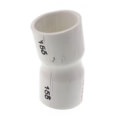
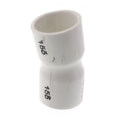
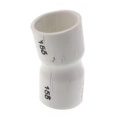
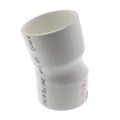
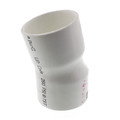
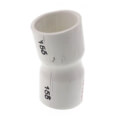
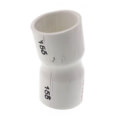
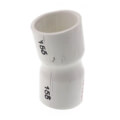
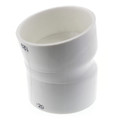

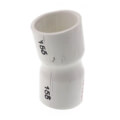
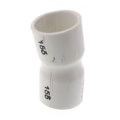
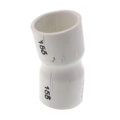
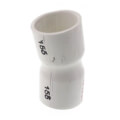
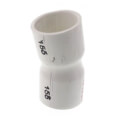
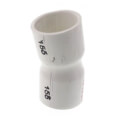
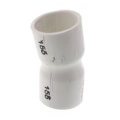
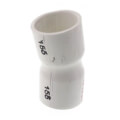
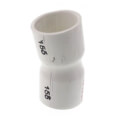
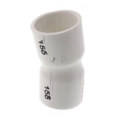

PVC Schedule 40 15° elbows are rigid fittings used to make a gradual direction change in a pressure-rated PVC line without the sharper turn of a 45° or 90° elbow. Schedule 40 refers to the wall thickness of the pipe and fitting, a standard commonly specified for water supply, irrigation, and drain lines. Installers solvent-weld these elbows to Schedule 40 pipe for a permanent, leak-resistant joint. A small bend angle keeps flow turbulence and pressure loss lower than a tighter turn would, which matters on long pressurized runs. Crews often combine two or more 15° elbows to reroute a line around an obstruction in gradual stages rather than one abrupt jog. These fittings show up regularly on irrigation mainlines, pool plumbing, and light industrial pressure systems where the piping path has to work around existing structures or grade changes. Matching the elbow's socket size and schedule to the connected pipe keeps the solvent weld strong and holds the system's pressure rating.
Subcategories
- Small Diameter (1/2 in. to 1 in.): Smaller-diameter 15° elbows are common on residential irrigation zones, drip lines, and small supply branches. Contractors use them to nudge a line's path around a footing or utility run without adding a full 90° turn. Solvent welding on these sizes cures quickly, so crews can move through a run fast. Size selection should always match the schedule and outside diameter of the connected pipe.
- Mid Diameter (1-1/4 in. to 2 in.): Mid-diameter elbows serve larger irrigation mainlines, pool circulation piping, and commercial drain branches. A gradual 15° bend on these sizes helps maintain flow rate through longer horizontal runs. Crews commonly pair them with couplings and tees when a run needs multiple direction changes. These sizes also see use in light industrial process piping carrying non-aggressive fluids.
- Large Diameter (2-1/2 in. to 4 in.): Larger 15° elbows appear on higher-volume irrigation mains, municipal-adjacent drainage, and commercial pressure lines. Because bigger pipe carries more flow, minimizing turbulence at every fitting matters more for maintaining system pressure. These fittings are heavier and require careful primer and cement coverage across the larger socket area. Crews typically stage large-diameter joints with extra cure time before pressurizing the line.
Buying Guide
Choosing the right PVC Schedule 40 15° elbow starts with confirming pipe size and schedule. A fitting sized for the wrong pipe diameter will not seat correctly in the socket, and mixing schedules can leave a joint under-supported for the system's working pressure. Contractors should also think about how many direction changes a run actually needs. A single 15° elbow works well for a minor course correction, but if the layout requires a bigger turn, a 45° or 90° elbow is the more direct choice and uses fewer joints.
Joint prep matters as much as fitting selection. Every socket should be clean, dry, and free of burrs before primer and cement go on, since a rushed weld is one of the more common causes of a pressurized line failing at a fitting. For runs exposed to sunlight or buried in soil with shifting conditions, confirm the fitting is rated for the application; not every Schedule 40 fitting is intended for continuous UV exposure.
Crews working on irrigation or pool systems should keep spare elbows on hand in the sizes already in use on site, since fittings often come from different production runs and small dimensional differences can show up between batches. Buying PVC Schedule 40 15° elbows alongside matching pipe, primer, and cement from the same order reduces the chance of a mismatched joint holding up a job.
Finally, consider the layout drawing before cutting pipe. Mapping out where each direction change happens, and whether a 15° bend is enough, avoids over-ordering fittings or discovering mid-install that a tighter angle was actually needed.
Pressure rating and application (potable water, irrigation, or drain) should guide the final fitting choice, since not every Schedule 40 product line is approved for the same use.
Frequently Asked Questions
When should I use a 15° elbow instead of a 45° elbow?
A 15° elbow is the better choice when a run only needs a slight course correction, such as working around a joist or footing, since it changes direction with less flow disruption than a sharper angle. If the layout needs a more noticeable turn, a 45° or 90° elbow gets there in fewer fittings.
Can these elbows be used on pressurized water lines?
Yes, Schedule 40 PVC fittings are commonly used on pressurized water, irrigation, and pool circulation lines when properly solvent-welded and rated for the system's working pressure. Always confirm the specific product's pressure rating matches the application before installing.
Do I need special cement for Schedule 40 PVC elbows?
A PVC-specific primer and solvent cement rated for the pipe schedule and application (potable water versus general purpose) should be used for a reliable joint. Using the wrong cement type can weaken the weld or fail to meet code for potable water systems.
Can multiple 15° elbows be combined for a bigger turn?
Yes, contractors often stack two or three 15° elbows with short pipe segments between them to reroute a line gradually around an obstruction. This spreads the direction change across several joints instead of concentrating it at one fitting.
Are these fittings rated for outdoor or buried installation?
Many Schedule 40 PVC fittings are suitable for buried or outdoor use, but continuous UV exposure can degrade unprotected PVC over time. Check the specific product listing for outdoor or burial ratings before finalizing the installation plan.
