




PVC Schedule 40 60° Elbows

 --%3E %3Csvg version='1.1' id='No-RB' xmlns='http://www.w3.org/2000/svg' xmlns:xlink='http://www.w3.org/1999/xlink' x='0px' y='0px' viewBox='0 0 100 100' enable-background='new 0 0 100 100' xml:space='preserve'%3E %3Cpath fill='%23CECECE' d='M79.44,0.95H20.56C9.78,0.95,0.95,9.78,0.95,20.56v58.87c0,10.79,8.82,19.61,19.61,19.61h58.87 c10.79,0,19.61-8.83,19.61-19.61V20.56C99.05,9.78,90.22,0.95,79.44,0.95z M65.38,58.24l9.38,29.58L49.69,69.78L24.5,87.82 l9.34-29.6L8.8,39.6l30.73-0.17c0,0,6.98-19.61,10-28.93c0.54,1.36,9.88,29.1,9.88,29.1H91.2L65.38,58.24z'/%3E %3C/svg%3E)

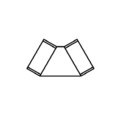
PVC Schedule 40 60 degree elbows are rigid PVC fittings that change pipe direction by 60 degrees, filling the gap between a 45 degree and a 90 degree elbow when a drain, waste, vent, or pressure run needs a shallower directional change than a standard quarter bend allows. Plumbers use these on drain, waste, and vent systems where a 90 degree elbow would create too sharp a turn for proper flow, or where existing framing and slope requirements call for a specific offset angle. Schedule 40 wall thickness makes these fittings suitable for both DWV applications and lower-pressure water or irrigation lines, depending on the specific product line. Because 60 degree elbows are used less often than 45s and 90s, technicians typically stock them in smaller quantities and pull from supply houses as a project's layout calls for the exact angle.
Subcategories
- Solvent Weld PVC 60° Elbows: Solvent weld connections use PVC cement to permanently bond the elbow to adjoining pipe, which is the standard method for both DWV and pressure PVC installations. Plumbers prep the joint with primer before cement on pressure-rated applications, while DWV connections in many jurisdictions allow cement alone. A properly cured solvent weld joint won't be disturbed once set, so alignment needs to be correct before the cement sets.
- DWV-Rated 60° Elbows: DWV-rated elbows are built to the thinner wall specification used for gravity drain, waste, and vent piping rather than pressurized water lines, routing waste and vent lines around obstructions or achieving a specific slope transition where a full 90 degree turn isn't practical. Confirming DWV rating rather than pressure rating on the fitting itself avoids installing an undersized wall thickness on a line that later needs pressure testing.
- Schedule 40 Pressure-Rated 60° Elbows: Pressure-rated Schedule 40 elbows carry a working pressure rating suitable for potable water, irrigation, or industrial fluid handling lines rather than gravity drainage alone. Matching pressure rating and pipe schedule to the rest of the run keeps the joint's burst pressure consistent across the whole line rather than creating a weak point at one fitting. Primer and cement steps matter more on these joints since they see sustained internal pressure rather than gravity flow alone.
Buying Guide
Confirm whether the application calls for a DWV fitting or a pressure-rated fitting before ordering, since PVC Schedule 40 60 degree elbows are manufactured in both wall thicknesses and using the wrong one on a pressurized line risks a burst joint under sustained water pressure. Local plumbing code often dictates which type is acceptable for a given application, so checking the governing code is worth doing before the material list is finalized.
Measure the actual angle needed against the drain or vent run's layout rather than defaulting to a 90 degree elbow out of habit. A 60 degree elbow can reduce the number of fittings needed to route around an obstruction compared to stacking two shallower-angle fittings, which also reduces the number of joints that could eventually leak.
Match pipe diameter and Schedule 40 wall thickness exactly to the rest of the run, since mixing schedules or wall thicknesses at a single joint can create a step in the interior bore that catches debris on drain lines or creates a pressure-rating mismatch on supply lines. Confirm solvent cement and primer compatibility with the specific PVC formulation being joined, since some specialty PVC products require a matched primer and cement system rather than a general-purpose one.
Stock quantity should reflect actual demand, since 60 degree elbows see less frequent use than 45s or 90s on most jobs, and over-ordering ties up truck or shelf space for a fitting that moves slowly.
Frequently Asked Questions
What's the difference between a 60 degree elbow and a 45 degree elbow?
A 60 degree elbow changes pipe direction by a steeper angle than a 45 but a shallower angle than a 90, giving an intermediate option when neither standard angle matches the layout.
Can a DWV-rated elbow be used on a pressurized water line?
DWV-rated fittings use a thinner wall than pressure-rated Schedule 40 fittings and generally shouldn't be substituted on pressurized lines, since they aren't built to hold sustained internal pressure.
Do 60 degree elbows require special cement?
Standard PVC solvent cement works for most 60 degree elbows, though matching cement and primer to the specific PVC formulation, especially on specialty or high-temperature-rated products, keeps the joint properly bonded.
Why would a 60 degree elbow be chosen over two 45 degree elbows to reach the same angle?
Using one 60 degree elbow instead of stacking two 45s reduces the number of joints in the run, which lowers the number of potential leak points and simplifies layout.
Is local code a factor in choosing DWV versus pressure-rated PVC fittings?
Local plumbing code often specifies which wall thickness and fitting type is acceptable for a given drain, waste, vent, or supply application, so checking code requirements before ordering avoids a failed inspection.
