




Filters
SORT
Product Availability –
Size –
Review Score –
 --%3E %3Csvg version='1.1' id='Fill' xmlns='http://www.w3.org/2000/svg' xmlns:xlink='http://www.w3.org/1999/xlink' x='0px' y='0px' viewBox='0 0 100 100' enable-background='new 0 0 100 100' xml:space='preserve'%3E %3Cpath fill='%23F15C02' d='M79.44,0.95H20.56C9.78,0.95,0.95,9.78,0.95,20.56v58.87c0,10.79,8.82,19.61,19.61,19.61h58.87 c10.79,0,19.61-8.83,19.61-19.61V20.56C99.05,9.78,90.22,0.95,79.44,0.95z M65.38,58.24l9.38,29.58L49.69,69.78L24.5,87.82 l9.34-29.6L8.8,39.6l30.73-0.17c0,0,6.98-19.61,10-28.93c0.54,1.36,9.88,29.1,9.88,29.1H91.2L65.38,58.24z'/%3E %3C/svg%3E)
PVC Schedule 40 Transition Tees

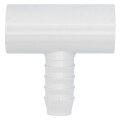

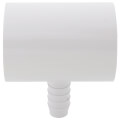
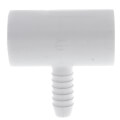
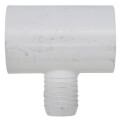

PVC Schedule 40 transition tees are branch fittings that join plastic pipe runs to a threaded metal connection at a third port. Each tee is molded from PVC Type I cell classification 12454 material conforming to ASTM D 1784, giving it consistent wall strength for pressure applications. A typical layout uses socket connections on two ends for solvent-welded PVC pipe and a female iron pipe thread on the branch, so a valve, gauge, or metal nipple can thread directly into the run without a separate adapter. That combination matters on jobs where a plastic distribution line needs a metal takeoff point, since it removes a coupling from the assembly and cuts down on potential leak paths. Crews working potable water, irrigation, or drain and waste systems reach for these tees whenever a threaded metal component has to tie into an otherwise all-plastic PVC line.
Subcategories
- Socket x Socket x FPT Transition Tees: This configuration solvent-welds to PVC pipe on the run and offers a female iron pipe thread on the branch. Plumbers use it to add a threaded valve or gauge port into a straight PVC line. The FPT outlet accepts standard NPT male fittings without extra adapters. It is the most common transition tee style stocked for Schedule 40 systems.
- Reducing Transition Tees: A reducing tee steps the branch or run down to a smaller pipe size while still transitioning to a threaded connection. Installers rely on these when a smaller metal accessory, such as a pressure switch, needs to tie into a larger-diameter PVC main. The reduction is molded into the fitting body rather than requiring a bushing. This keeps the joint count low on tighter retrofit runs.
- Potable Water Rated Transition Tees: These tees are NSF-certified for potable water service and manufactured to ASTM D 2466 standards for injection-molded PVC Schedule 40 fittings. Well and municipal water crews use them where a metal pressure tank fitting or threaded gauge must connect into a PVC supply line. Certification marks are molded directly into the fitting body. Rated temperature range runs from 32 to 140 degrees Fahrenheit.
- O-Ring Sealed Transition Tees: Some transition tees use a Buna-N, EPDM, or Viton O-ring at the threaded joint instead of relying on thread sealant alone. This style suits applications where the threaded connection may need to be disassembled for service, such as a removable metal valve. The elastomer seal accommodates minor thread wear over repeated cycles. Installers still apply thread sealant per the fitting manufacturer's instructions on the metal side.
Buying Guide
Start with the port configuration. Confirm which two ports need to solvent-weld to PVC pipe and which single port needs the female iron pipe thread, since transition tees are directional and not every layout matches a straight run-through design. Next, match pipe size on the socket ends to the existing PVC line; a reducing transition tee is the better call when the branch needs to be a different diameter than the main run rather than adding a separate bushing. Pressure and temperature rating come next. Standard Schedule 40 PVC Schedule 40 Transition Tees are rated for water service between 32 and 140 degrees Fahrenheit, and pressure capacity drops as temperature rises, so anything running warmer fluid or compressed air needs a rating check against the specific size before ordering. For potable water or well systems, confirm the fitting carries NSF certification and meets ASTM D 2466, since not every transition tee on the market is rated for drinking water. If the threaded joint will see repeated disassembly, choose an O-ring sealed version instead of a straight-thread design so the seal survives multiple service visits without cracking the plastic hub. Always prime and solvent cement the socket joints per the fitting manufacturer's instructions, and use thread sealant rated for the metal fitting going into the FPT port.
Frequently Asked Questions
What is a PVC Schedule 40 transition tee used for?
A transition tee lets a threaded metal fitting connect into an otherwise solvent-welded PVC pipe run. Two ports accept PVC pipe with primer and cement, while the third port carries a female iron pipe thread for a valve, gauge, or metal nipple. Plumbing, irrigation, and drain systems use these tees whenever a metal component needs to join a plastic line.
Are these tees rated for drinking water?
Versions manufactured to ASTM D 2466 and certified by NSF International are rated for potable water service. Certification marks are molded into the fitting body, so checking for that marking before installation is the quickest way to confirm suitability. Not every transition tee on the market carries this certification, so it is worth checking before use on a water supply line.
What temperature range can these fittings handle?
Standard PVC Schedule 40 Transition Tees are rated for service between 32 and 140 degrees Fahrenheit. Pressure capacity decreases as temperature rises toward the upper end of that range. Applications running hotter fluid need a fitting rated for those conditions rather than standard PVC.
Do these tees need an O-ring at the threaded connection?
A straight-thread transition tee works fine for permanent connections sealed with thread sealant. An O-ring sealed version is the better choice when the threaded fitting will be removed for service more than once, since the elastomer seal holds up to repeated disassembly better than thread sealant alone. Either style still requires proper thread sealant on the metal side.
Can a reducing transition tee replace a bushing and standard tee combination?
Yes, a reducing transition tee molds the size step directly into the fitting body, combining what would otherwise be a separate tee and bushing into one part. That reduces the number of joints in the assembly, which lowers the number of potential leak points. It is a common choice on retrofit work where the branch size differs from the main run.
