




Poly-Washers


 --%3E %3Csvg version='1.1' id='Fill' xmlns='http://www.w3.org/2000/svg' xmlns:xlink='http://www.w3.org/1999/xlink' x='0px' y='0px' viewBox='0 0 100 100' enable-background='new 0 0 100 100' xml:space='preserve'%3E %3Cpath fill='%23F15C02' d='M79.44,0.95H20.56C9.78,0.95,0.95,9.78,0.95,20.56v58.87c0,10.79,8.82,19.61,19.61,19.61h58.87 c10.79,0,19.61-8.83,19.61-19.61V20.56C99.05,9.78,90.22,0.95,79.44,0.95z M65.38,58.24l9.38,29.58L49.69,69.78L24.5,87.82 l9.34-29.6L8.8,39.6l30.73-0.17c0,0,6.98-19.61,10-28.93c0.54,1.36,9.88,29.1,9.88,29.1H91.2L65.38,58.24z'/%3E %3C/svg%3E)



 --%3E %3Csvg version='1.1' id='No-RB' xmlns='http://www.w3.org/2000/svg' xmlns:xlink='http://www.w3.org/1999/xlink' x='0px' y='0px' viewBox='0 0 100 100' enable-background='new 0 0 100 100' xml:space='preserve'%3E %3Cpath fill='%23CECECE' d='M79.44,0.95H20.56C9.78,0.95,0.95,9.78,0.95,20.56v58.87c0,10.79,8.82,19.61,19.61,19.61h58.87 c10.79,0,19.61-8.83,19.61-19.61V20.56C99.05,9.78,90.22,0.95,79.44,0.95z M65.38,58.24l9.38,29.58L49.69,69.78L24.5,87.82 l9.34-29.6L8.8,39.6l30.73-0.17c0,0,6.98-19.61,10-28.93c0.54,1.36,9.88,29.1,9.88,29.1H91.2L65.38,58.24z'/%3E %3C/svg%3E)

 --%3E %3Csvg version='1.1' id='With-RB' xmlns='http://www.w3.org/2000/svg' xmlns:xlink='http://www.w3.org/1999/xlink' x='0px' y='0px' viewBox='0 0 100 100' enable-background='new 0 0 100 100' xml:space='preserve'%3E %3Cpath fill='%23FBC8B4' d='M79.44,0.95H20.56C9.78,0.95,0.95,9.78,0.95,20.56v58.87c0,10.79,8.82,19.61,19.61,19.61h58.87 c10.79,0,19.61-8.83,19.61-19.61V20.56C99.05,9.78,90.22,0.95,79.44,0.95z M65.38,58.24l9.38,29.58L49.69,69.78L24.5,87.82 l9.34-29.6L8.8,39.6l30.73-0.17c0,0,6.98-19.61,10-28.93c0.54,1.36,9.88,29.1,9.88,29.1H91.2L65.38,58.24z'/%3E %3C/svg%3E)

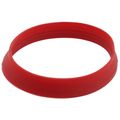
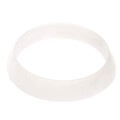
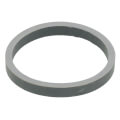
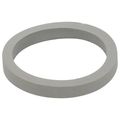
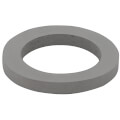

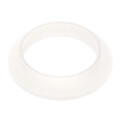




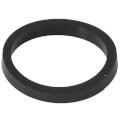

Poly-washers are flat plastic washers used in plumbing connections to create a seal between two mating surfaces, commonly found on slip joint fittings, faucet supply connections, and other threaded or compression fittings. Made from a durable plastic rather than rubber or metal, poly-washers resist corrosion and hold up well in wet environments where a metal washer might eventually rust or a rubber washer could degrade over time. They're a small but frequently replaced part in plumbing repair work, since a worn or cracked poly-washer is a common source of a slow drip at a slip joint or supply line connection. Sizes vary to match the fitting they're installed on, from small faucet supply connections to larger drain trap slip joints. Plumbers keep an assortment of poly-washer sizes on hand for routine repair calls, since matching the exact size to the fitting is what keeps the connection watertight.
Subcategories
- Slip Joint Poly-Washers: Slip joint poly-washers seal the connection between drain trap and tailpiece fittings under a sink, where a slight misalignment or worn washer is a frequent cause of a leak at the trap. Replacing the washer alone often resolves a drip without needing to replace the entire trap assembly.
- Faucet & Supply Line Poly-Washers: Faucet and supply line poly-washers seal smaller threaded connections at a faucet base or supply line fitting. Correct sizing matters here since these connections are typically under constant water pressure rather than gravity drainage.
- Poly-Washer Assortments: Assortments bundle multiple common sizes together, giving a plumber a range of poly-washers on hand for varied repair calls without needing to stock each size separately. These are a practical option for a service truck handling a mix of job types.
Buying Guide
Matching poly-washer size exactly to the fitting is the most important factor in a leak-free repair, since a washer that's slightly too large or small won't seat properly and can leave a persistent drip even after reassembly.
Application matters when choosing between a slip joint washer and a supply line washer, since drain connections and pressurized supply connections have different sealing demands. Using a washer designed for the specific connection type gives a more reliable seal than a generic substitute.
Poly-washers generally outperform rubber washers in wet, corrosive environments since they don't degrade or lose flexibility as a rubber washer can over time, though a plumber should confirm the specific fitting manufacturer's recommended washer material where compatibility matters.
Keeping an assortment of common poly-washer sizes on a service truck reduces the chance of a return trip for a mismatched part, especially on routine slip joint and supply line repair calls where the exact fitting size isn't known ahead of time.
Inspecting the mating surfaces of a fitting before installing a new poly-washer is worth the extra minute, since a cracked or corroded fitting surface can prevent even a correctly sized new washer from sealing properly.
Frequently Asked Questions
What's the difference between a poly-washer and a rubber washer?
Poly-washers are made from a durable plastic that resists corrosion and holds up well in wet environments, while rubber washers can degrade or lose flexibility over time. Both are used in similar plumbing connections, with material choice often coming down to the specific fitting manufacturer's recommendation.
How does a plumber know what size poly-washer a fitting needs?
Matching the washer to the fitting's connection size, typically measured by the pipe or fitting diameter it's sealing against, is the standard approach. Removing the old washer and comparing it directly to a new one before installation helps confirm a correct match.
Can a poly-washer be reused after disassembling a slip joint connection?
A poly-washer can sometimes be reused if it's still in good condition, but a cracked, flattened, or deformed washer should be replaced rather than reinstalled, since a compromised washer is unlikely to seal properly a second time.
Why does a slip joint connection keep leaking even after replacing the poly-washer?
A continued leak after replacement often points to a mismatched washer size, an over-tightened or under-tightened connection, or a damaged mating surface on the fitting itself. Checking all three before assuming the washer itself is defective helps isolate the actual cause.
Are poly-washers used only on drain connections?
Poly-washers appear on both drain-side slip joint connections and pressurized supply line or faucet connections, though the specific washer design can differ between the two applications. Confirming the washer is rated for the connection type being repaired is an important step before installation.
