




Filters
SORT
Product Availability –
Review Score –
 --%3E %3Csvg version='1.1' id='Fill' xmlns='http://www.w3.org/2000/svg' xmlns:xlink='http://www.w3.org/1999/xlink' x='0px' y='0px' viewBox='0 0 100 100' enable-background='new 0 0 100 100' xml:space='preserve'%3E %3Cpath fill='%23F15C02' d='M79.44,0.95H20.56C9.78,0.95,0.95,9.78,0.95,20.56v58.87c0,10.79,8.82,19.61,19.61,19.61h58.87 c10.79,0,19.61-8.83,19.61-19.61V20.56C99.05,9.78,90.22,0.95,79.44,0.95z M65.38,58.24l9.38,29.58L49.69,69.78L24.5,87.82 l9.34-29.6L8.8,39.6l30.73-0.17c0,0,6.98-19.61,10-28.93c0.54,1.36,9.88,29.1,9.88,29.1H91.2L65.38,58.24z'/%3E %3C/svg%3E)
 --%3E %3Csvg version='1.1' id='With-RB' xmlns='http://www.w3.org/2000/svg' xmlns:xlink='http://www.w3.org/1999/xlink' x='0px' y='0px' viewBox='0 0 100 100' enable-background='new 0 0 100 100' xml:space='preserve'%3E %3Cpath fill='%23FBC8B4' d='M79.44,0.95H20.56C9.78,0.95,0.95,9.78,0.95,20.56v58.87c0,10.79,8.82,19.61,19.61,19.61h58.87 c10.79,0,19.61-8.83,19.61-19.61V20.56C99.05,9.78,90.22,0.95,79.44,0.95z M65.38,58.24l9.38,29.58L49.69,69.78L24.5,87.82 l9.34-29.6L8.8,39.6l30.73-0.17c0,0,6.98-19.61,10-28.93c0.54,1.36,9.88,29.1,9.88,29.1H91.2L65.38,58.24z'/%3E %3C/svg%3E)
Price Range –
Rheem Temperature Sensors


 --%3E %3Csvg version='1.1' id='No-RB' xmlns='http://www.w3.org/2000/svg' xmlns:xlink='http://www.w3.org/1999/xlink' x='0px' y='0px' viewBox='0 0 100 100' enable-background='new 0 0 100 100' xml:space='preserve'%3E %3Cpath fill='%23CECECE' d='M79.44,0.95H20.56C9.78,0.95,0.95,9.78,0.95,20.56v58.87c0,10.79,8.82,19.61,19.61,19.61h58.87 c10.79,0,19.61-8.83,19.61-19.61V20.56C99.05,9.78,90.22,0.95,79.44,0.95z M65.38,58.24l9.38,29.58L49.69,69.78L24.5,87.82 l9.34-29.6L8.8,39.6l30.73-0.17c0,0,6.98-19.61,10-28.93c0.54,1.36,9.88,29.1,9.88,29.1H91.2L65.38,58.24z'/%3E %3C/svg%3E)
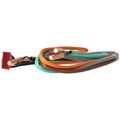
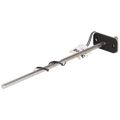
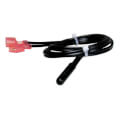
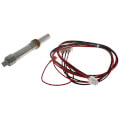

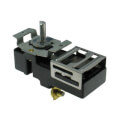
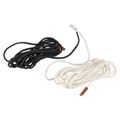
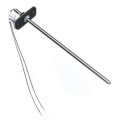
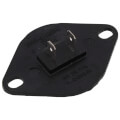

Rheem temperature sensors monitor water temperature inside Rheem water heaters and tankless units, feeding real-time readings to the control board so it can regulate burner or element cycling and maintain the set temperature. Most of these sensors are thermistors, which change electrical resistance as temperature changes, giving the control board a continuous signal rather than a simple on-off switch point. A failed or drifting sensor can cause a water heater to run hotter or colder than its thermostat setting, cycle erratically, or in some cases trigger a fault code that shuts the unit down as a safety precaution. Sensors are model-specific, since placement, connector type, and resistance curve vary across Rheem's tank and tankless product lines, so matching the replacement sensor to the exact unit matters more than matching it to a general temperature range.
Subcategories
- Tank Water Heater Sensors: Tank sensors monitor stored water temperature and report back to the gas control valve or electric thermostat to cycle the burner or heating element on and off within the set temperature range. Mounting location is typically directly on or near the tank wall at a specific height to read the temperature of the water at that level. A sensor reading incorrectly can cause a tank to run noticeably hotter or colder than its dial setting even though the thermostat itself is functioning.
- Tankless Water Heater Sensors: Tankless sensors track incoming and outgoing water temperature in real time so the control board can modulate burner or element output on the fly as flow rate and inlet temperature change throughout a draw. Because tankless units respond continuously rather than cycling a fixed heating element, accurate sensor readings matter more for tankless output stability than they do on a tank-style unit. Multiple sensors are often used in a single tankless unit to track inlet and outlet temperature separately.
- Sensor Wiring and Connectors: Wiring harnesses and connectors carry the sensor signal to the control board, and a damaged or corroded connector can produce the same symptoms as a failed sensor even when the sensor itself is reading correctly. Checking connector condition before replacing a sensor outright can save an unnecessary parts swap. Connector styles in this category are sized to match specific control board types across Rheem's product lines.
Buying Guide
Start by confirming the exact water heater model and whether it's a tank or tankless unit, since Rheem temperature sensors are not interchangeable across product lines even when they look similar or use a similar connector style. Check the service manual or a parts diagram for the specific sensor location, since some models use more than one sensor and installing a replacement in the wrong position won't resolve the original symptom.
Rule out wiring and connector issues before assuming the sensor itself has failed, since a corroded connector or damaged wire produces the same erratic temperature or fault code symptoms as a bad sensor. A multimeter check of sensor resistance at a known water temperature, compared against the manufacturer's resistance chart for that model, is the most reliable way to confirm whether the sensor or the wiring is at fault.
Order the exact replacement part number rather than a generic thermistor with a similar resistance rating, since small differences in resistance curve or connector shape can cause the control board to misread temperature even if the sensor otherwise appears to fit. Finally, note that some fault codes require a control board reset in addition to a sensor swap before the unit will resume normal operation.
Frequently Asked Questions
What are the symptoms of a failing water heater temperature sensor?
A failing sensor commonly shows up as water running noticeably hotter or colder than the thermostat setting, erratic cycling, or a fault code on units equipped with a diagnostic display.
Are tank and tankless sensors interchangeable?
No, tank and tankless sensors are built for different monitoring roles and connector types, so a sensor pulled from a tank unit won't work correctly, and often won't physically fit, in a tankless unit.
How can a technician tell if the sensor or the wiring is causing a temperature problem?
Checking connector condition and testing sensor resistance with a multimeter against the manufacturer's resistance chart at a known water temperature is the most reliable way to separate a wiring problem from an actual sensor failure.
Why do some tankless water heaters use more than one temperature sensor?
Tankless units often track inlet and outlet temperature separately so the control board can modulate heating output in real time as flow rate and incoming water temperature change during a draw.
Does replacing a temperature sensor always clear a fault code?
Not always. Some fault codes require a control board reset in addition to the sensor replacement before the unit resumes normal operation, so checking the specific fault code's reset procedure is worth doing after the parts swap.
