




Rheem Water Heaters
Rheem water heaters cover the manufacturer's line of tankless equipment carried for both new installations and repair work on existing units. The category includes tankless water heaters themselves along with the replacement parts needed to service tankless and standard Rheem water heaters already in service. Contractors turn to this category both when specifying new Rheem equipment and when sourcing a part number for a unit already installed.
Tankless models heat water on demand rather than storing a heated supply, which changes both the sizing approach and the installation requirements compared with a standard tank-style water heater. Replacement parts, from igniters to heat exchangers, keep an existing Rheem unit running without a full replacement, provided the part matches the specific model it services.

Subcategories
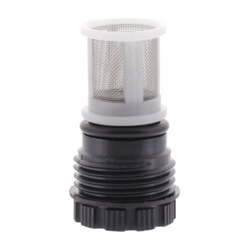
- Rheem Tankless Water Heater Parts: Rheem tankless water heater parts cover the components used to service an existing tankless unit, including igniters, flow sensors, and heat exchangers specific to Rheem's tankless model lines. Contractors use this subcategory when diagnosing a fault code or performing routine maintenance on a Rheem tankless unit already installed. Confirming the exact model and part number before ordering keeps the replacement compatible with the unit being serviced.
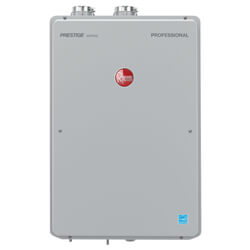
- Rheem Tankless Water Heaters: Rheem tankless water heaters heat water on demand rather than storing it in a tank, drawing gas or electric input only when a fixture calls for hot water. Contractors specify this subcategory for new installations, replacements of an aging tank-style unit, or retrofits where space savings or continuous hot water supply matter more than upfront equipment cost. Sizing a tankless unit to the home's peak flow rate and incoming water temperature keeps it able to meet demand during simultaneous fixture use.
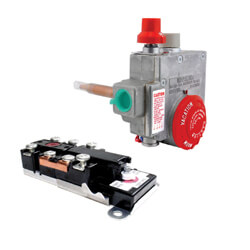
- Rheem Water Heater Parts: Rheem water heater parts cover components for standard tank-style Rheem water heaters, including thermostats, elements, anode rods, and gas control valves. Contractors use this subcategory for routine maintenance and repair work on tank-style units already in service. Matching the part to the water heater's model and serial number keeps the replacement fitting correctly and operating within the unit's original specifications.
Buying Guide
Choosing between a tankless and a tank-style Rheem water heater starts with the home's hot water demand pattern and available space. A tankless unit suits a household that values continuous hot water supply and a limited installation footprint, while a tank-style unit remains a straightforward, lower upfront-cost option for many replacement jobs.
Sizing a tankless water heater depends on peak flow rate, the number of fixtures likely to run hot water at once, and the incoming groundwater temperature, which varies by region and season. Undersizing a tankless unit for the home's peak demand results in reduced flow or temperature drop when multiple fixtures run simultaneously.
Gas-fired tankless units need adequate gas line sizing and venting to match their input rating, which is often higher than a comparable tank-style unit. Confirming the existing gas line and vent can support the new unit's requirements before installation avoids a return trip to correct an undersized line.
When servicing an existing unit, matching a replacement part to the exact model and serial number keeps the repair within the manufacturer's original specifications. A part number that looks similar across model years can still differ in fit or rating, so checking the specific part number against the unit's data plate matters more than matching by general appearance.
Routine maintenance parts, including anode rods and flow sensors, extend the service life of a water heater when replaced on a regular schedule rather than only after a failure. Water quality in a given area affects how quickly components like anode rods wear, so a unit in an area with hard or aggressive water may need more frequent inspection.
Frequently Asked Questions
How do I size a Rheem tankless water heater for my home?
Sizing depends on the home's peak hot water flow rate, the number of fixtures that might run simultaneously, and the incoming groundwater temperature for the installation's location. Working from the highest expected simultaneous demand, rather than average daily use, keeps the unit able to keep up during busy periods.
What parts commonly need replacing on a Rheem tankless unit?
Igniters, flow sensors, and heat exchangers are among the parts serviced most often on tankless units, typically in response to a fault code displayed on the unit itself. Matching the part number to the specific model keeps a repair within the manufacturer's specifications.
Does switching to a tankless water heater require new gas piping?
Many tankless units have a higher gas input rating than the tank-style unit they replace, which can require a larger gas line to deliver adequate flow. Checking the existing line size against the new unit's requirements before installation is a standard part of a tankless conversion.
How often should an anode rod be replaced in a tank-style Rheem water heater?
Anode rod wear depends heavily on local water quality, with harder or more aggressive water accelerating the process, so inspecting the rod periodically rather than following a fixed schedule gives a more accurate picture of when replacement is due. A heavily corroded rod left in place can shorten the tank's overall service life.
Can parts from a different water heater brand be used on a Rheem unit?
Parts built for a Rheem water heater are matched to that unit's specific design and control system, so a part from a different manufacturer will often not fit or function correctly even if it looks similar. Sourcing parts by the Rheem model and part number keeps a repair compatible with the unit.
Resources
Subcategories
- Rheem Tankless Water Heater Parts: Rheem tankless water heater parts cover the components used to service an existing tankless unit, including igniters, flow sensors, and heat exchangers specific to Rheem's tankless model lines. Contractors use this subcategory when diagnosing a fault code or performing routine maintenance on a Rheem tankless unit already installed. Confirming the exact model and part number before ordering keeps the replacement compatible with the unit being serviced.
- Rheem Tankless Water Heaters: Rheem tankless water heaters heat water on demand rather than storing it in a tank, drawing gas or electric input only when a fixture calls for hot water. Contractors specify this subcategory for new installations, replacements of an aging tank-style unit, or retrofits where space savings or continuous hot water supply matter more than upfront equipment cost. Sizing a tankless unit to the home's peak flow rate and incoming water temperature keeps it able to meet demand during simultaneous fixture use.
- Rheem Water Heater Parts: Rheem water heater parts cover components for standard tank-style Rheem water heaters, including thermostats, elements, anode rods, and gas control valves. Contractors use this subcategory for routine maintenance and repair work on tank-style units already in service. Matching the part to the water heater's model and serial number keeps the replacement fitting correctly and operating within the unit's original specifications.
Buying Guide
Choosing between a tankless and a tank-style Rheem water heater starts with the home's hot water demand pattern and available space. A tankless unit suits a household that values continuous hot water supply and a limited installation footprint, while a tank-style unit remains a straightforward, lower upfront-cost option for many replacement jobs.
Sizing a tankless water heater depends on peak flow rate, the number of fixtures likely to run hot water at once, and the incoming groundwater temperature, which varies by region and season. Undersizing a tankless unit for the home's peak demand results in reduced flow or temperature drop when multiple fixtures run simultaneously.
Gas-fired tankless units need adequate gas line sizing and venting to match their input rating, which is often higher than a comparable tank-style unit. Confirming the existing gas line and vent can support the new unit's requirements before installation avoids a return trip to correct an undersized line.
When servicing an existing unit, matching a replacement part to the exact model and serial number keeps the repair within the manufacturer's original specifications. A part number that looks similar across model years can still differ in fit or rating, so checking the specific part number against the unit's data plate matters more than matching by general appearance.
Routine maintenance parts, including anode rods and flow sensors, extend the service life of a water heater when replaced on a regular schedule rather than only after a failure. Water quality in a given area affects how quickly components like anode rods wear, so a unit in an area with hard or aggressive water may need more frequent inspection.
Frequently Asked Questions
How do I size a Rheem tankless water heater for my home?
Sizing depends on the home's peak hot water flow rate, the number of fixtures that might run simultaneously, and the incoming groundwater temperature for the installation's location. Working from the highest expected simultaneous demand, rather than average daily use, keeps the unit able to keep up during busy periods.
What parts commonly need replacing on a Rheem tankless unit?
Igniters, flow sensors, and heat exchangers are among the parts serviced most often on tankless units, typically in response to a fault code displayed on the unit itself. Matching the part number to the specific model keeps a repair within the manufacturer's specifications.
Does switching to a tankless water heater require new gas piping?
Many tankless units have a higher gas input rating than the tank-style unit they replace, which can require a larger gas line to deliver adequate flow. Checking the existing line size against the new unit's requirements before installation is a standard part of a tankless conversion.
How often should an anode rod be replaced in a tank-style Rheem water heater?
Anode rod wear depends heavily on local water quality, with harder or more aggressive water accelerating the process, so inspecting the rod periodically rather than following a fixed schedule gives a more accurate picture of when replacement is due. A heavily corroded rod left in place can shorten the tank's overall service life.
Can parts from a different water heater brand be used on a Rheem unit?
Parts built for a Rheem water heater are matched to that unit's specific design and control system, so a part from a different manufacturer will often not fit or function correctly even if it looks similar. Sourcing parts by the Rheem model and part number keeps a repair compatible with the unit.