




Ridgid Drain Cleaners
Ridgid drain cleaners are mechanical tools built to clear clogs from drain lines. They range from handheld augers for small fixture drains to powered drum and sectional machines for main lines. Plumbers use them to physically break up or retrieve blockages. This approach works on clogs that chemical drain cleaners can't reach. It also suits clogs that would risk damaging older pipe if treated with caustic products.
The category covers a range of tool sizes matched to different drain diameters and job types. These run from a small toilet auger for a single fixture to a water jetting machine capable of clearing grease and scale from larger main lines. Choosing the right tool for the line size and clog type keeps the job efficient and reduces the risk of damaging the pipe or the cable itself.

Subcategories
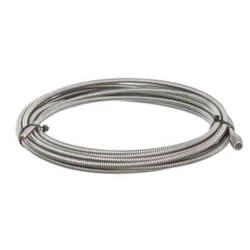
- Ridgid Drain Cleaning Cables & Heads: Drain cleaning cables and heads are consumable, replacement components for drum and sectional drain cleaning machines. They include various cutting head styles for different clog types. Cable diameter and length are matched to the machine and the drain size being serviced. Plumbers typically keep a range of head attachments on hand since a root-cutting head and a standard clog-clearing head serve different situations.
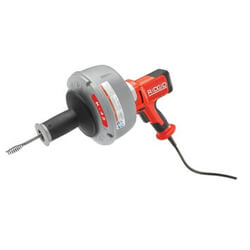
- Ridgid Drain Snakes: Drain snakes are hand-operated augers used for smaller, more accessible clogs, typically in sink or shower drains where a full powered machine isn't necessary. They're compact enough for quick service calls and require less setup time than powered equipment. Contractors often carry one as a first option before moving to a powered machine if the clog doesn't clear.
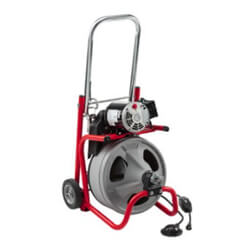
- Ridgid Drum & Sectional Machines: Drum machines hold a single length of cable on a rotating drum, while sectional machines use interchangeable cable sections that can be added or removed to reach varying distances. Sectional machines are generally suited to longer main line runs since sections can be added as needed rather than being limited to a fixed cable length. The choice between drum and sectional style often comes down to the typical line lengths a contractor services.
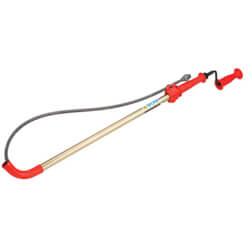
- Ridgid Toilet & Urinal Augers: Toilet and urinal augers are designed with a protective sleeve or bulb to avoid scratching porcelain while clearing clogs specific to those fixtures. The cable length and head design are built for navigating a toilet's trap without extending into the branch line beyond what's needed. This tool is a common first response for a clogged toilet before considering removal of the fixture.
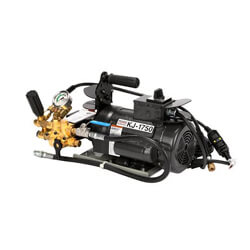
- Ridgid Water Jetting Machines: Water jetting machines use high-pressure water rather than a mechanical cable to clear clogs and scour the interior of a drain line. This is effective on grease buildup, scale, and debris that a cable might push through rather than remove. They're often used for maintenance cleaning of lines prone to recurring buildup, such as kitchen or restaurant drain lines. Jetting requires attention to pressure rating and pipe material compatibility to avoid damaging older or fragile piping.
Buying Guide
Matching the tool to the drain size and clog location is the starting point for choosing drain cleaning equipment. A handheld auger or drain snake is usually sufficient for a single fixture drain. A main line clog typically calls for a drum or sectional machine with enough cable length and cutting power to reach the blockage.
For recurring service work on main lines, sectional machines offer flexibility. Cable sections can be added to reach farther without being limited to the length of cable on a single drum. Drum machines can be quicker to set up and operate for shorter runs where the fixed cable length is enough.
Cable and head selection should match the type of clog expected. A standard clog-clearing head handles routine blockages, while a root-cutting head is built for tree root intrusion in older sewer lines. Keeping a few head styles on hand covers most situations without needing to return to the shop mid-job.
Water jetting is worth considering for lines with recurring grease or scale buildup rather than a one-time blockage. It scours the pipe interior rather than just punching a path through the clog. Pressure rating and pipe material compatibility should be checked before jetting older or more fragile pipe.
Fixture-specific tools like toilet and urinal augers protect porcelain surfaces that a standard cable could scratch. It's worth keeping a dedicated tool for those fixtures rather than using a general-purpose cable on delicate finishes.
Frequently Asked Questions
When should a plumber use a water jetting machine instead of a cable machine?
Water jetting is generally better suited to grease, scale, or debris buildup lining a pipe, since it scours the interior rather than just breaking through a blockage. A cable machine is often quicker for a single, isolated clog.
What's the difference between a drum machine and a sectional machine?
A drum machine holds one continuous cable on a rotating drum, while a sectional machine uses connectable cable sections that can be extended as needed. Sectional machines offer more flexibility for longer or variable-length runs.
Can a standard drain snake damage a toilet?
It can, which is why toilet augers include a protective sleeve to prevent scratching porcelain. A standard cable without that protection risks damaging the fixture's finish.
How is cable head selection determined for a clog?
Head selection depends on the type of blockage. Standard heads work for routine clogs, while specialized heads, such as root-cutting attachments, are built for specific problems like tree root intrusion in sewer lines.
Is water jetting safe for all pipe materials?
Not necessarily. Older or more fragile piping may not tolerate high water pressure well, so pressure rating and pipe condition should be checked before jetting to avoid causing damage.
Resources
Subcategories
- Ridgid Drain Cleaning Cables & Heads: Drain cleaning cables and heads are consumable, replacement components for drum and sectional drain cleaning machines. They include various cutting head styles for different clog types. Cable diameter and length are matched to the machine and the drain size being serviced. Plumbers typically keep a range of head attachments on hand since a root-cutting head and a standard clog-clearing head serve different situations.
- Ridgid Drain Snakes: Drain snakes are hand-operated augers used for smaller, more accessible clogs, typically in sink or shower drains where a full powered machine isn't necessary. They're compact enough for quick service calls and require less setup time than powered equipment. Contractors often carry one as a first option before moving to a powered machine if the clog doesn't clear.
- Ridgid Drum & Sectional Machines: Drum machines hold a single length of cable on a rotating drum, while sectional machines use interchangeable cable sections that can be added or removed to reach varying distances. Sectional machines are generally suited to longer main line runs since sections can be added as needed rather than being limited to a fixed cable length. The choice between drum and sectional style often comes down to the typical line lengths a contractor services.
- Ridgid Toilet & Urinal Augers: Toilet and urinal augers are designed with a protective sleeve or bulb to avoid scratching porcelain while clearing clogs specific to those fixtures. The cable length and head design are built for navigating a toilet's trap without extending into the branch line beyond what's needed. This tool is a common first response for a clogged toilet before considering removal of the fixture.
- Ridgid Water Jetting Machines: Water jetting machines use high-pressure water rather than a mechanical cable to clear clogs and scour the interior of a drain line. This is effective on grease buildup, scale, and debris that a cable might push through rather than remove. They're often used for maintenance cleaning of lines prone to recurring buildup, such as kitchen or restaurant drain lines. Jetting requires attention to pressure rating and pipe material compatibility to avoid damaging older or fragile piping.
Buying Guide
Matching the tool to the drain size and clog location is the starting point for choosing drain cleaning equipment. A handheld auger or drain snake is usually sufficient for a single fixture drain. A main line clog typically calls for a drum or sectional machine with enough cable length and cutting power to reach the blockage.
For recurring service work on main lines, sectional machines offer flexibility. Cable sections can be added to reach farther without being limited to the length of cable on a single drum. Drum machines can be quicker to set up and operate for shorter runs where the fixed cable length is enough.
Cable and head selection should match the type of clog expected. A standard clog-clearing head handles routine blockages, while a root-cutting head is built for tree root intrusion in older sewer lines. Keeping a few head styles on hand covers most situations without needing to return to the shop mid-job.
Water jetting is worth considering for lines with recurring grease or scale buildup rather than a one-time blockage. It scours the pipe interior rather than just punching a path through the clog. Pressure rating and pipe material compatibility should be checked before jetting older or more fragile pipe.
Fixture-specific tools like toilet and urinal augers protect porcelain surfaces that a standard cable could scratch. It's worth keeping a dedicated tool for those fixtures rather than using a general-purpose cable on delicate finishes.
Frequently Asked Questions
When should a plumber use a water jetting machine instead of a cable machine?
Water jetting is generally better suited to grease, scale, or debris buildup lining a pipe, since it scours the interior rather than just breaking through a blockage. A cable machine is often quicker for a single, isolated clog.
What's the difference between a drum machine and a sectional machine?
A drum machine holds one continuous cable on a rotating drum, while a sectional machine uses connectable cable sections that can be extended as needed. Sectional machines offer more flexibility for longer or variable-length runs.
Can a standard drain snake damage a toilet?
It can, which is why toilet augers include a protective sleeve to prevent scratching porcelain. A standard cable without that protection risks damaging the fixture's finish.
How is cable head selection determined for a clog?
Head selection depends on the type of blockage. Standard heads work for routine clogs, while specialized heads, such as root-cutting attachments, are built for specific problems like tree root intrusion in sewer lines.
Is water jetting safe for all pipe materials?
Not necessarily. Older or more fragile piping may not tolerate high water pressure well, so pressure rating and pipe condition should be checked before jetting to avoid causing damage.