




Solenoid Valves
Solenoid valves use an electrically energized coil to open or close a flow path. This gives HVAC and refrigeration systems a way to control liquid or gas flow automatically without a manually operated valve. Contractors work with this category on refrigeration circuits, hydronic zoning setups, and gas control applications. In these applications, a valve needs to respond to an electrical signal from a thermostat, controller, or safety switch.
The category spans multiple actuation types and pressure ranges, from small direct acting valves used in low-flow control lines to larger pilot operated valves built for higher-flow refrigeration and industrial systems. Selecting the right valve type depends on the application's flow rate, working pressure, and the fluid or refrigerant passing through it.

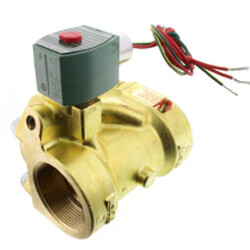
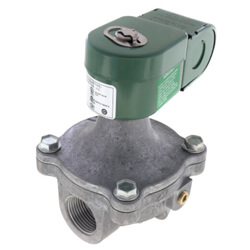


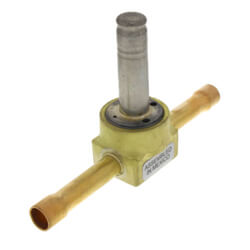

Subcategories
- Direct Acting Solenoid Valves: Direct Acting Solenoid Valves open and close using the coil's magnetic force alone, without relying on line pressure to help move the valve plunger. This design allows them to operate at low or zero differential pressure, making them suitable for applications where flow needs to start from a fully closed, no-pressure state. Contractors use direct acting valves on smaller line sizes where pilot-operated designs aren't practical.
- Hydramotors: Hydramotors are motorized valve actuators used to open and close valves gradually rather than with the near-instant snap action of a standard solenoid. This slower actuation reduces water hammer and mechanical stress in hydronic and larger valve applications. Hydramotor-equipped valves are common in zoning and larger-diameter control valve setups.
- Low Pressure Solenoid Valves: Low Pressure Solenoid Valves are built for applications where line pressure falls below the threshold needed for a standard pilot-operated valve to function reliably. These valves typically use a direct acting or modified pilot design to maintain shutoff and flow control at reduced pressure differentials. They're specified when a system's operating pressure doesn't match a standard solenoid valve's minimum requirement.
- Pilot Operated Solenoid Valves: Pilot Operated Solenoid Valves use line pressure, combined with a small pilot orifice and coil, to open and close a larger main valve disc. This allows the valve to handle higher flow rates and larger line sizes than a direct acting design of similar coil size. These valves require a minimum pressure differential to function properly. They're common on larger refrigeration and process lines where flow demands exceed what a direct acting valve can handle.
- Refrigeration & Industrial Solenoid Valves: Refrigeration & Industrial Solenoid Valves are built with body materials and seal compounds rated for refrigerants and other process fluids. They serve commercial and industrial systems. These valves see use in liquid line, suction line, and hot gas bypass applications within refrigeration circuits. Selecting the correct valve depends on the specific refrigerant type and system pressure it will handle.
- Solenoid Valve Repair Kits and Coils: Solenoid Valve Repair Kits and Coils covers replacement coils, seat discs, and internal rebuild kits for existing solenoid valve bodies rather than full valve replacement. Replacing a coil or internal kit is often a lower-cost repair path when the valve body itself is still in serviceable condition. Kits are matched to specific valve models and voltage ratings to maintain proper operation after rebuild.
Buying Guide
Choosing between a direct acting and pilot operated solenoid valve comes down to the application's pressure differential and flow requirements. Pilot operated valves handle higher flow with a smaller coil by using line pressure to assist valve movement. They need a minimum pressure differential to function. Direct acting valves work at any pressure, including zero, but are generally limited to smaller line sizes and lower flow rates.
Matching the valve's body material and seal compound to the fluid or refrigerant passing through it is critical in refrigeration and industrial applications. An incompatible seal material can degrade quickly under exposure to certain refrigerants or chemicals. Confirming the valve is rated for the specific refrigerant or fluid in use helps avoid premature valve failure.
Coil voltage needs to match the control circuit exactly, whether that's a standard 24V control voltage common in HVAC zoning or a higher voltage used in some industrial applications. Installing a valve with the wrong coil voltage can cause the coil to fail quickly or the valve to not actuate at all.
For zoning and larger hydronic applications, a motorized valve actuator can offer smoother, quieter operation than a standard solenoid's near-instant snap action. This reduces water hammer in the piping system. The tradeoff is a slower response time, so the application's tolerance for gradual versus immediate valve action should factor into the choice.
If a solenoid valve isn't operating correctly, replacing just the coil or an internal repair kit is often the more economical first step. This applies when the valve body shows no signs of damage or contamination. Confirming the valve model number before ordering a repair kit or coil keeps the replacement parts properly matched to the existing valve body.
Frequently Asked Questions
What's the difference between direct acting and pilot operated solenoid valves?
Direct acting valves open and close using only the coil's magnetic force, so they work at any pressure differential including zero. Pilot operated valves use line pressure along with the coil to move a larger main valve disc, which allows higher flow capacity. However, they need a minimum pressure differential to operate correctly.
Why would I choose a valve with a Hydramotor actuator instead of a standard solenoid coil?
A Hydramotor actuator opens and closes a valve gradually rather than instantly, which reduces water hammer and mechanical stress in larger hydronic or zoning applications. Standard solenoid coils actuate almost instantly, which can be preferable in applications where response speed matters more than gradual operation.
Can I use any solenoid valve for refrigerant service?
Not without confirming the valve's body material and seal compound are rated for the specific refrigerant in use. Refrigeration-rated solenoid valves are built with materials designed to hold up under refrigerant exposure, while general-purpose valves may not be compatible with certain refrigerants.
My solenoid valve isn't opening. Is it the coil or the valve body?
A failed coil typically shows no magnetic pull when energized and can often be tested with a multimeter for continuity. If the coil tests fine but the valve still won't open, contamination or damage inside the valve body is a more likely cause. This may call for a repair kit or full valve replacement.
Do solenoid valve coils need to match a specific voltage?
Yes, coil voltage needs to match the control circuit powering it, commonly 24V in HVAC zoning applications but varying by system. Installing a coil rated for a different voltage than the control circuit supplies can cause premature coil failure or prevent the valve from actuating.
Resources
Subcategories
- Direct Acting Solenoid Valves: Direct Acting Solenoid Valves open and close using the coil's magnetic force alone, without relying on line pressure to help move the valve plunger. This design allows them to operate at low or zero differential pressure, making them suitable for applications where flow needs to start from a fully closed, no-pressure state. Contractors use direct acting valves on smaller line sizes where pilot-operated designs aren't practical.
- Hydramotors: Hydramotors are motorized valve actuators used to open and close valves gradually rather than with the near-instant snap action of a standard solenoid. This slower actuation reduces water hammer and mechanical stress in hydronic and larger valve applications. Hydramotor-equipped valves are common in zoning and larger-diameter control valve setups.
- Low Pressure Solenoid Valves: Low Pressure Solenoid Valves are built for applications where line pressure falls below the threshold needed for a standard pilot-operated valve to function reliably. These valves typically use a direct acting or modified pilot design to maintain shutoff and flow control at reduced pressure differentials. They're specified when a system's operating pressure doesn't match a standard solenoid valve's minimum requirement.
- Pilot Operated Solenoid Valves: Pilot Operated Solenoid Valves use line pressure, combined with a small pilot orifice and coil, to open and close a larger main valve disc. This allows the valve to handle higher flow rates and larger line sizes than a direct acting design of similar coil size. These valves require a minimum pressure differential to function properly. They're common on larger refrigeration and process lines where flow demands exceed what a direct acting valve can handle.
- Refrigeration & Industrial Solenoid Valves: Refrigeration & Industrial Solenoid Valves are built with body materials and seal compounds rated for refrigerants and other process fluids. They serve commercial and industrial systems. These valves see use in liquid line, suction line, and hot gas bypass applications within refrigeration circuits. Selecting the correct valve depends on the specific refrigerant type and system pressure it will handle.
- Solenoid Valve Repair Kits and Coils: Solenoid Valve Repair Kits and Coils covers replacement coils, seat discs, and internal rebuild kits for existing solenoid valve bodies rather than full valve replacement. Replacing a coil or internal kit is often a lower-cost repair path when the valve body itself is still in serviceable condition. Kits are matched to specific valve models and voltage ratings to maintain proper operation after rebuild.
Buying Guide
Choosing between a direct acting and pilot operated solenoid valve comes down to the application's pressure differential and flow requirements. Pilot operated valves handle higher flow with a smaller coil by using line pressure to assist valve movement. They need a minimum pressure differential to function. Direct acting valves work at any pressure, including zero, but are generally limited to smaller line sizes and lower flow rates.
Matching the valve's body material and seal compound to the fluid or refrigerant passing through it is critical in refrigeration and industrial applications. An incompatible seal material can degrade quickly under exposure to certain refrigerants or chemicals. Confirming the valve is rated for the specific refrigerant or fluid in use helps avoid premature valve failure.
Coil voltage needs to match the control circuit exactly, whether that's a standard 24V control voltage common in HVAC zoning or a higher voltage used in some industrial applications. Installing a valve with the wrong coil voltage can cause the coil to fail quickly or the valve to not actuate at all.
For zoning and larger hydronic applications, a motorized valve actuator can offer smoother, quieter operation than a standard solenoid's near-instant snap action. This reduces water hammer in the piping system. The tradeoff is a slower response time, so the application's tolerance for gradual versus immediate valve action should factor into the choice.
If a solenoid valve isn't operating correctly, replacing just the coil or an internal repair kit is often the more economical first step. This applies when the valve body shows no signs of damage or contamination. Confirming the valve model number before ordering a repair kit or coil keeps the replacement parts properly matched to the existing valve body.
Frequently Asked Questions
What's the difference between direct acting and pilot operated solenoid valves?
Direct acting valves open and close using only the coil's magnetic force, so they work at any pressure differential including zero. Pilot operated valves use line pressure along with the coil to move a larger main valve disc, which allows higher flow capacity. However, they need a minimum pressure differential to operate correctly.
Why would I choose a valve with a Hydramotor actuator instead of a standard solenoid coil?
A Hydramotor actuator opens and closes a valve gradually rather than instantly, which reduces water hammer and mechanical stress in larger hydronic or zoning applications. Standard solenoid coils actuate almost instantly, which can be preferable in applications where response speed matters more than gradual operation.
Can I use any solenoid valve for refrigerant service?
Not without confirming the valve's body material and seal compound are rated for the specific refrigerant in use. Refrigeration-rated solenoid valves are built with materials designed to hold up under refrigerant exposure, while general-purpose valves may not be compatible with certain refrigerants.
My solenoid valve isn't opening. Is it the coil or the valve body?
A failed coil typically shows no magnetic pull when energized and can often be tested with a multimeter for continuity. If the coil tests fine but the valve still won't open, contamination or damage inside the valve body is a more likely cause. This may call for a repair kit or full valve replacement.
Do solenoid valve coils need to match a specific voltage?
Yes, coil voltage needs to match the control circuit powering it, commonly 24V in HVAC zoning applications but varying by system. Installing a coil rated for a different voltage than the control circuit supplies can cause premature coil failure or prevent the valve from actuating.