




Thermostatic Radiator Valves
Thermostatic radiator valves automatically regulate hot water flow into a radiator based on room temperature, letting each radiator maintain its own setpoint without a central thermostat controlling the whole system. The category covers valves from Caleffi, Castrads, Danfoss, Honeywell Home, and Macon Controls.
Danfoss valves are commonly specified for high-volume commercial and multifamily retrofits, while Castrads valves suit period and designer radiator installations where appearance matters as much as function. Matching valve capacity to the radiator and system pressure keeps flow control accurate room by room.


Subcategories
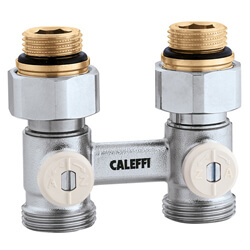
- Caleffi Thermostatic Radiator Valves: Caleffi valves suit techs working on European-style hydronic retrofits and new installs, with brass bodies rated to 150 psi and 212°F and angled, straight, and reverse patterns sized for 3/8" and 1/2" iron pipe.
- Castrads Thermostatic Radiator Valves: Castrads valves are the choice for period and designer radiator projects, including the Windsor line rated to a 10 bar max operating pressure with a 1/2" BSP valve tail and a choice of chrome, satin nickel, and brass finishes for exposed installations.
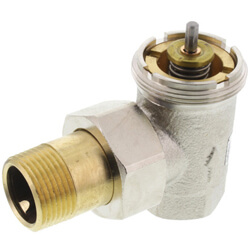
- Danfoss Thermostatic Radiator Valves: Danfoss RA2000 valves cover high-volume commercial and multifamily retrofits, rated to 145 psi static pressure and 250°F with an adjustable dial spanning roughly 45 to 86°F for straightforward room-by-room tuning.
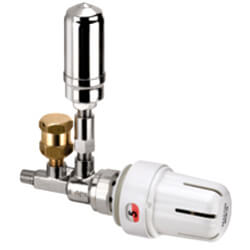
- Honeywell Home Thermostatic Radiator Valves: Honeywell Home valves range from standard-capacity one-pipe steam models to High Capacity valves with T104 actuators, built with nickel-plated bronze bodies and cartridge inserts that let techs service the working parts without pulling the whole valve.
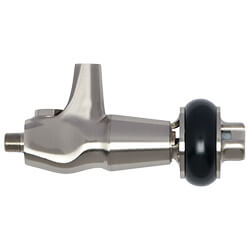
- Macon Controls Thermostatic Radiator Valves: Macon Controls valves target heavier hydronic and low-pressure steam loads, rated to 145 psi water pressure and 15 psi steam with a 50 to 82°F control range, and they're built to ASHRAE 102P and EN 215/1215 standards for commercial specification jobs.
Buying Guide
Start with the system type. Steam systems need valves rated for steam pressure and equipped with the right air vent or vacuum breaker, while hot water systems can use a broader range of standard TRV bodies without those steam-specific components.
Match the connection to what's already in the wall or floor. Sweat, compression, and threaded NPT or BSP connections aren't interchangeable, and swapping connection types mid-retrofit usually means adding a union or adapter fitting that wasn't in the original scope.
Check the valve's Cv rating against the radiator's heating capacity. An undersized valve restricts flow and leaves a large radiator underperforming, while an oversized valve can hunt and overshoot the setpoint in a small room.
Confirm head and actuator compatibility before ordering a bare valve body. Some manufacturers design valve bodies and heads as a matched system, so a universal head won't always thread onto a proprietary body without an adapter.
Factor in visible finish for occupied spaces. Chrome, nickel, and brass finishes matter on exposed radiator valves in living areas, while mechanical rooms and unfinished basements can use standard nickel-plated bodies without the upcharge.
Frequently Asked Questions
Can a thermostatic radiator valve replace a manual valve on the same radiator?
In most cases yes, as long as the pipe size, connection type, and pattern (angled, straight, or reverse) match the existing rough-in. It's worth confirming the valve's pressure and temperature rating against the system before swapping, especially on steam.
Do TRVs work on one-pipe steam systems?
Yes, but they need a steam-rated valve body with a built-in air vent or vacuum breaker rather than a standard hot water valve. One-pipe steam TRVs are typically rated for lower differential pressure than two-pipe hot water models.
What's the difference between the valve body and the thermostatic head?
The valve body mounts in the pipe and controls flow, while the head or actuator senses room temperature and drives the valve's internal plunger. Some are sold as complete sets and others are sold separately, so it's important to check compatibility between brands.
How much energy can a TRV realistically save?
Savings depend heavily on the building and how the system was zoned before, but manufacturers commonly cite reductions in the range of 20 to 30 percent when TRVs let overheated or unoccupied rooms throttle back automatically instead of running at full flow.
Can these valves be installed on fin-tube baseboard or convectors, not just radiators?
Yes, high-capacity TRVs from brands like Honeywell Home and Macon Controls are rated for baseboard, convectors, and fan coils in addition to standing radiators, provided the Cv rating matches the unit's flow requirements.
Resources
Subcategories
- Caleffi Thermostatic Radiator Valves: Caleffi valves suit techs working on European-style hydronic retrofits and new installs, with brass bodies rated to 150 psi and 212°F and angled, straight, and reverse patterns sized for 3/8" and 1/2" iron pipe.
- Castrads Thermostatic Radiator Valves: Castrads valves are the choice for period and designer radiator projects, including the Windsor line rated to a 10 bar max operating pressure with a 1/2" BSP valve tail and a choice of chrome, satin nickel, and brass finishes for exposed installations.
- Danfoss Thermostatic Radiator Valves: Danfoss RA2000 valves cover high-volume commercial and multifamily retrofits, rated to 145 psi static pressure and 250°F with an adjustable dial spanning roughly 45 to 86°F for straightforward room-by-room tuning.
- Honeywell Home Thermostatic Radiator Valves: Honeywell Home valves range from standard-capacity one-pipe steam models to High Capacity valves with T104 actuators, built with nickel-plated bronze bodies and cartridge inserts that let techs service the working parts without pulling the whole valve.
- Macon Controls Thermostatic Radiator Valves: Macon Controls valves target heavier hydronic and low-pressure steam loads, rated to 145 psi water pressure and 15 psi steam with a 50 to 82°F control range, and they're built to ASHRAE 102P and EN 215/1215 standards for commercial specification jobs.
Buying Guide
Start with the system type. Steam systems need valves rated for steam pressure and equipped with the right air vent or vacuum breaker, while hot water systems can use a broader range of standard TRV bodies without those steam-specific components.
Match the connection to what's already in the wall or floor. Sweat, compression, and threaded NPT or BSP connections aren't interchangeable, and swapping connection types mid-retrofit usually means adding a union or adapter fitting that wasn't in the original scope.
Check the valve's Cv rating against the radiator's heating capacity. An undersized valve restricts flow and leaves a large radiator underperforming, while an oversized valve can hunt and overshoot the setpoint in a small room.
Confirm head and actuator compatibility before ordering a bare valve body. Some manufacturers design valve bodies and heads as a matched system, so a universal head won't always thread onto a proprietary body without an adapter.
Factor in visible finish for occupied spaces. Chrome, nickel, and brass finishes matter on exposed radiator valves in living areas, while mechanical rooms and unfinished basements can use standard nickel-plated bodies without the upcharge.
Frequently Asked Questions
Can a thermostatic radiator valve replace a manual valve on the same radiator?
In most cases yes, as long as the pipe size, connection type, and pattern (angled, straight, or reverse) match the existing rough-in. It's worth confirming the valve's pressure and temperature rating against the system before swapping, especially on steam.
Do TRVs work on one-pipe steam systems?
Yes, but they need a steam-rated valve body with a built-in air vent or vacuum breaker rather than a standard hot water valve. One-pipe steam TRVs are typically rated for lower differential pressure than two-pipe hot water models.
What's the difference between the valve body and the thermostatic head?
The valve body mounts in the pipe and controls flow, while the head or actuator senses room temperature and drives the valve's internal plunger. Some are sold as complete sets and others are sold separately, so it's important to check compatibility between brands.
How much energy can a TRV realistically save?
Savings depend heavily on the building and how the system was zoned before, but manufacturers commonly cite reductions in the range of 20 to 30 percent when TRVs let overheated or unoccupied rooms throttle back automatically instead of running at full flow.
Can these valves be installed on fin-tube baseboard or convectors, not just radiators?
Yes, high-capacity TRVs from brands like Honeywell Home and Macon Controls are rated for baseboard, convectors, and fan coils in addition to standing radiators, provided the Cv rating matches the unit's flow requirements.