




Torque Arrestors

 --%3E %3Csvg version='1.1' id='Fill' xmlns='http://www.w3.org/2000/svg' xmlns:xlink='http://www.w3.org/1999/xlink' x='0px' y='0px' viewBox='0 0 100 100' enable-background='new 0 0 100 100' xml:space='preserve'%3E %3Cpath fill='%23F15C02' d='M79.44,0.95H20.56C9.78,0.95,0.95,9.78,0.95,20.56v58.87c0,10.79,8.82,19.61,19.61,19.61h58.87 c10.79,0,19.61-8.83,19.61-19.61V20.56C99.05,9.78,90.22,0.95,79.44,0.95z M65.38,58.24l9.38,29.58L49.69,69.78L24.5,87.82 l9.34-29.6L8.8,39.6l30.73-0.17c0,0,6.98-19.61,10-28.93c0.54,1.36,9.88,29.1,9.88,29.1H91.2L65.38,58.24z'/%3E %3C/svg%3E)

 --%3E %3Csvg version='1.1' id='No-RB' xmlns='http://www.w3.org/2000/svg' xmlns:xlink='http://www.w3.org/1999/xlink' x='0px' y='0px' viewBox='0 0 100 100' enable-background='new 0 0 100 100' xml:space='preserve'%3E %3Cpath fill='%23CECECE' d='M79.44,0.95H20.56C9.78,0.95,0.95,9.78,0.95,20.56v58.87c0,10.79,8.82,19.61,19.61,19.61h58.87 c10.79,0,19.61-8.83,19.61-19.61V20.56C99.05,9.78,90.22,0.95,79.44,0.95z M65.38,58.24l9.38,29.58L49.69,69.78L24.5,87.82 l9.34-29.6L8.8,39.6l30.73-0.17c0,0,6.98-19.61,10-28.93c0.54,1.36,9.88,29.1,9.88,29.1H91.2L65.38,58.24z'/%3E %3C/svg%3E)
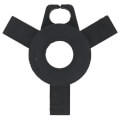
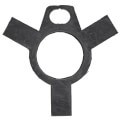

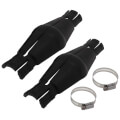
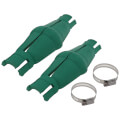
Torque arrestors are mounting devices that hold a compressor, motor, or other rotating equipment in place while absorbing the twisting force the unit generates during startup and shutdown. Installed between the equipment and its mounting base, a torque arrestor limits how far the unit can rock or shift without transmitting that movement into rigid piping or electrical connections. HVAC and refrigeration compressors are the most common application, since a compressor that's free to twist on its spring mounts can stress the refrigerant lines attached to it over time. Most torque arrestors combine a rubber or elastomer bushing with a metal bracket, letting the bushing flex slightly while the bracket keeps the range of motion within a safe limit. Choosing a torque arrestor rated for the equipment's weight and starting torque keeps the mounts doing their job without adding unnecessary strain elsewhere in the system. For a tech replacing a compressor, swapping in a matching torque arrestor protects the new unit the same way the old one protected its predecessor.
Subcategories
- Snubber-Style Torque Arrestors: Snubber-style torque arrestors use a rubber bushing sandwiched between two metal plates to absorb the initial jolt of a compressor starting up. Techs commonly install them alongside spring isolation mounts on rooftop and outdoor condensing units. The snubber limits travel in one direction, which keeps refrigerant lines from taking the brunt of a hard start.
- Adjustable Torque Arrestors: Adjustable torque arrestors let a technician set the amount of play in the mount to match a specific compressor's starting characteristics. They're useful on equipment where the factory spec calls for a tighter or looser tolerance than a fixed-style arrestor provides. Fine-tuning the adjustment during commissioning helps cut down on vibration noise reaching the surrounding structure.
- Compressor Torque Arrestors: Compressor torque arrestors are sized and shaped specifically to mount on refrigeration and HVAC compressors rather than general rotating equipment. They typically bolt directly to the compressor base and the equipment frame, working alongside the spring mounts already supporting the unit's weight. Replacing one during a compressor swap is a routine part of the job on most commercial refrigeration systems.
Buying Guide
Selecting a torque arrestor starts with matching it to the compressor or motor's weight and starting torque, since an arrestor sized for a smaller unit won't control the movement of a larger one. Manufacturers publish weight and torque ratings for their equipment, and matching a replacement arrestor to those figures keeps the mount performing the way it did when the system was new. On a compressor swap, techs generally replace the torque arrestor along with the spring mounts rather than reusing old hardware, since a worn bushing loses its ability to limit travel even if it looks intact. The mounting bracket also needs to fit the specific compressor base or motor frame, so confirming bolt pattern and orientation before ordering avoids a return trip. Outdoor equipment exposed to weather benefits from a torque arrestor built with a bushing material that holds up to temperature swings and UV exposure, since a bushing that hardens or cracks stops absorbing shock the way it should. Vibration and noise complaints from a building's occupants are sometimes traced back to a torque arrestor that's worn out rather than a problem with the compressor itself, so checking the arrestor is a reasonable early step in that kind of service call. Stocking a few common sizes covers most routine compressor replacements without a special order.
Frequently Asked Questions
What does a torque arrestor actually do on a compressor?
A torque arrestor limits how far a compressor can rock or twist on its spring mounts when it starts up or shuts down. Without it, that movement can stress the refrigerant lines and electrical connections attached to the compressor. It works alongside, not instead of, the spring isolation mounts already supporting the unit's weight.
Should a torque arrestor be replaced when swapping a compressor?
Yes, replacing the torque arrestor along with the compressor is standard practice, since a used bushing may have already lost some of its ability to absorb shock. Reusing an old arrestor on a new compressor can let excess movement reach the piping. A fresh set of mounts and arrestor gives the new unit the same protection the original had.
How is a torque arrestor different from a spring mount?
A spring mount supports the compressor's weight and isolates vibration during normal running. A torque arrestor works alongside the springs to limit the twisting motion that happens specifically during startup and shutdown. Both parts work together, and skipping one can shorten the life of the other.
Can a torque arrestor cause vibration noise if it wears out?
Yes, a bushing that's cracked or hardened with age stops controlling movement the way it should, which can transmit vibration into the building structure. A noise complaint traced to worn equipment sometimes turns out to be an arrestor issue rather than a compressor problem. Checking the arrestor's condition is a quick step during that kind of service call.
Are torque arrestors specific to certain compressor brands?
Torque arrestors are generally sized to a compressor's weight and mounting pattern rather than tied to one brand, though the bracket shape needs to match the specific compressor base. Checking the bolt pattern and orientation before ordering prevents a mismatch. A universal-fit style can work across several compressor models that share a similar mounting footprint.
