



Filters
SORT
Product Availability –
Review Score –
 --%3E %3Csvg version='1.1' id='Fill' xmlns='http://www.w3.org/2000/svg' xmlns:xlink='http://www.w3.org/1999/xlink' x='0px' y='0px' viewBox='0 0 100 100' enable-background='new 0 0 100 100' xml:space='preserve'%3E %3Cpath fill='%23F15C02' d='M79.44,0.95H20.56C9.78,0.95,0.95,9.78,0.95,20.56v58.87c0,10.79,8.82,19.61,19.61,19.61h58.87 c10.79,0,19.61-8.83,19.61-19.61V20.56C99.05,9.78,90.22,0.95,79.44,0.95z M65.38,58.24l9.38,29.58L49.69,69.78L24.5,87.82 l9.34-29.6L8.8,39.6l30.73-0.17c0,0,6.98-19.61,10-28.93c0.54,1.36,9.88,29.1,9.88,29.1H91.2L65.38,58.24z'/%3E %3C/svg%3E)
Price Range –
Trane Zone Sensors


 --%3E %3Csvg version='1.1' id='No-RB' xmlns='http://www.w3.org/2000/svg' xmlns:xlink='http://www.w3.org/1999/xlink' x='0px' y='0px' viewBox='0 0 100 100' enable-background='new 0 0 100 100' xml:space='preserve'%3E %3Cpath fill='%23CECECE' d='M79.44,0.95H20.56C9.78,0.95,0.95,9.78,0.95,20.56v58.87c0,10.79,8.82,19.61,19.61,19.61h58.87 c10.79,0,19.61-8.83,19.61-19.61V20.56C99.05,9.78,90.22,0.95,79.44,0.95z M65.38,58.24l9.38,29.58L49.69,69.78L24.5,87.82 l9.34-29.6L8.8,39.6l30.73-0.17c0,0,6.98-19.61,10-28.93c0.54,1.36,9.88,29.1,9.88,29.1H91.2L65.38,58.24z'/%3E %3C/svg%3E)
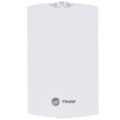

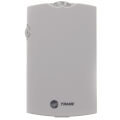
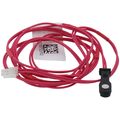

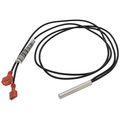
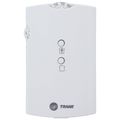

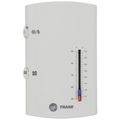

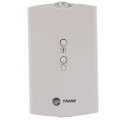
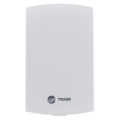
Trane Zone Sensors are OEM temperature sensors that wire back to a Trane zone controller or rooftop unit control board to report space temperature and, on some models, let an occupant adjust setpoint or fan speed locally. The SEN01448 is a basic 10K ohm wired zone sensor that reports temperature only, while the SEN01577 is a programmable zone sensor that adds onboard scheduling at the sensor itself. Other models in the line add features incrementally, like the SEN1447's setpoint dial or the SEN01518's combination of setpoint adjustment and 3 speed fan switch. Matching the right sensor model to the zone controller's wiring and feature requirements keeps zone-level temperature control and occupant comfort adjustments working as the original equipment manufacturer designed them, which matters on commercial rooftop and zoning system service calls where a mismatched sensor can throw false readings or disable functions the controller expects.
Subcategories
- Basic Wired Zone Sensors: Basic wired zone sensors report space temperature back to the zone controller without any local occupant controls. The SEN01448 is a 10K ohm wired zone sensor built as an OEM replacement part for Trane HVAC equipment. Technicians use this tier on zones where temperature control happens entirely at a central thermostat or building automation system, with the sensor serving only as the temperature input point.
- Zone Sensors with Setpoint Dial: Setpoint dial sensors add a manual adjustment dial to the basic 10K ohm temperature sensing function, letting an occupant nudge the zone's target temperature within a range set by the controller. The SEN1447 is a 10K ohm wired zone sensor with a dial. Sensors at this tier fit zones where some local adjustment is useful, like individual offices or exam rooms, without giving the occupant full thermostat control.
- Zone Sensors with Fan Speed Control: Fan speed control sensors add a 3 speed fan switch on top of temperature sensing and setpoint adjustment, letting an occupant control local fan speed directly from the wall sensor. The SEN01518 combines setpoint adjustment with a 3 speed fan switch, and the SEN01517 offers the 3 speed fan switch as its primary added feature. Models at this tier fit zones served by fan coil or terminal unit equipment where local fan speed control improves comfort.
- Programmable Zone Sensors: Programmable zone sensors add onboard scheduling functions at the sensor itself rather than relying entirely on a central building automation schedule. The SEN01577 is Trane's programmable zone sensor, built as an OEM part for Trane HVAC equipment. Sensors at this tier suit zones that need their own occupied and unoccupied schedule independent from, or in addition to, the building's main control schedule.
- Trane-Compatible Aftermarket Sensors: Aftermarket sensors offer a lower-cost replacement path for zones where an exact OEM part isn't necessary or available. The SP155-017 from Peco Controls is a 10K ohm sensor built to be Trane compatible, covering the same basic temperature sensing function as Trane's own 10K ohm wired sensors. Technicians use this option on straightforward temperature-only replacements where the zone doesn't need OEM-specific programming or control features.
Buying Guide
Replacing a zone sensor starts with identifying what features the existing sensor and controller actually use, since installing a sensor with fewer or different features than the original can disable functions the zone controller expects to see. Trane Zone Sensors range from basic 10K ohm temperature-only models like the SEN01448 up through sensors that add a setpoint dial, a 3 speed fan switch, or onboard programming, so pulling the old sensor's model number before ordering a replacement avoids a mismatch. Wiring compatibility matters as much as feature set; a 10K ohm sensor needs to go back into a controller configured for a 10K ohm input, and swapping in a sensor with different electrical characteristics can produce inaccurate temperature readings even if the physical mounting fits. For zones with local fan coil or terminal units, sensors like the SEN01518 and SEN01517 that include a 3 speed fan switch give occupants direct fan control, which is worth confirming against whether the terminal equipment actually supports multi-speed operation. Programmable sensors like the SEN01577 make sense for zones that need an independent schedule from the main building automation system, but add complexity that isn't necessary on a zone that already follows the central schedule. Where an exact OEM match isn't required, Trane-compatible aftermarket sensors like the Peco Controls SP155-017 cover the basic temperature sensing function at a different price point, though OEM sensors stay the safer choice on zones using Trane-specific programmable or multi-function features.
Frequently Asked Questions
What's the difference between a basic and a programmable Trane zone sensor?
A basic sensor like the SEN01448 only reports 10K ohm temperature readings back to the zone controller. A programmable sensor like the SEN01577 adds onboard scheduling at the sensor itself, letting a zone run its own occupied and unoccupied schedule.
Can an aftermarket sensor replace an OEM Trane zone sensor?
Yes, on basic temperature sensing applications. The Peco Controls SP155-017 is a 10K ohm sensor built to be Trane compatible and covers the same core function as Trane's own 10K ohm wired sensors, though OEM sensors are the safer choice for zones using Trane-specific programmable or multi-function features.
What does the setpoint dial on a Trane zone sensor do?
The setpoint dial lets an occupant adjust the zone's target temperature within a range the controller allows. The SEN1447 is a 10K ohm wired zone sensor that includes this dial alongside its basic temperature sensing function.
Which Trane zone sensors include fan speed control?
The SEN01518 and SEN01517 both include a 3 speed fan switch, with the SEN01518 also adding setpoint adjustment. Both models fit zones served by fan coil or terminal units that support multi-speed fan operation.
Does a Trane zone sensor need to match the zone controller's electrical configuration?
Yes, a 10K ohm sensor needs to go back into a controller configured for a 10K ohm input to read temperature accurately. Mismatched electrical characteristics between the sensor and controller can produce inaccurate readings even when the sensor mounts correctly.
