




Uponor PEX Manifolds
Uponor PEX manifolds are the distribution point where a home run PEX plumbing or radiant heating system splits a single supply line into multiple dedicated runs, each feeding one fixture or heating zone directly. Instead of a trunk-and-branch layout with tees along the way, a manifold system routes an individual line from the manifold to each outlet, giving a contractor a central location to shut off, balance, or service any single run without affecting the rest of the system.
Plumbers and hydronic heating installers specify Uponor manifolds because the brand's ProPEX expansion fitting system is one of the most widely used PEX platforms on the market, and keeping the manifold and its connections in the same product family simplifies both the install and any future service call.
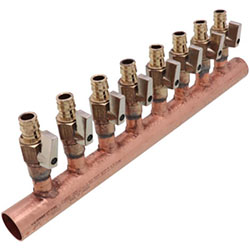
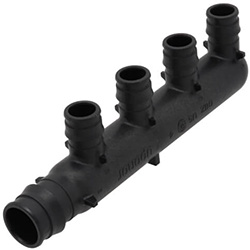

Subcategories
- ProPEX Copper Manifolds: Copper manifolds built for ProPEX expansion connections, giving each port a durable copper stub for expansion fittings on plumbing or heating distribution runs.
- Uponor EP Multi-Port Manifold Tees: Multi-port tees that let a contractor add branch connections directly off a manifold or main line, useful for expanding a system without installing a full second manifold.
Buying Guide
Port count is the starting point for any manifold selection. Count the number of individual runs the system needs, whether that's fixtures on a plumbing manifold or zones on a radiant heat manifold, and choose a manifold with enough ports to cover the layout, since undersizing forces a second manifold and additional main-line piping.
Copper ProPEX manifolds pair directly with Uponor's expansion fitting system, so each port accepts an expanded PEX connection without an adapter. Staying within the same connection platform for the manifold, fittings, and tubing keeps a job's parts list simpler and reduces the number of connection types on site.
Multi-port tees extend a system's reach when a full additional manifold isn't justified. They let a contractor branch an extra line or two off an existing manifold or main run, which is a common solution on retrofit work where adding a whole new manifold location isn't practical.
Manifold placement affects future serviceability as much as the manifold itself. Installing it in an accessible location, such as a mechanical room or an accessible closet, means every fixture or zone valve can be reached for balancing or repair without opening up finished walls.
On radiant heat jobs, manifold sizing should be worked out alongside the loop layout so port count, expected flow, and zone control valves are planned together rather than the manifold being chosen last and the loops forced to fit around it.
Frequently Asked Questions
What is the advantage of a manifold system over a trunk-and-branch layout?
A manifold system runs one dedicated PEX line from the manifold to each fixture or zone, so a contractor can shut off or service a single run without affecting other fixtures on the system, which isn't possible with a shared trunk line feeding multiple branches.
Do Uponor manifolds require Uponor fittings?
Uponor copper manifolds are built for ProPEX expansion connections, so pairing them with ProPEX fittings and tubing keeps the whole run within one compatible system, which simplifies both installation and future repairs.
How many ports does a manifold need?
Port count should match the number of individual runs planned, whether that's fixtures on a plumbing manifold or heating zones on a radiant manifold. It's worth counting the full layout before ordering rather than guessing, since undersizing means adding a second manifold later.
What is a multi-port tee used for?
A multi-port tee lets a contractor add one or more branch connections off an existing manifold or main line, which is useful on retrofit or expansion work where installing an entirely new manifold isn't practical.
Where should a manifold be installed for easy servicing?
A manifold should go in an accessible spot, such as a mechanical room or utility closet, so each port's shutoff or balancing valve can be reached later without opening finished walls.
Resources
Subcategories
- ProPEX Copper Manifolds: Copper manifolds built for ProPEX expansion connections, giving each port a durable copper stub for expansion fittings on plumbing or heating distribution runs.
- Uponor EP Multi-Port Manifold Tees: Multi-port tees that let a contractor add branch connections directly off a manifold or main line, useful for expanding a system without installing a full second manifold.
Buying Guide
Port count is the starting point for any manifold selection. Count the number of individual runs the system needs, whether that's fixtures on a plumbing manifold or zones on a radiant heat manifold, and choose a manifold with enough ports to cover the layout, since undersizing forces a second manifold and additional main-line piping.
Copper ProPEX manifolds pair directly with Uponor's expansion fitting system, so each port accepts an expanded PEX connection without an adapter. Staying within the same connection platform for the manifold, fittings, and tubing keeps a job's parts list simpler and reduces the number of connection types on site.
Multi-port tees extend a system's reach when a full additional manifold isn't justified. They let a contractor branch an extra line or two off an existing manifold or main run, which is a common solution on retrofit work where adding a whole new manifold location isn't practical.
Manifold placement affects future serviceability as much as the manifold itself. Installing it in an accessible location, such as a mechanical room or an accessible closet, means every fixture or zone valve can be reached for balancing or repair without opening up finished walls.
On radiant heat jobs, manifold sizing should be worked out alongside the loop layout so port count, expected flow, and zone control valves are planned together rather than the manifold being chosen last and the loops forced to fit around it.
Frequently Asked Questions
What is the advantage of a manifold system over a trunk-and-branch layout?
A manifold system runs one dedicated PEX line from the manifold to each fixture or zone, so a contractor can shut off or service a single run without affecting other fixtures on the system, which isn't possible with a shared trunk line feeding multiple branches.
Do Uponor manifolds require Uponor fittings?
Uponor copper manifolds are built for ProPEX expansion connections, so pairing them with ProPEX fittings and tubing keeps the whole run within one compatible system, which simplifies both installation and future repairs.
How many ports does a manifold need?
Port count should match the number of individual runs planned, whether that's fixtures on a plumbing manifold or heating zones on a radiant manifold. It's worth counting the full layout before ordering rather than guessing, since undersizing means adding a second manifold later.
What is a multi-port tee used for?
A multi-port tee lets a contractor add one or more branch connections off an existing manifold or main line, which is useful on retrofit or expansion work where installing an entirely new manifold isn't practical.
Where should a manifold be installed for easy servicing?
A manifold should go in an accessible spot, such as a mechanical room or utility closet, so each port's shutoff or balancing valve can be reached later without opening finished walls.