




Watts 340/340X Re-Seating T&P Relief Valves

 --%3E %3Csvg version='1.1' id='No-RB' xmlns='http://www.w3.org/2000/svg' xmlns:xlink='http://www.w3.org/1999/xlink' x='0px' y='0px' viewBox='0 0 100 100' enable-background='new 0 0 100 100' xml:space='preserve'%3E %3Cpath fill='%23CECECE' d='M79.44,0.95H20.56C9.78,0.95,0.95,9.78,0.95,20.56v58.87c0,10.79,8.82,19.61,19.61,19.61h58.87 c10.79,0,19.61-8.83,19.61-19.61V20.56C99.05,9.78,90.22,0.95,79.44,0.95z M65.38,58.24l9.38,29.58L49.69,69.78L24.5,87.82 l9.34-29.6L8.8,39.6l30.73-0.17c0,0,6.98-19.61,10-28.93c0.54,1.36,9.88,29.1,9.88,29.1H91.2L65.38,58.24z'/%3E %3C/svg%3E)
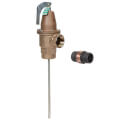

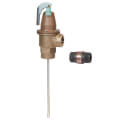
Watts 340/340X Re-Seating T&P Relief Valves are automatic reseating temperature and pressure relief valves used to protect commercial water heaters and hot water storage tanks from excess heat and pressure buildup. Built with a bronze body and stainless steel trim, the line includes the 340X-8 model, which pairs a 1-1/2 inch NPTF connection with an 8 inch stainless steel thermostat, a 150 psi set pressure, and a 210 degree Fahrenheit temperature rating. Re-seating construction lets the valve close again after it relieves pressure, rather than requiring manual reset or replacement after every discharge event. Commercial plumbing contractors install these valves on water heaters, boilers, and storage tanks where code requires a dedicated T&P relief device sized to the tank's rated pressure and temperature. Because a relief valve is a life-safety device protecting against tank rupture from thermal expansion or control failure, matching set pressure and temperature rating to the equipment nameplate is not optional.
Subcategories
- Standard 340 Series Valves: The standard 340 series uses a bronze body and automatic reseating design to relieve excess temperature or pressure on a water heater tank, then close again once conditions return to normal. Plumbing contractors install these on residential and light commercial water heaters where a dedicated T&P valve is required by code. Stainless steel trim resists corrosion from mineral-heavy domestic water. A test lever lets a technician manually trigger the valve during routine service checks.
- 340X-8 Models with Extended Thermostat: The 340X-8 pairs a 1-1/2 inch NPTF connection with an 8 inch stainless steel thermostat, a 150 psi set pressure, and a 210 degree Fahrenheit rating, sized for deeper tank penetration on larger commercial water heaters. Mechanical contractors select the longer thermostat length when the tank's sensing well sits deeper than a standard 340 valve can reach. Tamper-resistant bonnet screws keep building occupants from altering the factory set pressure. A test lever remains accessible for scheduled maintenance checks.
- Flood Sensor Connectivity Models: Models such as the F348470 add flood sensor connectivity with SentryPlus Alert technology to the standard 340X-8 valve, detecting water discharge from the relief line and relaying an alert. Facility managers use this option on commercial properties where an undetected relief discharge could run for an extended period before anyone notices. Core relief valve specifications, including the 1-1/2 inch connection and 210 degree Fahrenheit rating, match the standard 340X-8. Connectivity hardware mounts to the discharge line rather than replacing the relief valve itself.
Buying Guide
Sizing a relief valve starts with the water heater or storage tank's nameplate rating rather than a generic size match. Set pressure and temperature rating need to meet or fall below the tank manufacturer's maximum allowable working pressure and temperature, since an undersized relief setting trips too often while an oversized setting fails to protect the tank at all. Watts 340/340X Re-Seating T&P Relief Valves come in multiple set pressure and temperature combinations, so checking the tank nameplate against the valve's rating before ordering avoids a mismatch.
Next, confirm thermostat length against the tank's sensing well depth. A standard length thermostat that does not reach deep enough into the tank reads ambient temperature near the tank wall instead of the actual water temperature, delaying a response to a real overheat condition. Commercial tanks with deeper wells typically need the longer 8 inch thermostat option.
Connection size and thread type matter for a clean installation. A female NPTF connection needs to match the tank's tapping or an adapter fitting, and inlet size should not be reduced below the tank manufacturer's minimum requirement.
Finally, consider flood sensor connectivity on properties where an undetected discharge would go unnoticed for a long period, such as unattended commercial buildings or multi-tenant properties. Tamper-resistant bonnet screws are worth specifying anywhere building occupants might otherwise adjust a factory-set valve.
Frequently Asked Questions
What does re-seating mean on a Watts 340/340X relief valve?
Re-seating means the valve closes again after it relieves excess temperature or pressure, rather than needing manual reset or replacement after every discharge, and the automatic reseating design is standard across the 340 and 340X series.
What set pressure and temperature does the 340X-8 use?
The 340X-8 carries a 150 psi set pressure and a 210 degree Fahrenheit temperature rating, paired with an 8 inch stainless steel thermostat. Matching these ratings to the water heater's nameplate is required before installation.
When does a job need the longer 8 inch thermostat instead of a standard length?
A longer thermostat reaches deeper into a tank's sensing well, which matters on larger commercial water heaters where a standard length thermostat would not contact the water accurately. The 8 inch thermostat on the 340X-8 is sized for these deeper commercial tank wells.
What is the flood sensor connectivity option on some 340X-8 valves?
Flood sensor connectivity, branded as SentryPlus Alert, detects water discharge from the relief valve's discharge line and relays an alert when the valve releases water. The core relief valve specifications on these models match the standard 340X-8, including the 210 degree Fahrenheit rating.
Why do these valves have tamper-resistant bonnet screws?
Tamper-resistant bonnet screws keep building occupants or unauthorized personnel from adjusting the factory-set pressure and temperature settings on a Watts 340/340X relief valve. Maintaining the factory setting keeps the valve calibrated to the tank's actual rated pressure and temperature.
