




Filters
SORT
Product Availability –
Review Score –
 --%3E %3Csvg version='1.1' id='Fill' xmlns='http://www.w3.org/2000/svg' xmlns:xlink='http://www.w3.org/1999/xlink' x='0px' y='0px' viewBox='0 0 100 100' enable-background='new 0 0 100 100' xml:space='preserve'%3E %3Cpath fill='%23F15C02' d='M79.44,0.95H20.56C9.78,0.95,0.95,9.78,0.95,20.56v58.87c0,10.79,8.82,19.61,19.61,19.61h58.87 c10.79,0,19.61-8.83,19.61-19.61V20.56C99.05,9.78,90.22,0.95,79.44,0.95z M65.38,58.24l9.38,29.58L49.69,69.78L24.5,87.82 l9.34-29.6L8.8,39.6l30.73-0.17c0,0,6.98-19.61,10-28.93c0.54,1.36,9.88,29.1,9.88,29.1H91.2L65.38,58.24z'/%3E %3C/svg%3E)
Watts 374A Pressure Relief Valve

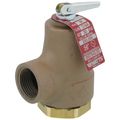


The Watts 374A Pressure Relief Valve is a bronze-body relief valve used on hydronic heating and boiler systems to release excess pressure before it reaches a level that could damage the boiler, piping, or connected components. It opens automatically once system pressure crosses its set point and reseats once pressure drops back to a safe range, functioning as a last line of defense against overpressure rather than a device that's meant to open under normal operating conditions.
Technicians typically size and set this valve to match the specific boiler or system it protects, since a relief valve set too high won't respond in time to prevent damage, while one set too low will relieve pressure during normal operation and waste system water. Confirming the valve's pressure setting and connection size against the system's requirements before installation keeps the safety device matched to the equipment it protects.
Subcategories
- 3/4 Inch Connection: The 3/4 inch connection size is common on smaller residential boilers and hydronic systems, where the piping and expected relief flow don't require a larger valve body.
- 1 Inch Connection: The 1 inch connection size fits mid-size residential and light commercial boilers, offering more relief capacity than the smaller connection size for systems with a larger volume of water to protect.
- 1-1/4 Inch Connection: The 1-1/4 inch connection size is used on larger commercial boilers where a higher potential relief flow rate is needed to bring an overpressure condition under control quickly.
Buying Guide
Match the valve's connection size to the boiler's relief valve outlet, since installing a relief valve smaller than what the boiler manufacturer specifies can limit how quickly the valve relieves pressure during an overpressure event.
Confirm the valve's pressure setting matches the boiler's maximum allowable working pressure, since the Watts 374A Pressure Relief Valve needs to open before system pressure exceeds what the boiler and connected piping are rated to handle.
Check local plumbing and mechanical code requirements for relief valve discharge piping, since most jurisdictions require the discharge line to run to an approved location rather than being capped or left to spray directly into the mechanical room.
Replace a relief valve that weeps or won't reseat cleanly rather than attempting a repair, since a relief valve is a safety device and a valve that doesn't seat properly after opening can waste system water or fail to protect the system on the next overpressure event.
Frequently Asked Questions
What does a pressure relief valve do on a boiler system?
It opens automatically once system pressure crosses its set point, releasing excess pressure before it can damage the boiler or connected piping, then reseats once pressure returns to a safe range.
Why is my relief valve weeping water during normal operation?
A relief valve that weeps under normal conditions is often a sign that system pressure is running close to the valve's set point, or that the valve itself isn't seating properly and needs to be replaced.
How is the correct pressure setting for a relief valve determined?
The setting needs to match the boiler's maximum allowable working pressure, so the valve opens before system pressure exceeds what the boiler and piping are rated to handle.
Where should the discharge line from a relief valve be routed?
Most jurisdictions require the discharge line to run to an approved location rather than being capped or sprayed directly into the mechanical room, so local code should be checked before finishing the installation.
Can a relief valve be repaired instead of replaced?
A relief valve that won't reseat cleanly or continues to weep is typically replaced rather than repaired, since it's a safety device and needs to seat reliably to protect the system.
