



Ball Valves
Ball valves use a rotating ball with a bored hole to open and close a line with a quarter turn, giving a full-flow shutoff that plumbing and mechanical contractors rely on throughout water distribution, radiant heating, and process piping systems. This category spans valves built for PEX, CPVC, and PVC piping systems, connected by crimp, press, solvent weld, or thread depending on the material and installation method in use.
Connection type follows directly from the piping system already in place on a job, since a PEX crimp valve, a PEX press valve, and a solvent weld PVC valve aren't interchangeable without an adapter. Picking a valve that matches both the pipe material and the connection method already established on a job keeps the installation straightforward.



Subcategories
- CPVC Ball Valves: CPVC ball valves solvent weld directly into a CPVC piping system, giving full-flow shutoff on hot and cold water distribution lines rated for CPVC's higher temperature range. Contractors use them anywhere a CPVC system needs a shutoff point, from fixture supply lines to main distribution runs. Matching valve size to pipe diameter keeps the solvent weld joint properly supported.
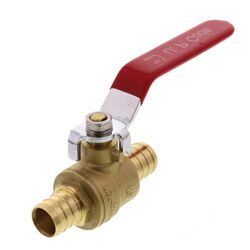
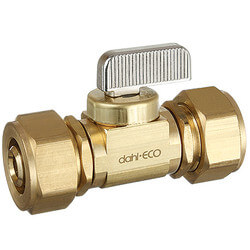
- PEX Crimp Ball Valves: PEX crimp ball valves connect to PEX tubing using a copper crimp ring and a dedicated crimp tool, the traditional PEX connection method still specified on many jobs. Contractors select crimp valves when the rest of a system's connections use the crimp method, keeping tooling consistent across a job. A go or no-go gauge confirms a completed crimp meets the ring's proper compression.
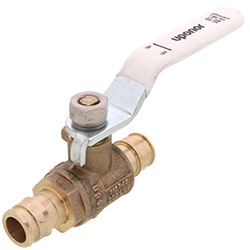
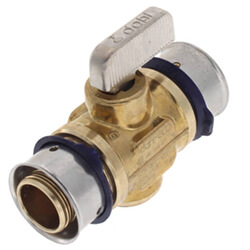
- PEX Press Ball Valves: PEX press ball valves use a press tool and stainless steel sleeve to create the connection, an alternative to crimping that some contractors prefer for its speed and repeatable results. Contractors choose press valves when a job's other connections already use the press method or when working in tight spaces where a press tool maneuvers more easily than a crimp tool. Press connections require a jaw sized to match the valve's tubing diameter.
- PEX-AL-PEX Ball Valves: PEX-AL-PEX ball valves are sized and rated for tubing with an aluminum layer sandwiched between PEX walls, a construction that behaves differently under a standard PEX fitting than plain PEX-A or PEX-B tubing. Contractors use these valves specifically on PEX-AL-PEX radiant heating and plumbing systems. Confirming tubing type before ordering keeps the valve compatible with the pipe on the job.
- PVC Ball Valves: PVC ball valves solvent weld into standard PVC piping systems, providing full-flow shutoff on cold water distribution, irrigation, and drainage applications where PVC is the specified material. Contractors use PVC valves throughout residential and light commercial water systems operating within PVC's standard pressure and temperature range. Solvent welding a PVC valve follows the same primer and cement process as surrounding PVC fittings.
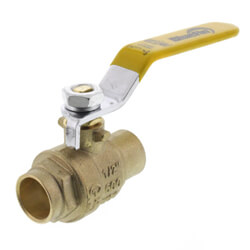
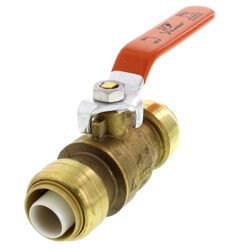
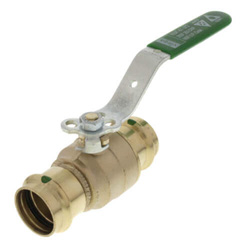
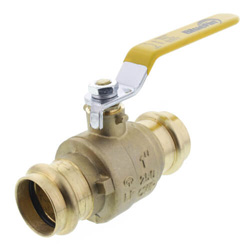
- Press Ball Valves: Brass press ball valves connect to copper tubing using a press tool and sealing O-ring, skipping the torch a soldered valve connection requires. Contractors use press valves on copper water distribution systems where soldering isn't practical, such as occupied spaces or near flammable materials. A properly sized press jaw completes the connection in a single operation.
Buying Guide
Connection method is the first filter when selecting a ball valve for a piping system already in progress. PEX systems split further between crimp and press connections, which use different tools and aren't compatible with each other, so confirming which crimping or pressing tool is already on the job matters before ordering valves.
PEX-AL-PEX systems need valves sized and rated specifically for that tubing's aluminum-layer construction, since a standard PEX valve fitting may not seat correctly against the different wall thickness. Checking tubing type before ordering avoids a valve that doesn't fit the pipe on hand.
CPVC and PVC ball valves solvent weld into the line the same way surrounding fittings do, so matching valve material to pipe material keeps the solvent weld joint reliable. A CPVC valve solvent welded into a PVC line, or the reverse, won't produce a dependable bond.
Full port versus standard port matters for flow-sensitive applications, since a full port valve keeps the bore diameter close to the pipe's inside diameter while a standard port restricts flow somewhat at the valve body. Most residential plumbing and heating applications work fine with either, but a system with tight flow margins benefits from full port valves.
Valve body material and pressure rating should match the system's operating conditions, particularly on radiant heating or hydronic systems that see sustained higher temperatures than typical cold water distribution. Checking a valve's temperature and pressure rating against the system's actual operating range prevents a valve failure under normal service conditions.
Frequently Asked Questions
Can a PEX crimp ball valve be used with a press connection tool?
No, crimp and press connections use different fitting designs and require their own dedicated tools, so a crimp valve won't seal properly with a press tool and the reverse is also true. Confirming which connection system is already used on a job before ordering valves avoids a mismatch.
Are PEX-AL-PEX ball valves different from standard PEX valves?
PEX-AL-PEX valves are built to match that tubing's aluminum-layer wall construction, which differs enough from standard PEX-A or PEX-B that a standard valve fitting may not seat correctly. Checking tubing type before ordering keeps the valve and pipe compatible.
What's the benefit of a full port ball valve over a standard port valve?
A full port valve keeps its internal bore close to the pipe's inside diameter, which minimizes flow restriction and pressure drop through the valve. Standard port valves cost less and work fine for most residential applications where flow margins aren't tight.
Can CPVC ball valves be installed on a PVC line?
Solvent welding CPVC directly to PVC isn't a reliable connection method, since the two materials use different solvent cements rated for their specific plastic. Matching valve material to pipe material throughout a run keeps every solvent weld joint dependable.
How often should ball valves be exercised to keep them working properly?
Turning a ball valve fully open and closed periodically, even when it stays open in normal service, keeps the seals from sticking and confirms the valve still operates smoothly when it's actually needed. Valves that rarely see use, like main shutoffs, benefit from this the most.
Resources

 --%3E %3C!DOCTYPE svg PUBLIC '-//W3C//DTD SVG 1.1//EN' 'http://www.w3.org/Graphics/SVG/1.1/DTD/svg11.dtd'%3E %3Csvg version='1.1' id='Layer_1' xmlns='http://www.w3.org/2000/svg' xmlns:xlink='http://www.w3.org/1999/xlink' x='0px' y='0px' width='90px' height='90px' viewBox='0 0 90 90' enable-background='new 0 0 90 90' xml:space='preserve'%3E %3Crect x='27' y='23' fill='%23FFFFFF' width='43' height='44'/%3E %3Cg%3E %3Cdefs%3E %3Crect id='SVGID_1_' width='90' height='90'/%3E %3C/defs%3E %3CclipPath id='SVGID_2_'%3E %3Cuse xlink:href='%23SVGID_1_' overflow='visible'/%3E %3C/clipPath%3E %3Cpath clip-path='url(%23SVGID_2_)' fill='%234186AD' d='M45,0C20.1,0,0,20.1,0,45c0,24.9,20.1,45,45,45c24.9,0,45-20.1,45-45 C90,20.1,69.9,0,45,0'/%3E %3C/g%3E %3Cpath fill='%23FFFFFF' d='M60.6,47.4l-22.5,14c-0.5,0.3-1,0.399-1.5,0.399s-0.9-0.1-1.4-0.399c-0.9-0.5-1.4-1.4-1.4-2.5v-28 c0-1,0.6-2,1.4-2.5c0.9-0.5,2-0.5,2.9,0.1l22.5,14.1C61.4,43.1,61.9,44,61.9,45S61.4,46.9,60.6,47.4'/%3E %3C/svg%3E)
Subcategories
- CPVC Ball Valves: CPVC ball valves solvent weld directly into a CPVC piping system, giving full-flow shutoff on hot and cold water distribution lines rated for CPVC's higher temperature range. Contractors use them anywhere a CPVC system needs a shutoff point, from fixture supply lines to main distribution runs. Matching valve size to pipe diameter keeps the solvent weld joint properly supported.
- PEX Crimp Ball Valves: PEX crimp ball valves connect to PEX tubing using a copper crimp ring and a dedicated crimp tool, the traditional PEX connection method still specified on many jobs. Contractors select crimp valves when the rest of a system's connections use the crimp method, keeping tooling consistent across a job. A go or no-go gauge confirms a completed crimp meets the ring's proper compression.
- PEX Press Ball Valves: PEX press ball valves use a press tool and stainless steel sleeve to create the connection, an alternative to crimping that some contractors prefer for its speed and repeatable results. Contractors choose press valves when a job's other connections already use the press method or when working in tight spaces where a press tool maneuvers more easily than a crimp tool. Press connections require a jaw sized to match the valve's tubing diameter.
- PEX-AL-PEX Ball Valves: PEX-AL-PEX ball valves are sized and rated for tubing with an aluminum layer sandwiched between PEX walls, a construction that behaves differently under a standard PEX fitting than plain PEX-A or PEX-B tubing. Contractors use these valves specifically on PEX-AL-PEX radiant heating and plumbing systems. Confirming tubing type before ordering keeps the valve compatible with the pipe on the job.
- PVC Ball Valves: PVC ball valves solvent weld into standard PVC piping systems, providing full-flow shutoff on cold water distribution, irrigation, and drainage applications where PVC is the specified material. Contractors use PVC valves throughout residential and light commercial water systems operating within PVC's standard pressure and temperature range. Solvent welding a PVC valve follows the same primer and cement process as surrounding PVC fittings.
- Press Ball Valves: Brass press ball valves connect to copper tubing using a press tool and sealing O-ring, skipping the torch a soldered valve connection requires. Contractors use press valves on copper water distribution systems where soldering isn't practical, such as occupied spaces or near flammable materials. A properly sized press jaw completes the connection in a single operation.
Buying Guide
Connection method is the first filter when selecting a ball valve for a piping system already in progress. PEX systems split further between crimp and press connections, which use different tools and aren't compatible with each other, so confirming which crimping or pressing tool is already on the job matters before ordering valves.
PEX-AL-PEX systems need valves sized and rated specifically for that tubing's aluminum-layer construction, since a standard PEX valve fitting may not seat correctly against the different wall thickness. Checking tubing type before ordering avoids a valve that doesn't fit the pipe on hand.
CPVC and PVC ball valves solvent weld into the line the same way surrounding fittings do, so matching valve material to pipe material keeps the solvent weld joint reliable. A CPVC valve solvent welded into a PVC line, or the reverse, won't produce a dependable bond.
Full port versus standard port matters for flow-sensitive applications, since a full port valve keeps the bore diameter close to the pipe's inside diameter while a standard port restricts flow somewhat at the valve body. Most residential plumbing and heating applications work fine with either, but a system with tight flow margins benefits from full port valves.
Valve body material and pressure rating should match the system's operating conditions, particularly on radiant heating or hydronic systems that see sustained higher temperatures than typical cold water distribution. Checking a valve's temperature and pressure rating against the system's actual operating range prevents a valve failure under normal service conditions.
Frequently Asked Questions
Can a PEX crimp ball valve be used with a press connection tool?
No, crimp and press connections use different fitting designs and require their own dedicated tools, so a crimp valve won't seal properly with a press tool and the reverse is also true. Confirming which connection system is already used on a job before ordering valves avoids a mismatch.
Are PEX-AL-PEX ball valves different from standard PEX valves?
PEX-AL-PEX valves are built to match that tubing's aluminum-layer wall construction, which differs enough from standard PEX-A or PEX-B that a standard valve fitting may not seat correctly. Checking tubing type before ordering keeps the valve and pipe compatible.
What's the benefit of a full port ball valve over a standard port valve?
A full port valve keeps its internal bore close to the pipe's inside diameter, which minimizes flow restriction and pressure drop through the valve. Standard port valves cost less and work fine for most residential applications where flow margins aren't tight.
Can CPVC ball valves be installed on a PVC line?
Solvent welding CPVC directly to PVC isn't a reliable connection method, since the two materials use different solvent cements rated for their specific plastic. Matching valve material to pipe material throughout a run keeps every solvent weld joint dependable.
How often should ball valves be exercised to keep them working properly?
Turning a ball valve fully open and closed periodically, even when it stays open in normal service, keeps the seals from sticking and confirms the valve still operates smoothly when it's actually needed. Valves that rarely see use, like main shutoffs, benefit from this the most.