




PEX-AL-PEX Ball Valves
 --%3E %3Csvg version='1.1' id='No-RB' xmlns='http://www.w3.org/2000/svg' xmlns:xlink='http://www.w3.org/1999/xlink' x='0px' y='0px' viewBox='0 0 100 100' enable-background='new 0 0 100 100' xml:space='preserve'%3E %3Cpath fill='%23CECECE' d='M79.44,0.95H20.56C9.78,0.95,0.95,9.78,0.95,20.56v58.87c0,10.79,8.82,19.61,19.61,19.61h58.87 c10.79,0,19.61-8.83,19.61-19.61V20.56C99.05,9.78,90.22,0.95,79.44,0.95z M65.38,58.24l9.38,29.58L49.69,69.78L24.5,87.82 l9.34-29.6L8.8,39.6l30.73-0.17c0,0,6.98-19.61,10-28.93c0.54,1.36,9.88,29.1,9.88,29.1H91.2L65.38,58.24z'/%3E %3C/svg%3E)


PEX-AL-PEX ball valves are shutoff valves designed to connect directly to PEX-AL-PEX composite tubing, the multilayer pipe that sandwiches an aluminum layer between two PEX layers. Plumbers and hydronic heating installers use them to isolate sections of a system for repairs, zoning, or seasonal shutoff without cutting into the tubing runs. Because PEX-AL-PEX holds a formed bend without support brackets, these valves are common in radiant floor manifolds, baseboard loops, and tight mechanical rooms where copper would need extra fittings to route around obstacles. The valve body typically threads or crimps onto the tubing end, and the ball mechanism gives a quarter turn shutoff that is faster to operate than a gate valve. Ball valves in this category range from compact quarter turn handles for manifold work up to full port designs that keep flow resistance low across larger tubing diameters. Choosing the right connection style is what determines whether a job goes together fast or needs extra adapters.
Subcategories
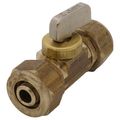
- PEX-AL-PEX x PEX-AL-PEX Ball Valves: These valves connect two runs of PEX-AL-PEX tubing of the same diameter, most often at manifold takeoffs or mid-run shutoffs on radiant heating loops. Hydronic installers use them to isolate a single zone for service without draining the whole system. The valve typically uses a compression or crimp fitting on each end that matches the tubing outer diameter, so sizing has to match the run exactly. A quarter turn handle gives a clear visual indication of open or closed position from across the mechanical room.
- PEX-AL-PEX x Copper Ball Valves: These valves transition a PEX-AL-PEX run into rigid copper piping, a common need where a system ties into an existing copper trunk line or a boiler with copper stub outs. Plumbers reach for this style when retrofitting radiant heat into a building that already has a copper distribution system. One end has a compression or crimp connection sized to the tubing while the other has a sweat or press fitting sized to copper tube. Keeping the transition close to the manifold simplifies future service since only one connection type needs to be broken.
- PEX-AL-PEX x Threaded Ball Valves: These valves pair a PEX-AL-PEX connection on one end with male or female pipe thread on the other, giving a direct connection point to boilers, circulator pumps, and manifold ports that use NPT threads. Installers use them where the tubing run terminates at a piece of equipment rather than another length of pipe. Thread sizes commonly match half inch or three quarter inch NPT to line up with standard heating equipment ports. Because the threaded end is rigid, it also gives a stable mounting point for shutoff at a mechanical room wall.
- PEX-AL-PEX Union Ball Valves: These valves include a union nut built into the body, so the valve can be disconnected and swapped without cutting into the tubing on either side. Contractors use them at points in a system where a valve is likely to need future service or replacement, such as ahead of a circulator pump or at a zone takeoff. The union connection separates by hand once the nut is loosened, keeping the surrounding tubing undisturbed. Full port versions in this style keep flow resistance close to that of the tubing itself.
Buying Guide
Selecting a PEX-AL-PEX ball valve starts with matching the valve's connection size to the outer diameter of the tubing already installed, since PEX-AL-PEX is sized differently than standard PEX and will not interchange with PEX fittings. Confirm whether the run uses compression, crimp, or press connections before ordering, because mixing connection styles on the same job usually means carrying extra tools. Full port valves keep the interior bore close to the tubing's inner diameter, which matters most on longer runs or where a circulator pump is already working against tight head pressure. Standard port valves cost less and work fine for short shutoff runs where flow restriction is not a concern. For radiant floor manifolds, union style ball valves make sense at any point likely to need future service, since they come apart without disturbing the tubing. Where a run terminates at a boiler or pump with threaded ports, a threaded end valve skips the need for an extra adapter fitting. Material matters too, since brass bodies with dezincification resistant coatings hold up better in systems with variable water chemistry than valves in bare brass. Whatever the connection style, installing PEX-AL-PEX ball valves so the handle stays accessible for service matters, since it is the primary way installers isolate a zone for repair. Reviewing manifold layout drawings before ordering valves helps avoid finding out mid installation that a fitting size does not match tubing already run through the walls or floor.
Frequently Asked Questions
Can a standard PEX ball valve be used with PEX-AL-PEX tubing?
No, a standard PEX ball valve will not seal on PEX-AL-PEX tubing because the aluminum layer makes the outer diameter different from standard PEX. Valves made for PEX-AL-PEX are sized to match that specific tubing profile. Using the wrong valve type can cause a poor seal or a fitting that does not fully seat.
What is the difference between a full port and a standard port ball valve?
A full port ball valve has an interior bore close to the same size as the tubing's inner diameter, which keeps flow resistance low. A standard port valve has a narrower bore, restricting flow slightly at the valve body. Full port is generally the better pick for longer runs or systems with pumps already working against high head pressure.
Do PEX-AL-PEX ball valves need a union fitting?
A union is not required for every installation, but it makes a valve much easier to service or replace since it can be taken apart without cutting into the tubing. Union style valves are common at zone takeoffs, ahead of circulator pumps, and other spots likely to need future maintenance. Non-union valves work fine for permanent shutoff points that are unlikely to be serviced.
Are PEX-AL-PEX ball valves rated for radiant floor heating systems?
Yes, PEX-AL-PEX ball valves are commonly installed on radiant floor heating manifolds since PEX-AL-PEX tubing is a standard material for that application. The valve's connection style should match the manifold's takeoff sizing. Brass bodies with dezincification resistant coatings are a common choice for hydronic systems with treated water.
Can PEX-AL-PEX ball valves connect directly to copper pipe?
Only if the valve has a copper rated connection on one end, such as a sweat or press fitting, since a standard PEX-AL-PEX compression end will not seal onto copper tube. Transition valves built specifically for this purpose have one PEX-AL-PEX side and one copper side. Checking both connection types before ordering avoids needing a separate adapter fitting on the job.
