




Filters
SORT
Product Availability –
Brand –
Product Type –
Volume –
Review Score –
 --%3E %3Csvg version='1.1' id='Fill' xmlns='http://www.w3.org/2000/svg' xmlns:xlink='http://www.w3.org/1999/xlink' x='0px' y='0px' viewBox='0 0 100 100' enable-background='new 0 0 100 100' xml:space='preserve'%3E %3Cpath fill='%23F15C02' d='M79.44,0.95H20.56C9.78,0.95,0.95,9.78,0.95,20.56v58.87c0,10.79,8.82,19.61,19.61,19.61h58.87 c10.79,0,19.61-8.83,19.61-19.61V20.56C99.05,9.78,90.22,0.95,79.44,0.95z M65.38,58.24l9.38,29.58L49.69,69.78L24.5,87.82 l9.34-29.6L8.8,39.6l30.73-0.17c0,0,6.98-19.61,10-28.93c0.54,1.36,9.88,29.1,9.88,29.1H91.2L65.38,58.24z'/%3E %3C/svg%3E)
 --%3E %3Csvg version='1.1' id='With-RB' xmlns='http://www.w3.org/2000/svg' xmlns:xlink='http://www.w3.org/1999/xlink' x='0px' y='0px' viewBox='0 0 100 100' enable-background='new 0 0 100 100' xml:space='preserve'%3E %3Cpath fill='%23FBC8B4' d='M79.44,0.95H20.56C9.78,0.95,0.95,9.78,0.95,20.56v58.87c0,10.79,8.82,19.61,19.61,19.61h58.87 c10.79,0,19.61-8.83,19.61-19.61V20.56C99.05,9.78,90.22,0.95,79.44,0.95z M65.38,58.24l9.38,29.58L49.69,69.78L24.5,87.82 l9.34-29.6L8.8,39.6l30.73-0.17c0,0,6.98-19.61,10-28.93c0.54,1.36,9.88,29.1,9.88,29.1H91.2L65.38,58.24z'/%3E %3C/svg%3E)
Price Range –
Soldering Paste & Liquid Flux

 --%3E %3Csvg version='1.1' id='No-RB' xmlns='http://www.w3.org/2000/svg' xmlns:xlink='http://www.w3.org/1999/xlink' x='0px' y='0px' viewBox='0 0 100 100' enable-background='new 0 0 100 100' xml:space='preserve'%3E %3Cpath fill='%23CECECE' d='M79.44,0.95H20.56C9.78,0.95,0.95,9.78,0.95,20.56v58.87c0,10.79,8.82,19.61,19.61,19.61h58.87 c10.79,0,19.61-8.83,19.61-19.61V20.56C99.05,9.78,90.22,0.95,79.44,0.95z M65.38,58.24l9.38,29.58L49.69,69.78L24.5,87.82 l9.34-29.6L8.8,39.6l30.73-0.17c0,0,6.98-19.61,10-28.93c0.54,1.36,9.88,29.1,9.88,29.1H91.2L65.38,58.24z'/%3E %3C/svg%3E)

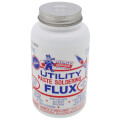
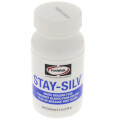
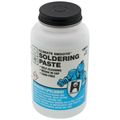
 --%3E %3Csvg version='1.1' id='Half' xmlns='http://www.w3.org/2000/svg' xmlns:xlink='http://www.w3.org/1999/xlink' x='0px' y='0px' viewBox='0 0 100 100' enable-background='new 0 0 100 100' xml:space='preserve'%3E %3Cg%3E %3Cpath fill='%23F15C02' d='M30.05,70.23l3.79-12.01L8.8,39.6l30.73-0.17c0,0,6.98-19.61,10-28.93c0.54,1.36,9.88,29.1,9.88,29.1h1.58 L93.71,7.18c-3.58-3.82-8.66-6.23-14.28-6.23H20.56C9.78,0.95,0.95,9.78,0.95,20.56v58.87c0,5.41,2.22,10.32,5.79,13.88 L30.05,70.23z'/%3E %3C/g%3E %3Cpath fill='%23FBC8B4' d='M93.71,7.18L60.98,39.6H91.2L65.38,58.24l9.38,29.58L49.69,69.78L24.5,87.82l5.55-17.59L6.75,93.32 c3.55,3.54,8.44,5.73,13.82,5.73h58.87c10.79,0,19.61-8.83,19.61-19.61V20.56C99.05,15.4,97.01,10.69,93.71,7.18z'/%3E %3C/svg%3E)
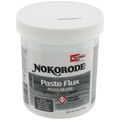
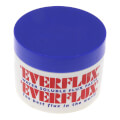
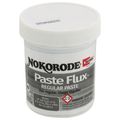
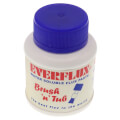


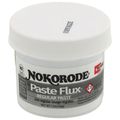
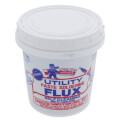
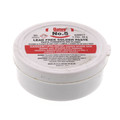
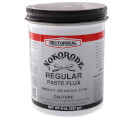
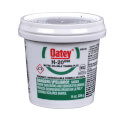
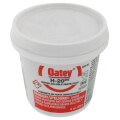
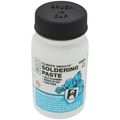

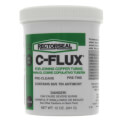
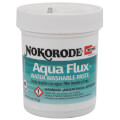
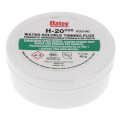
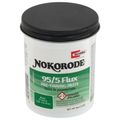
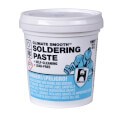
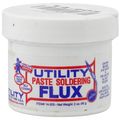
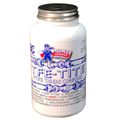
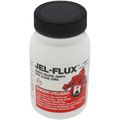
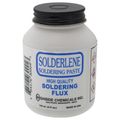
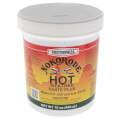
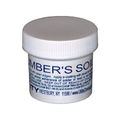
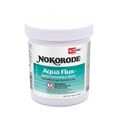

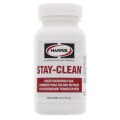
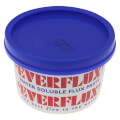
Soldering Paste & Liquid Flux are chemical compounds that clean copper and other metal surfaces before soldering, removing oxidation so solder flows evenly and bonds tight.
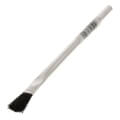
Paste flux applies with a brush directly to fittings and pipe ends, while liquid flux works well for tight joints and touch-up work where precision matters more than coverage.
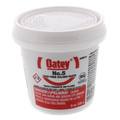
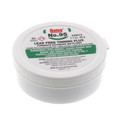
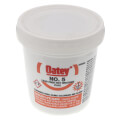
Lead-free paste flux, such as Oatey No. 5, is petrolatum-based and rated safe for potable water applications, making it a standard choice on domestic plumbing runs.
Liquid flux tends to flow into gaps that paste can't reach, which makes it useful on fittings with multiple close-set joints.
Water-flushable formulas, like Oatey H-205, clean and flux copper without leaving discoloration behind.
Choosing the right flux type affects joint integrity, leak resistance, and how long a soldered connection lasts under pressure, so matching the product to the job is a small step with a real impact on finished work.
Subcategories
- Paste Flux: Paste flux is a thick, brushable compound applied directly to the outside of pipe and the inside of fittings before soldering. Plumbers and HVAC technicians use it on standard copper joints because the paste stays in place during assembly and doesn't run off vertical pipe runs. Lead-free formulas like Oatey No. 5 are petrolatum-based and rated safe for potable water lines. Paste flux works best on straightforward joints where coverage and control matter more than reaching tight gaps.
- Liquid Flux: Liquid flux flows more freely than paste, which lets it reach into narrow gaps and multi-joint fittings that a brush can't fully cover. Service technicians reach for liquid flux on repair work and touch-ups where a small, precise application beats broad coverage. It cleans and preps copper surfaces the same way paste does, removing oxidation so solder adheres properly. Many liquid formulas are water flushable, meaning residue rinses away after the joint cools.
- Lead-Free Flux: Lead-free flux is formulated without lead compounds so it meets code requirements for potable water systems. Installers working on drinking water lines rely on lead-free paste and liquid formulas to pass inspection and protect water quality. Oatey No. 5 is one example, built on a petrolatum base and rated safe for potable applications. Lead-free flux performs the same cleaning and wetting function as older formulas without the compliance risk.
- Water-Flushable Flux: Water-flushable flux, like Oatey H-205, is designed to clean and flux copper and similar metals without leaving discoloration on finished pipe. Installers who need a clean cosmetic result, such as on exposed copper runs, choose water-flushable formulas because residue rinses off with water instead of requiring solvent cleanup. It performs the standard flux job of removing oxidation before solder is applied. Water-flushable formulas suit jobs where appearance and easy cleanup matter as much as the solder joint itself.
Buying Guide
Start with the water application. Potable water lines require lead-free flux, full stop, since code and NSF requirements rule out anything else. Non-potable runs, like heating or drain lines, give more flexibility on flux chemistry, but lead-free formulas work fine there too, which simplifies keeping one product on the truck.
Next, match the flux type to the joint. Paste flux covers broad surfaces fast and stays put on vertical pipe, making it the default for straight runs and standard fittings. Liquid flux reaches into tight gaps and multi-joint fixtures where a brush can't get full coverage, so it earns a spot in the kit for repair work and complex assemblies.
Soldering Paste & Liquid Flux selection also depends on cleanup requirements. Water-flushable formulas rinse away without solvent, which saves time on exposed or decorative copper where residue would be visible. Standard paste flux may need more thorough wiping if the joint stays visible after the job.
Container size matters for job scale. Small jars suit service trucks and repair calls, while larger containers make sense for new construction runs with dozens of joints. Buying flux and solder from the same manufacturer line, when practical, keeps chemistry compatible and reduces the chance of a weak joint from mismatched products. Keep both paste and liquid available, since most crews end up needing each type depending on the fitting.
Frequently Asked Questions
What's the difference between paste flux and liquid flux?
Paste flux is a thick compound brushed onto pipe and fittings, and it stays in place on vertical runs during assembly. Liquid flux flows more freely and reaches into tight gaps that a brush can't cover well. Both remove oxidation from copper so solder bonds properly, but the application method and consistency differ.
Is lead-free flux required for potable water lines?
Lead-free flux is required for any soldering work on drinking water piping. Formulas like Oatey No. 5 are petrolatum-based and rated safe for potable applications, meeting the standard for domestic water systems. Using a non-lead formula on these lines avoids code violations and contamination risk.
Does flux residue need to be cleaned off after soldering?
Cleaning residue depends on the flux type and the visibility of the joint. Water-flushable formulas, such as Oatey H-205, rinse away with water and won't leave discoloration on finished copper. Standard paste flux can leave visible residue, so wiping it down matters more on exposed runs.
Can liquid flux be used on the same joints as paste flux?
Liquid flux can be used anywhere paste flux works, since both clean and prep copper the same way before soldering. Liquid flux has an advantage on multi-joint fittings and tight gaps where a brush can't reach every surface. Many technicians keep both types on hand and choose based on the joint.
What causes a soldered joint to fail even after flux is applied?
A failed joint after flux application usually traces back to insufficient heat, poor surface prep before the flux went on, or a mismatch between flux and solder chemistry. Flux only cleans and preps the surface, so proper pipe fit and adequate heating still drive a sound solder bond. Choosing a compatible flux and solder line reduces this risk.
