




Filters
SORT
Product Availability –
Size –
Review Score –
 --%3E %3Csvg version='1.1' id='Fill' xmlns='http://www.w3.org/2000/svg' xmlns:xlink='http://www.w3.org/1999/xlink' x='0px' y='0px' viewBox='0 0 100 100' enable-background='new 0 0 100 100' xml:space='preserve'%3E %3Cpath fill='%23F15C02' d='M79.44,0.95H20.56C9.78,0.95,0.95,9.78,0.95,20.56v58.87c0,10.79,8.82,19.61,19.61,19.61h58.87 c10.79,0,19.61-8.83,19.61-19.61V20.56C99.05,9.78,90.22,0.95,79.44,0.95z M65.38,58.24l9.38,29.58L49.69,69.78L24.5,87.82 l9.34-29.6L8.8,39.6l30.73-0.17c0,0,6.98-19.61,10-28.93c0.54,1.36,9.88,29.1,9.88,29.1H91.2L65.38,58.24z'/%3E %3C/svg%3E)
Price Range –
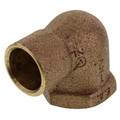
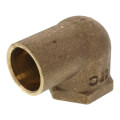
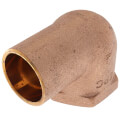
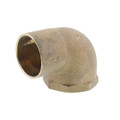
90° Elbows CxF


 --%3E %3Csvg version='1.1' id='No-RB' xmlns='http://www.w3.org/2000/svg' xmlns:xlink='http://www.w3.org/1999/xlink' x='0px' y='0px' viewBox='0 0 100 100' enable-background='new 0 0 100 100' xml:space='preserve'%3E %3Cpath fill='%23CECECE' d='M79.44,0.95H20.56C9.78,0.95,0.95,9.78,0.95,20.56v58.87c0,10.79,8.82,19.61,19.61,19.61h58.87 c10.79,0,19.61-8.83,19.61-19.61V20.56C99.05,9.78,90.22,0.95,79.44,0.95z M65.38,58.24l9.38,29.58L49.69,69.78L24.5,87.82 l9.34-29.6L8.8,39.6l30.73-0.17c0,0,6.98-19.61,10-28.93c0.54,1.36,9.88,29.1,9.88,29.1H91.2L65.38,58.24z'/%3E %3C/svg%3E)
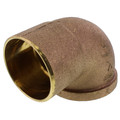
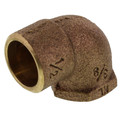
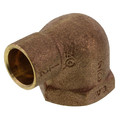
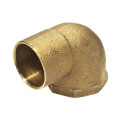
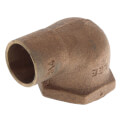
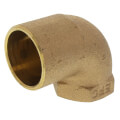
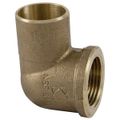


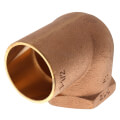
90 degree elbows CxF are copper fittings that make a right-angle turn in a piping run while transitioning from a solder or press connection on one end to a female threaded connection on the other. The "C" side accepts a length of copper pipe using a sweat, press, or similar copper-to-copper joining method, while the "F" side has internal NPT threads that accept a male-threaded fitting, valve, or appliance connection. This combination shows up constantly in plumbing and hydronic work anywhere a copper supply line needs to terminate at a threaded fixture, gauge, or valve body.
Because one end joins copper and the other joins threaded pipe, these elbows are a common transition point between rigid copper distribution lines and fixtures like hose bibs, water heaters, and mechanical equipment. They're available in the full range of standard copper pipe sizes, and choosing the correct one depends on matching both the copper pipe diameter on one end and the thread size needed on the threaded end.
Subcategories
- Wrot Copper CxF Elbows: Wrot copper elbows are formed from copper tubing and have thinner, more uniform walls than cast fittings, making them easier to solder evenly. They're the most commonly stocked style for residential and light commercial plumbing because they heat up quickly and consistently during sweating. Their lighter weight also makes them easier to work with in tight spaces.
- Cast Copper Alloy CxF Elbows: Cast fittings are manufactured by pouring molten copper alloy into a mold, resulting in a heavier, thicker-walled fitting than a wrot equivalent. The added mass takes longer to heat during soldering but can hold up better under repeated stress at threaded connections that see frequent disassembly. These are often specified in commercial or industrial applications where connections are serviced more often.
- Lead-Free CxF Elbows: Lead-free elbows are manufactured to meet reduced-lead content requirements for potable water applications, using alloys formulated to keep lead levels below the applicable limit. These are required on jobs supplying drinking water and are typically marked to distinguish them from standard bronze or brass-threaded fittings. Stocking lead-free versions is standard practice for any residential water supply work.
- Reducing CxF Elbows: Reducing elbows have a different pipe size on the copper end than the nominal thread size on the female end, letting a technician step down (or up) in size while also making the turn to a threaded connection. These are useful when connecting a larger supply line to a smaller-threaded fixture or gauge without needing a separate coupling. They save a joint compared to using a standard elbow plus a bushing.
Buying Guide
Sizing a 90 degree elbow CxF starts with two separate measurements: the copper pipe diameter on the sweat or press side, and the thread size needed on the female side. These two dimensions don't always match in a reducing fitting, so it's worth confirming both before ordering, especially on retrofit or repair work where the existing pipe size may not be obvious at a glance.
Wrot versus cast construction is the next decision point. Wrot copper elbows are lighter, solder more evenly, and are the default choice for most residential plumbing and hydronic heating runs. Cast copper alloy elbows carry more mass at the threaded connection, which can be an advantage anywhere the threaded joint gets disassembled and reassembled repeatedly, such as at a hose bib or a serviceable equipment connection.
For any job involving potable drinking water, confirm the fitting is rated lead-free before installing it. Lead-free 90 degree elbows CxF use alloys formulated to meet reduced-lead requirements and are the standard specification on residential water supply lines. Non-lead-free versions are generally reserved for non-potable applications like hydronic heating loops or hydraulic lines where drinking water contact isn't a concern.
Joining method is worth confirming as well, since some copper fittings are made for traditional solder joints while others are designed for press connections that don't require a torch. Press-style CxF elbows can speed up installation and reduce fire-watch requirements on occupied job sites, but they require a compatible press tool and jaw size matched to the pipe diameter.
Frequently Asked Questions
What does CxF mean on a copper elbow?
CxF describes the two connection types on the fitting: the "C" end joins to copper pipe using a sweat or press connection, and the "F" end has female NPT threads that accept a male-threaded fitting or fixture. It's a standard way manufacturers label copper transition fittings.
Can I use a standard cast elbow on a drinking water line?
Only if it's specifically rated lead-free. Standard bronze or brass-alloy cast fittings that aren't marked lead-free shouldn't be used on potable water supply lines and should be reserved for non-potable applications like hydronic heating.
What's the difference between wrot and cast CxF elbows?
Wrot elbows are formed from copper tubing with thinner, more consistent walls, making them lighter and easier to solder evenly. Cast elbows are poured from molten copper alloy and have thicker walls, giving them more durability at threaded connections that see frequent disassembly.
Do I need a different tool for press-style CxF elbows than solder fittings?
Yes. Press fittings require a press tool with a jaw sized to match the pipe diameter, while solder fittings are joined with a torch and solder. The two joining methods aren't interchangeable on the same fitting.
Why would I choose a reducing CxF elbow instead of a standard one plus a bushing?
A reducing elbow combines the size transition and the directional turn into a single fitting, which means one joint instead of two. That reduces both material cost and the number of potential leak points in the assembly.
