




AO Smith Water Heaters
A.O. Smith water heaters cover residential and commercial tank, tankless, and heat pump models built by one of the longest-operating manufacturers in the water heating industry, with roots dating back to 1874. The lineup on SupplyHouse spans residential gas and electric tank units, tankless models, and commercial storage and packaged systems, alongside the parts needed to service existing A.O. Smith equipment. Contractors specify A.O. Smith equipment across new installations and replacement jobs where matching an existing brand simplifies future parts sourcing.
A.O. Smith's residential lineup includes hybrid electric heat pump and split system heat pump models built to meet current federal energy efficiency incentives, alongside standard gas and electric tank units for straightforward replacements. Commercial customers have access to gas, electric, heat pump, and tankless options sized for higher-demand applications, plus the storage tanks and packaged systems used in larger commercial hot water plants.




Subcategories
- AO Smith Commercial Water Heaters: A.O. Smith's gas and electric tank water heaters built for commercial hot water demand fall under this subcategory. Contractors use it when sizing replacement or new-install equipment for restaurants, multifamily buildings, and other higher-volume applications. Commercial models are typically rated for higher recovery rates than residential equivalents.
- AO Smith Residential Water Heaters: AO Smith residential water heaters include gas, electric, hybrid heat pump, and tankless models sized for single-family and light multifamily installations. Contractors use this subcategory for both new installations and like-for-like replacements. Hybrid heat pump models can qualify for federal energy efficiency tax incentives under A.O. Smith's Qualified Manufacturer code A5X5.
- AO Smith Tankless Water Heater Parts: Replacement parts specific to A.O. Smith tankless water heaters, including igniters, heat exchangers, and control boards, fall under this subcategory. Technicians servicing existing A.O. Smith tankless units use it to find components matched to the unit's model number. Confirming the tankless unit's exact model before ordering avoids a mismatched part.
- AO Smith Tankless Water Heaters: AO Smith tankless water heaters provide on-demand hot water without a storage tank, sized for both residential and light commercial applications. Contractors specify this subcategory when space constraints or continuous hot water demand make a tankless unit a better fit than a tank model. Gas supply line and venting requirements differ from tank units and should be confirmed before installation.
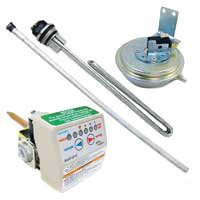
- AO Smith Water Heater Parts: Replacement parts for A.O. Smith tank-style water heaters, including thermocouples, gas valves, anode rods, and heating elements, fall under this subcategory. Technicians use it to service existing A.O. Smith tank units without a full replacement. Matching the part to the water heater's model and serial number keeps the repair straightforward.
Buying Guide
Selecting an A.O. Smith water heater starts with matching the unit's fuel type, gas or electric, to the existing supply lines and, for gas models, confirming the venting configuration the installation location supports. Tankless models in particular require adequate gas line sizing and specific venting materials that differ from standard tank installations.
Recovery rate and first-hour rating determine whether a tank model can keep up with a household or business's peak hot water demand. Larger households or commercial kitchens with simultaneous hot water draws need a higher first-hour rating than a single-occupant residence, so matching capacity to actual usage patterns prevents undersizing the installation.
Hybrid electric heat pump models offer lower operating costs than standard electric resistance tanks in most climates, but they need adequate surrounding air volume and a condensate drain, which can rule them out for tight mechanical closets. Confirming the installation space meets the manufacturer's clearance and airflow requirements before specifying a heat pump model avoids a change mid-project.
Commercial applications typically call for higher recovery rate models or packaged systems sized to the building's peak demand rather than a residential-grade unit scaled up. Working from an actual demand calculation, rather than sizing by building square footage alone, keeps a commercial installation from running short during peak usage.
For replacement parts, working from the water heater's full model and serial number, both usually found on the unit's rating plate, is the most reliable way to confirm a part's fit before ordering. A.O. Smith updates part numbers across production runs, so a part that fit an older unit of the same model name may not fit a newer production run.
Frequently Asked Questions
How long has A.O. Smith been manufacturing water heaters?
A.O. Smith traces its history back to 1874, making it one of the longest-operating manufacturers in the water heating industry. Both residential and commercial product lines from that history remain in production today.
What's the difference between a hybrid heat pump and a standard electric water heater?
A hybrid heat pump water heater pulls heat from surrounding air to warm the water, which typically lowers operating costs compared to standard electric resistance heating. Standard electric tanks heat water directly with an electric element and don't require the additional clearance a heat pump model needs.
Do A.O. Smith heat pump water heaters qualify for tax incentives?
Many A.O. Smith hybrid electric heat pump models qualify for federal energy efficiency tax credits under the manufacturer's Qualified Manufacturer code A5X5. Confirming the specific model's eligibility before purchase helps a customer claim the correct incentive.
How do I find replacement parts for an older A.O. Smith water heater?
Start with the model and serial number from the unit's rating plate, since A.O. Smith updates part numbers across production runs even under the same model name. That information lets a distributor or the manufacturer confirm the exact part needed.
What size A.O. Smith water heater does a typical household need?
Sizing depends on first-hour rating and household hot water demand rather than tank size alone, since two units of the same tank size can have different recovery rates. Matching the unit's first-hour rating to peak simultaneous hot water use, such as showers and laundry running together, gives the most accurate sizing.
Resources
Subcategories
- AO Smith Commercial Water Heaters: A.O. Smith's gas and electric tank water heaters built for commercial hot water demand fall under this subcategory. Contractors use it when sizing replacement or new-install equipment for restaurants, multifamily buildings, and other higher-volume applications. Commercial models are typically rated for higher recovery rates than residential equivalents.
- AO Smith Residential Water Heaters: AO Smith residential water heaters include gas, electric, hybrid heat pump, and tankless models sized for single-family and light multifamily installations. Contractors use this subcategory for both new installations and like-for-like replacements. Hybrid heat pump models can qualify for federal energy efficiency tax incentives under A.O. Smith's Qualified Manufacturer code A5X5.
- AO Smith Tankless Water Heater Parts: Replacement parts specific to A.O. Smith tankless water heaters, including igniters, heat exchangers, and control boards, fall under this subcategory. Technicians servicing existing A.O. Smith tankless units use it to find components matched to the unit's model number. Confirming the tankless unit's exact model before ordering avoids a mismatched part.
- AO Smith Tankless Water Heaters: AO Smith tankless water heaters provide on-demand hot water without a storage tank, sized for both residential and light commercial applications. Contractors specify this subcategory when space constraints or continuous hot water demand make a tankless unit a better fit than a tank model. Gas supply line and venting requirements differ from tank units and should be confirmed before installation.
- AO Smith Water Heater Parts: Replacement parts for A.O. Smith tank-style water heaters, including thermocouples, gas valves, anode rods, and heating elements, fall under this subcategory. Technicians use it to service existing A.O. Smith tank units without a full replacement. Matching the part to the water heater's model and serial number keeps the repair straightforward.
Buying Guide
Selecting an A.O. Smith water heater starts with matching the unit's fuel type, gas or electric, to the existing supply lines and, for gas models, confirming the venting configuration the installation location supports. Tankless models in particular require adequate gas line sizing and specific venting materials that differ from standard tank installations.
Recovery rate and first-hour rating determine whether a tank model can keep up with a household or business's peak hot water demand. Larger households or commercial kitchens with simultaneous hot water draws need a higher first-hour rating than a single-occupant residence, so matching capacity to actual usage patterns prevents undersizing the installation.
Hybrid electric heat pump models offer lower operating costs than standard electric resistance tanks in most climates, but they need adequate surrounding air volume and a condensate drain, which can rule them out for tight mechanical closets. Confirming the installation space meets the manufacturer's clearance and airflow requirements before specifying a heat pump model avoids a change mid-project.
Commercial applications typically call for higher recovery rate models or packaged systems sized to the building's peak demand rather than a residential-grade unit scaled up. Working from an actual demand calculation, rather than sizing by building square footage alone, keeps a commercial installation from running short during peak usage.
For replacement parts, working from the water heater's full model and serial number, both usually found on the unit's rating plate, is the most reliable way to confirm a part's fit before ordering. A.O. Smith updates part numbers across production runs, so a part that fit an older unit of the same model name may not fit a newer production run.
Frequently Asked Questions
How long has A.O. Smith been manufacturing water heaters?
A.O. Smith traces its history back to 1874, making it one of the longest-operating manufacturers in the water heating industry. Both residential and commercial product lines from that history remain in production today.
What's the difference between a hybrid heat pump and a standard electric water heater?
A hybrid heat pump water heater pulls heat from surrounding air to warm the water, which typically lowers operating costs compared to standard electric resistance heating. Standard electric tanks heat water directly with an electric element and don't require the additional clearance a heat pump model needs.
Do A.O. Smith heat pump water heaters qualify for tax incentives?
Many A.O. Smith hybrid electric heat pump models qualify for federal energy efficiency tax credits under the manufacturer's Qualified Manufacturer code A5X5. Confirming the specific model's eligibility before purchase helps a customer claim the correct incentive.
How do I find replacement parts for an older A.O. Smith water heater?
Start with the model and serial number from the unit's rating plate, since A.O. Smith updates part numbers across production runs even under the same model name. That information lets a distributor or the manufacturer confirm the exact part needed.
What size A.O. Smith water heater does a typical household need?
Sizing depends on first-hour rating and household hot water demand rather than tank size alone, since two units of the same tank size can have different recovery rates. Matching the unit's first-hour rating to peak simultaneous hot water use, such as showers and laundry running together, gives the most accurate sizing.