




Aqua-Pure Water Filters
Aqua-Pure water filters address a range of residential and light commercial water filtration needs. The range runs from point of use drinking water systems to whole house filtration installed at the main water line. Filter housings and cartridges in this category remove sediment, chlorine taste and odor, and other contaminants. Results depend on the specific filter media selected. Plumbing contractors install these systems during new construction, water heater replacements, and water quality upgrades.
Choosing the right Aqua-Pure filtration product depends on where filtration is needed in the plumbing system and the flow rate the household requires. Point of use filters serve a single fixture such as a kitchen faucet. Whole house systems filter all water entering the building before it reaches individual fixtures and appliances.


Subcategories
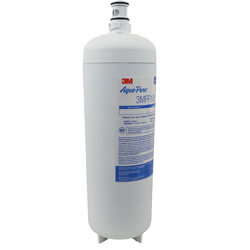
- Drinking Water Filters: Drinking water filters install at a single point of use, typically under a kitchen sink, to improve the taste and quality of water at that fixture. Plumbing contractors connect these filters to a dedicated faucet or tee into the cold water supply line beneath the sink. Cartridges are sized for specific flow rates and contaminant reduction claims, so matching the cartridge to household water quality matters. Replacement cartridges are typically changed on a schedule based on usage rather than a fixed calendar date.
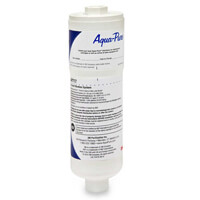
- In-Line Filtration & Hot Water System Filters: In-line filtration and hot water system filters install directly in a water line. They protect downstream equipment such as water heaters, boilers, and appliances from sediment and scale. Contractors size these filters to the pipe diameter and expected flow rate of the system being protected. Hot water rated cartridges use materials designed to withstand elevated temperatures without degrading. Replacing the cartridge on a regular schedule protects connected equipment from reduced flow and sediment buildup.
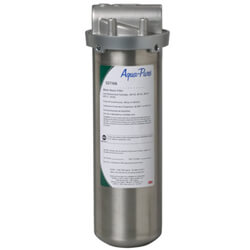
- Stainless Steel Water Filters: Stainless steel water filters use a durable housing suited to commercial applications, higher pressure systems, or installations where corrosion resistance is a priority over standard plastic housings. Contractors select stainless housings for outdoor installations or environments with wide temperature swings that could stress a plastic housing over time. These filters accept standard cartridge sizes compatible with residential and light commercial filtration needs. Sizing depends on the required flow rate and available space for installation.
- Water Treatment Systems: Water treatment systems address broader water quality issues beyond basic filtration, including hardness, iron content, and other dissolved minerals that standard sediment or carbon filters don't remove. Contractors evaluate a water test before recommending a specific treatment system, since the right equipment depends on the exact contaminants present. These systems typically require more space and plumbing modifications than a simple in-line filter. Ongoing maintenance varies by system type, from periodic salt refills to filter media replacement.
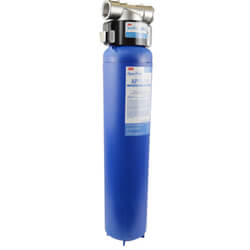
- Whole House System Plastic Water Filters: Whole house system plastic water filters install at the main water line to filter all water entering a building before it reaches individual fixtures and appliances. Contractors size these systems based on the household's peak flow rate to avoid a pressure drop during simultaneous fixture use. Plastic housings are suited to residential installations with moderate pressure and temperature conditions. Cartridges inside these housings are typically rated for sediment reduction, chlorine taste and odor, or a combination of both.
Buying Guide
Deciding between point of use and whole house filtration starts with identifying the specific water quality concern. Point of use filters address taste and odor at a single fixture. Whole house systems protect all plumbing and appliances from sediment and chlorine throughout the building.
Flow rate is a key sizing factor for any filtration system. Undersized housings and cartridges reduce water pressure at fixtures, particularly in homes with multiple bathrooms or simultaneous water use. Matching the filter's rated flow to the household's peak demand avoids pressure complaints.
Housing material selection depends on the installation environment. Stainless steel housings hold up better in outdoor, unheated, or corrosive environments, while standard plastic housings suit typical indoor residential installations at moderate temperatures and pressures.
Cartridge replacement frequency and availability should factor into the initial selection, since some specialty cartridges are harder to source than standard sediment and carbon options. Confirming a household's willingness to maintain a filtration system on schedule helps determine whether a simpler or more advanced system makes sense.
For water quality concerns beyond taste and sediment, such as hardness or iron, a full water treatment system rather than a basic filter may be necessary. Starting with an accurate water test helps identify exactly which contaminants need to be addressed before selecting equipment.
Frequently Asked Questions
What is the difference between a whole house filter and a point of use filter?
A whole house filter installs at the main water line and treats all water entering the building. A point of use filter treats water at a single fixture, most often a kitchen faucet. Whole house systems protect plumbing and appliances broadly, while point of use filters focus on drinking water quality at one location.
How often do water filter cartridges need to be replaced?
Replacement frequency depends on household water usage and the specific cartridge's rated capacity. Homes with higher sediment levels or heavy water use may need more frequent replacement.
When is a stainless steel filter housing recommended over a plastic housing?
Stainless steel housings are recommended for outdoor installations, commercial applications, or environments with temperature extremes that could stress a plastic housing over time. Standard indoor residential installations at moderate temperatures typically perform well with plastic housings.
Can a basic sediment filter remove hard water minerals?
No, standard sediment filters remove particulate matter but do not address dissolved minerals that cause water hardness. Addressing hardness requires a dedicated water treatment system designed for that purpose.
Do in-line filters protect water heaters from sediment damage?
Yes, in-line filters installed ahead of a water heater reduce sediment entering the tank. This can extend the service life of the heating element and reduce mineral buildup inside the tank. Regular cartridge replacement is necessary to maintain this protection.
Resources

 --%3E %3C!DOCTYPE svg PUBLIC '-//W3C//DTD SVG 1.1//EN' 'http://www.w3.org/Graphics/SVG/1.1/DTD/svg11.dtd'%3E %3Csvg version='1.1' id='Layer_1' xmlns='http://www.w3.org/2000/svg' xmlns:xlink='http://www.w3.org/1999/xlink' x='0px' y='0px' width='90px' height='90px' viewBox='0 0 90 90' enable-background='new 0 0 90 90' xml:space='preserve'%3E %3Crect x='27' y='23' fill='%23FFFFFF' width='43' height='44'/%3E %3Cg%3E %3Cdefs%3E %3Crect id='SVGID_1_' width='90' height='90'/%3E %3C/defs%3E %3CclipPath id='SVGID_2_'%3E %3Cuse xlink:href='%23SVGID_1_' overflow='visible'/%3E %3C/clipPath%3E %3Cpath clip-path='url(%23SVGID_2_)' fill='%234186AD' d='M45,0C20.1,0,0,20.1,0,45c0,24.9,20.1,45,45,45c24.9,0,45-20.1,45-45 C90,20.1,69.9,0,45,0'/%3E %3C/g%3E %3Cpath fill='%23FFFFFF' d='M60.6,47.4l-22.5,14c-0.5,0.3-1,0.399-1.5,0.399s-0.9-0.1-1.4-0.399c-0.9-0.5-1.4-1.4-1.4-2.5v-28 c0-1,0.6-2,1.4-2.5c0.9-0.5,2-0.5,2.9,0.1l22.5,14.1C61.4,43.1,61.9,44,61.9,45S61.4,46.9,60.6,47.4'/%3E %3C/svg%3E)
Subcategories
- Drinking Water Filters: Drinking water filters install at a single point of use, typically under a kitchen sink, to improve the taste and quality of water at that fixture. Plumbing contractors connect these filters to a dedicated faucet or tee into the cold water supply line beneath the sink. Cartridges are sized for specific flow rates and contaminant reduction claims, so matching the cartridge to household water quality matters. Replacement cartridges are typically changed on a schedule based on usage rather than a fixed calendar date.
- In-Line Filtration & Hot Water System Filters: In-line filtration and hot water system filters install directly in a water line. They protect downstream equipment such as water heaters, boilers, and appliances from sediment and scale. Contractors size these filters to the pipe diameter and expected flow rate of the system being protected. Hot water rated cartridges use materials designed to withstand elevated temperatures without degrading. Replacing the cartridge on a regular schedule protects connected equipment from reduced flow and sediment buildup.
- Stainless Steel Water Filters: Stainless steel water filters use a durable housing suited to commercial applications, higher pressure systems, or installations where corrosion resistance is a priority over standard plastic housings. Contractors select stainless housings for outdoor installations or environments with wide temperature swings that could stress a plastic housing over time. These filters accept standard cartridge sizes compatible with residential and light commercial filtration needs. Sizing depends on the required flow rate and available space for installation.
- Water Treatment Systems: Water treatment systems address broader water quality issues beyond basic filtration, including hardness, iron content, and other dissolved minerals that standard sediment or carbon filters don't remove. Contractors evaluate a water test before recommending a specific treatment system, since the right equipment depends on the exact contaminants present. These systems typically require more space and plumbing modifications than a simple in-line filter. Ongoing maintenance varies by system type, from periodic salt refills to filter media replacement.
- Whole House System Plastic Water Filters: Whole house system plastic water filters install at the main water line to filter all water entering a building before it reaches individual fixtures and appliances. Contractors size these systems based on the household's peak flow rate to avoid a pressure drop during simultaneous fixture use. Plastic housings are suited to residential installations with moderate pressure and temperature conditions. Cartridges inside these housings are typically rated for sediment reduction, chlorine taste and odor, or a combination of both.
Buying Guide
Deciding between point of use and whole house filtration starts with identifying the specific water quality concern. Point of use filters address taste and odor at a single fixture. Whole house systems protect all plumbing and appliances from sediment and chlorine throughout the building.
Flow rate is a key sizing factor for any filtration system. Undersized housings and cartridges reduce water pressure at fixtures, particularly in homes with multiple bathrooms or simultaneous water use. Matching the filter's rated flow to the household's peak demand avoids pressure complaints.
Housing material selection depends on the installation environment. Stainless steel housings hold up better in outdoor, unheated, or corrosive environments, while standard plastic housings suit typical indoor residential installations at moderate temperatures and pressures.
Cartridge replacement frequency and availability should factor into the initial selection, since some specialty cartridges are harder to source than standard sediment and carbon options. Confirming a household's willingness to maintain a filtration system on schedule helps determine whether a simpler or more advanced system makes sense.
For water quality concerns beyond taste and sediment, such as hardness or iron, a full water treatment system rather than a basic filter may be necessary. Starting with an accurate water test helps identify exactly which contaminants need to be addressed before selecting equipment.
Frequently Asked Questions
What is the difference between a whole house filter and a point of use filter?
A whole house filter installs at the main water line and treats all water entering the building. A point of use filter treats water at a single fixture, most often a kitchen faucet. Whole house systems protect plumbing and appliances broadly, while point of use filters focus on drinking water quality at one location.
How often do water filter cartridges need to be replaced?
Replacement frequency depends on household water usage and the specific cartridge's rated capacity. Homes with higher sediment levels or heavy water use may need more frequent replacement.
When is a stainless steel filter housing recommended over a plastic housing?
Stainless steel housings are recommended for outdoor installations, commercial applications, or environments with temperature extremes that could stress a plastic housing over time. Standard indoor residential installations at moderate temperatures typically perform well with plastic housings.
Can a basic sediment filter remove hard water minerals?
No, standard sediment filters remove particulate matter but do not address dissolved minerals that cause water hardness. Addressing hardness requires a dedicated water treatment system designed for that purpose.
Do in-line filters protect water heaters from sediment damage?
Yes, in-line filters installed ahead of a water heater reduce sediment entering the tank. This can extend the service life of the heating element and reduce mineral buildup inside the tank. Regular cartridge replacement is necessary to maintain this protection.