




Filters
SORT
Product Availability –
Reduction Claim –
Used With –
Review Score –
 --%3E %3Csvg version='1.1' id='Fill' xmlns='http://www.w3.org/2000/svg' xmlns:xlink='http://www.w3.org/1999/xlink' x='0px' y='0px' viewBox='0 0 100 100' enable-background='new 0 0 100 100' xml:space='preserve'%3E %3Cpath fill='%23F15C02' d='M79.44,0.95H20.56C9.78,0.95,0.95,9.78,0.95,20.56v58.87c0,10.79,8.82,19.61,19.61,19.61h58.87 c10.79,0,19.61-8.83,19.61-19.61V20.56C99.05,9.78,90.22,0.95,79.44,0.95z M65.38,58.24l9.38,29.58L49.69,69.78L24.5,87.82 l9.34-29.6L8.8,39.6l30.73-0.17c0,0,6.98-19.61,10-28.93c0.54,1.36,9.88,29.1,9.88,29.1H91.2L65.38,58.24z'/%3E %3C/svg%3E)
Price Range –
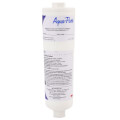
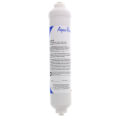
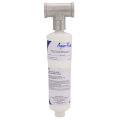
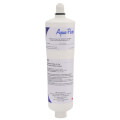
In-Line Filtration & Hot Water System Filters


 --%3E %3Csvg version='1.1' id='No-RB' xmlns='http://www.w3.org/2000/svg' xmlns:xlink='http://www.w3.org/1999/xlink' x='0px' y='0px' viewBox='0 0 100 100' enable-background='new 0 0 100 100' xml:space='preserve'%3E %3Cpath fill='%23CECECE' d='M79.44,0.95H20.56C9.78,0.95,0.95,9.78,0.95,20.56v58.87c0,10.79,8.82,19.61,19.61,19.61h58.87 c10.79,0,19.61-8.83,19.61-19.61V20.56C99.05,9.78,90.22,0.95,79.44,0.95z M65.38,58.24l9.38,29.58L49.69,69.78L24.5,87.82 l9.34-29.6L8.8,39.6l30.73-0.17c0,0,6.98-19.61,10-28.93c0.54,1.36,9.88,29.1,9.88,29.1H91.2L65.38,58.24z'/%3E %3C/svg%3E)

In-line filtration and hot water system filters are the components installed directly into the water line feeding a boiler, tankless water heater, or hydronic heating system, removing sediment, scale-forming particulate, and debris before it reaches sensitive parts like heat exchangers and circulator pumps. Municipal and well water both carry enough particulate to accelerate wear on close-tolerance components inside modern high-efficiency equipment, which is why many manufacturers now specify inline filtration as part of a proper installation rather than an optional add-on. Cartridge-style filters use a replaceable element housed in a sump, while spin-down and Y-strainer styles rely on a mesh screen that can be cleaned or replaced without removing the whole housing. Sizing a filter to the system's flow rate matters as much as its filtration rating, since an undersized filter restricts flow and can starve a boiler or water heater of the circulation it needs. Routine filter maintenance protects the significantly more expensive equipment downstream from avoidable sediment damage.
Subcategories
- Cartridge Filter Housings: Cartridge filter housings hold a replaceable filter element in a sump that threads or unions into the water line, giving technicians a straightforward way to swap filtration media without disturbing the surrounding piping. Housing size needs to match both the system's flow rate and the cartridge dimensions it's designed to accept, since an undersized housing restricts flow regardless of how well-rated the cartridge inside is. Clear sumps let a technician visually check sediment buildup without opening the housing, while opaque sumps typically cost less and work fine for systems changed on a fixed schedule.
- Replacement Filter Cartridges: Replacement filter cartridges come in a range of micron ratings, with a lower micron number capturing finer particulate at the cost of needing more frequent changes as the finer media loads up faster. Matching the cartridge's dimensions and end-cap style to the existing housing is necessary, since cartridges aren't universally interchangeable between manufacturers. Systems protecting sensitive components like modulating boiler heat exchangers often run a finer micron rating than a simple sediment-capture application would need.
- Y-Strainers: Y-strainers use an angled body and removable mesh screen to catch larger sediment and debris before it reaches downstream equipment, and the screen can be pulled and cleaned without cutting into the piping. Mesh size determines how fine a particulate the strainer captures, with a finer mesh needing more frequent cleaning as it loads up faster than a coarser screen. Installers typically mount a Y-strainer just ahead of a circulator pump or control valve, where catching debris before it reaches close-tolerance moving parts matters most.
- Spin-Down Sediment Filters: Spin-down sediment filters use a clear housing and a flush valve at the bottom, letting a technician purge collected sediment by opening the valve rather than removing and cleaning a separate screen or cartridge. The clear housing makes it easy to see when sediment has built up enough to warrant a flush. Pairing one ahead of a finer cartridge filter extends the cartridge's service life by catching the coarsest debris first, making spin-down filters effective as a first line of defense.
Buying Guide
Selecting the right in-line filtration and hot water system filter starts with matching the filter's rated flow capacity to the system it protects, since manufacturers publish maximum flow rates for cartridge housings, Y-strainers, and spin-down filters alike. A filter rated below the system's actual flow demand creates a pressure drop that can starve a boiler or tankless heater of adequate circulation, sometimes triggering a flow-related fault even when the equipment itself is functioning properly.
Filtration rating, typically expressed in microns for cartridge and spin-down styles or mesh size for strainers, should match what the protected equipment actually needs. Systems feeding a modulating boiler or a heat exchanger with tight internal clearances generally call for finer filtration than a straightforward sediment-capture application protecting simpler equipment.
Maintenance access matters over the life of the installation. A Y-strainer or spin-down filter that requires shutting down the whole system to service adds downtime with every cleaning, while models built with isolation valves on either side let a technician service the filter without draining the system. Placement in the piping layout also affects performance, since installing filtration too far from the equipment it's meant to protect gives sediment more opportunity to settle out in the piping between the filter and the unit.
Frequently Asked Questions
Where should an in-line filter be installed relative to a boiler or water heater?
Installing the filter as close as practical to the equipment it protects, on the cold water supply line feeding the unit, catches sediment right before it would otherwise enter the equipment. Installing filtration too far upstream gives sediment more distance in the piping to settle out before reaching the filter.
What's the difference between a Y-strainer and a cartridge filter?
A Y-strainer uses a removable mesh screen that catches larger debris and can be cleaned in place, while a cartridge filter uses a replaceable element inside a housing and typically captures finer particulate. Many systems use a Y-strainer as a first stage ahead of a finer cartridge filter to extend the cartridge's service life.
How does filter micron rating affect maintenance frequency?
A lower micron rating captures finer particulate but loads up faster than a coarser filter handling the same water conditions, which means more frequent cartridge changes or screen cleanings. Selecting a micron rating that matches what the protected equipment actually needs, rather than the finest option available, helps balance filtration performance against a reasonable maintenance interval.
Can a spin-down filter be flushed without shutting off water to the system?
Most spin-down filters need isolation valves installed on either side to allow flushing or servicing without shutting down the whole system, so checking for that feature before installation is worthwhile if minimizing downtime matters. Units without isolation valves require shutting off supply water to service.
What flow rate should a filter be sized for?
Filter housings, cartridges, and strainers all carry a manufacturer-rated maximum flow rate, and matching that rating to the system's actual flow demand avoids a pressure drop that can restrict circulation to the boiler or water heater downstream. Undersizing a filter to save on upfront cost often creates a flow restriction that shows up as a performance problem in the connected equipment.
