




Armstrong Air Gas Valves


 --%3E %3Csvg version='1.1' id='No-RB' xmlns='http://www.w3.org/2000/svg' xmlns:xlink='http://www.w3.org/1999/xlink' x='0px' y='0px' viewBox='0 0 100 100' enable-background='new 0 0 100 100' xml:space='preserve'%3E %3Cpath fill='%23CECECE' d='M79.44,0.95H20.56C9.78,0.95,0.95,9.78,0.95,20.56v58.87c0,10.79,8.82,19.61,19.61,19.61h58.87 c10.79,0,19.61-8.83,19.61-19.61V20.56C99.05,9.78,90.22,0.95,79.44,0.95z M65.38,58.24l9.38,29.58L49.69,69.78L24.5,87.82 l9.34-29.6L8.8,39.6l30.73-0.17c0,0,6.98-19.61,10-28.93c0.54,1.36,9.88,29.1,9.88,29.1H91.2L65.38,58.24z'/%3E %3C/svg%3E)
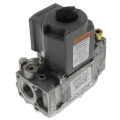


Armstrong Air Gas Valves are the safety-critical components that meter fuel to the burner assembly on Armstrong Air gas furnaces, and choosing the right one starts with matching voltage, pressure rating, and staging to the original equipment. Models like the R37933B002 run on 24 volts with a 3.5 inch water column rating, a spec range typical of single-stage residential furnace valves in this lineup. Furnaces built for two-stage operation use a different valve design, such as the R47485-003, which modulates gas flow between low and high fire rather than opening fully on every call for heat. Because a mismatched valve can cause delayed ignition, short-cycling, or a furnace that fails to reach its rated output, installers should always confirm the furnace's model and serial number against the valve's original part number before ordering. Replacing a gas valve also means checking manifold pressure after installation, since even a correct part number will not perform properly if outlet pressure isn't set to the furnace's specification.
Subcategories
- Single-Stage Natural Gas Valves: Single-stage valves open fully on every call for heat, delivering a fixed rate of gas to the burner. The R37933B002 is a 1/2 inch valve rated for 24 volts and 3.5 inches water column, a common baseline spec for standard-efficiency Armstrong Air furnaces. Installers reach for this valve type on furnaces without staged or modulating burner controls. It's a straightforward swap when the original valve fails a leak or pressure test.
- Two-Stage Gas Valves: Two-stage valves regulate gas flow between a low-fire and high-fire setting, letting the furnace match output to the heating load instead of firing at full capacity on every cycle. The R47485-003 is built for this staged operation and pairs with furnace control boards designed to send separate low and high fire signals. Furnaces using two-stage valves typically run quieter and hold tighter temperature swings than single-stage units. Replacing this valve requires confirming the control board supports staged operation.
- OEM Direct-Fit Replacement Valves: OEM valves are manufactured to the exact specifications of the original Armstrong Air part, preserving fit, wiring connections, and pressure settings without modification. The AGASVLV607-1 is a 3.5 inch water column, 1/2 inch valve rated for 24 volts, sold as a direct OEM replacement. Technicians use OEM valves when an exact match to the furnace's original equipment is required for warranty or code compliance. Direct-fit parts also reduce installation time since no bracket or fitting changes are needed.
Buying Guide
Identify the furnace's staging before anything else. Single-stage furnaces need a valve like the R37933B002 that opens fully on every call for heat, while two-stage furnaces require a valve such as the R47485-003 built to modulate between low and high fire. Installing a single-stage valve on a two-stage furnace, or the reverse, will cause control board faults or a furnace that never reaches its rated output.
Next, match voltage and pressure specifications exactly. Most residential Armstrong Air Gas Valves run on 24 volts, but water column ratings vary by model, and a valve rated for the wrong pressure will either starve the burner or overfire it. Pulling the original part number from the furnace's valve, rather than guessing from the furnace's model number alone, prevents this kind of mismatch.
For furnaces still under warranty or subject to local code inspection, OEM direct-fit valves such as the AGASVLV607-1 preserve the exact wiring and pressure settings of the original part. Aftermarket alternatives may fit but can void warranty coverage or fail an inspection if specifications drift from factory settings.
Finally, treat manifold pressure verification as part of every gas valve replacement, not an optional step. A correctly matched valve still needs outlet pressure set to the furnace's specification sheet after installation, since shipping tolerances and regulator adjustments can shift pressure slightly from the factory default.
Frequently Asked Questions
What's the difference between a single-stage and two-stage Armstrong Air gas valve?
A single-stage valve opens fully every time the furnace calls for heat, delivering one fixed rate of gas to the burner. A two-stage valve, such as the R47485-003, modulates between a low-fire and high-fire setting so the furnace can match its output to the heating load. Installing the wrong type on a furnace built for the other staging method typically causes control board faults or uneven heat output.
What voltage and pressure does a typical Armstrong Air gas valve use?
Most residential Armstrong Air gas valves, including the R37933B002, run on 24 volts. Water column ratings vary by model, with 3.5 inches water column being a common baseline for single-stage valves in this lineup. Confirming both specifications against the furnace's original valve prevents a mismatch that can starve or overfire the burner.
Is an OEM replacement gas valve necessary, or will an aftermarket valve work?
OEM valves, such as the AGASVLV607-1, are built to the exact wiring, fit, and pressure specifications of the original Armstrong Air part. Furnaces still under warranty or subject to code inspection generally require this exact match, since aftermarket alternatives can drift from factory settings enough to void coverage or fail an inspection.
What are signs that an Armstrong Air furnace's gas valve needs replacement?
Delayed ignition, a furnace that short-cycles, or a unit that never reaches its rated heat output all point toward a failing or mismatched gas valve. Testing manifold pressure against the furnace's specification sheet helps confirm whether the valve itself, rather than the regulator or control board, is causing the problem.
Does manifold pressure need to be checked after installing a new gas valve?
Yes. A correctly matched valve still needs outlet pressure verified against the furnace's specification sheet after installation, since shipping tolerances and regulator adjustments can shift pressure from the factory default. Skipping this step can leave a properly sized valve running outside its intended range.
