



Armstrong Air Parts - Furnace & AC
Armstrong Air parts cover the components most likely to need replacement on Armstrong Air furnaces and air handlers, from pilot and ignition assemblies to the circuit boards that manage startup and safety lockouts. Draft blowers, gas valves, and blower wheels round out the core mechanical and combustion parts.
Because these components are safety critical, matching the exact part number to the equipment model keeps the furnace operating within its designed safety margins. Technicians servicing Armstrong Air equipment in the field often keep common failure parts like ignitors and pressure switches on hand to reduce repeat visits.
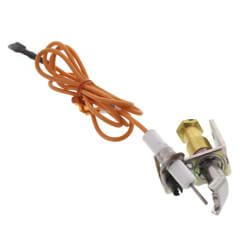
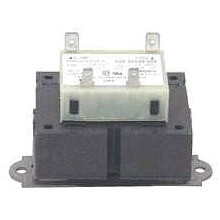


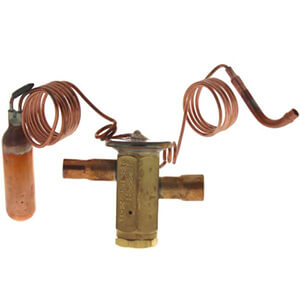
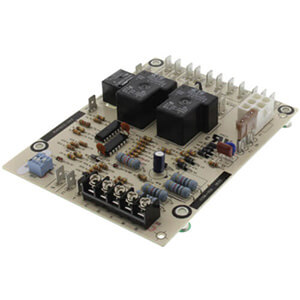
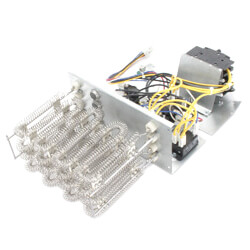

Pilot & Ignition parts cover the components most likely to fail during startup, including hot surface igniters, flame sensors, and pilot assemblies. Ignition failures are among the most common service calls on gas furnaces, often presenting as a no-heat condition where the system attempts to start but fails to light. Replacing an Armstrong Air igniter or flame sensor is typically a one-trip repair when the correct part is on hand. Igniters are specific to the equipment series, so matching the part number to the unit model is critical.
Circuit Boards control startup sequences, burner staging, blower timing, and system safety lockouts on Armstrong Air furnaces. A failed control board can cause intermittent operation, no-heat conditions, or error codes that don't clear after resetting the system. Circuit boards for Armstrong Air furnaces are model-specific and must be matched to the unit's wiring configuration to operate correctly. Swapping a board without confirming compatibility can trigger additional faults or damage connected components.
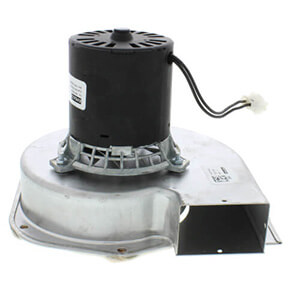
Draft Blowers & Motors pull combustion gases through the heat exchanger and out the flue, a function required before the furnace will light. A failing draft motor typically presents as a pressure switch error or slow startup before the furnace locks out on a safety fault. Armstrong Air draft blowers are matched to specific furnace models by CFM rating and mounting configuration. Replacing the inducer assembly with an incorrect unit can prevent the pressure switch from closing and keep the system from firing.
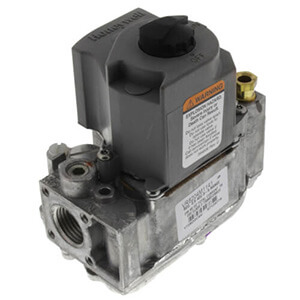
Gas Valves control fuel delivery to the burner assembly and are a safety-critical component in any Armstrong Air gas furnace. A faulty gas valve can cause delayed ignition, failure to fire, or odors that indicate incomplete shutoff. Armstrong Air gas valves must be matched to the correct inlet pressure and manifold pressure specifications for the unit. Field replacement requires confirming the valve type, inlet and outlet configuration, and voltage rating before installation.
Blower Wheels move conditioned air through the duct system after the heat exchanger warms it, and imbalance or damage in the wheel causes vibration, noise, and reduced airflow. Blower wheels are specified by diameter, width, and bore size, and must match the existing motor shaft to seat correctly. Rattling or vibrating air handlers are often traced to blower wheel damage from debris ingestion or years of cyclic stress. Replacing the wheel without cleaning the housing can allow residual debris to damage a new wheel quickly.
Switches include pressure switches, limit switches, and rollout switches that protect Armstrong Air systems from unsafe operating conditions. Pressure switches verify that the draft blower is creating adequate negative pressure before allowing ignition; limit switches cut burner operation if the heat exchanger reaches unsafe temperatures. A tripped rollout switch is a serious indicator of a combustion problem and should not be bypassed without diagnosing the root cause. Switches must match the correct trip point and configuration for the specific Armstrong Air unit to maintain proper safety function.
The first priority when ordering Armstrong Air replacement parts is the model and serial number of the unit. Armstrong Air furnaces span multiple product lines and generations, and many part types are not interchangeable across models. Circuit boards, gas valves, and ignition components on one series will not necessarily work in another, even if the physical fit looks similar.
For ignition and pilot parts, identify whether the unit uses a hot surface igniter, a direct spark igniter, or a standing pilot. Hot surface igniters vary by wattage and element material. Swapping a silicon carbide igniter for a silicon nitride unit of the wrong wattage risks premature failure on the next heating season.
Draft blower replacement requires matching CFM rating, motor horsepower, and mounting bolt pattern to the original unit. Pressure switches sense the specific static pressure that motor creates, so a blower with different airflow specs can cause a nuisance pressure switch fault on an otherwise functional system.
Armstrong Air circuit boards must match the unit's wiring harness connectors and staging configuration. A two-stage board installed in a single-stage furnace creates control conflicts. Always confirm the OEM part number before ordering, rather than sourcing by model number alone.
Gas valves require inlet gas pressure, outlet manifold pressure, and voltage confirmation before ordering. Most Armstrong Air gas valves run on 24VAC, but outlet pressure specifications vary by burner design. Always verify manifold pressure with a manometer after installation.
What Armstrong Air parts fail most often on gas furnaces?
The most commonly replaced Armstrong Air parts on gas furnaces are hot surface igniters, flame sensors, draft blower motors, and pressure switches. Igniters and flame sensors degrade over normal operating cycles and frequently cause no-heat calls in colder months. Draft blower motors wear over time and can cause pressure switch faults when airflow drops below the switch's trigger threshold. Circuit boards fail less predictably but can cause intermittent lockouts and error codes that don't resolve with a reset.
Are Armstrong Air parts interchangeable with other Allied Air brand furnaces?
Armstrong Air equipment is produced under the Allied Air Enterprises family, which includes brands such as Heil and Tempstar. Many Armstrong Air parts share OEM part numbers with equivalent Allied brand components, but interchangeability depends on the specific model and generation of equipment. Confirming the OEM part number from the unit's wiring diagram or data plate before substituting avoids compatibility issues that can create new fault codes or safety function problems.
How do I find the right Armstrong Air circuit board for my furnace?
The correct Armstrong Air circuit board is identified by the OEM part number printed on the existing board and referenced in the unit's installation manual. Circuit boards for Armstrong Air furnaces are model-specific; the wiring harness connectors, staging configuration, and jumper settings must all match the original board. Ordering by furnace model number alone can return multiple board options if the unit was produced across multiple production runs with different board revisions.
What's the difference between a draft blower and a blower wheel on an Armstrong Air furnace?
The draft blower on an Armstrong Air furnace is the inducer motor that pulls combustion gases through the heat exchanger and out the flue before ignition. The blower wheel is part of the air handler section and moves conditioned air through the duct system after the heat exchanger warms it. Draft blower problems typically cause pressure switch faults and prevent ignition; blower wheel problems cause airflow issues, noise, or vibration after the system has lit successfully.
Can I replace an Armstrong Air pressure switch without replacing the inducer motor?
Replacing only the Armstrong Air pressure switch is appropriate when the switch itself has failed and the inducer motor is confirmed to be producing adequate airflow. A pressure switch that trips repeatedly may indicate a weak inducer motor rather than a faulty switch. Before condemning the pressure switch, verify that the draft blower is operating at rated RPM and check the hose connections and port for blockage or cracks. Replacing a pressure switch on a failing inducer motor can result in a callback when the motor degrades further.
Resources
Pilot & Ignition parts cover the components most likely to fail during startup, including hot surface igniters, flame sensors, and pilot assemblies. Ignition failures are among the most common service calls on gas furnaces, often presenting as a no-heat condition where the system attempts to start but fails to light. Replacing an Armstrong Air igniter or flame sensor is typically a one-trip repair when the correct part is on hand. Igniters are specific to the equipment series, so matching the part number to the unit model is critical.
Circuit Boards control startup sequences, burner staging, blower timing, and system safety lockouts on Armstrong Air furnaces. A failed control board can cause intermittent operation, no-heat conditions, or error codes that don't clear after resetting the system. Circuit boards for Armstrong Air furnaces are model-specific and must be matched to the unit's wiring configuration to operate correctly. Swapping a board without confirming compatibility can trigger additional faults or damage connected components.
Draft Blowers & Motors pull combustion gases through the heat exchanger and out the flue, a function required before the furnace will light. A failing draft motor typically presents as a pressure switch error or slow startup before the furnace locks out on a safety fault. Armstrong Air draft blowers are matched to specific furnace models by CFM rating and mounting configuration. Replacing the inducer assembly with an incorrect unit can prevent the pressure switch from closing and keep the system from firing.
Gas Valves control fuel delivery to the burner assembly and are a safety-critical component in any Armstrong Air gas furnace. A faulty gas valve can cause delayed ignition, failure to fire, or odors that indicate incomplete shutoff. Armstrong Air gas valves must be matched to the correct inlet pressure and manifold pressure specifications for the unit. Field replacement requires confirming the valve type, inlet and outlet configuration, and voltage rating before installation.
Blower Wheels move conditioned air through the duct system after the heat exchanger warms it, and imbalance or damage in the wheel causes vibration, noise, and reduced airflow. Blower wheels are specified by diameter, width, and bore size, and must match the existing motor shaft to seat correctly. Rattling or vibrating air handlers are often traced to blower wheel damage from debris ingestion or years of cyclic stress. Replacing the wheel without cleaning the housing can allow residual debris to damage a new wheel quickly.
Switches include pressure switches, limit switches, and rollout switches that protect Armstrong Air systems from unsafe operating conditions. Pressure switches verify that the draft blower is creating adequate negative pressure before allowing ignition; limit switches cut burner operation if the heat exchanger reaches unsafe temperatures. A tripped rollout switch is a serious indicator of a combustion problem and should not be bypassed without diagnosing the root cause. Switches must match the correct trip point and configuration for the specific Armstrong Air unit to maintain proper safety function.
The first priority when ordering Armstrong Air replacement parts is the model and serial number of the unit. Armstrong Air furnaces span multiple product lines and generations, and many part types are not interchangeable across models. Circuit boards, gas valves, and ignition components on one series will not necessarily work in another, even if the physical fit looks similar.
For ignition and pilot parts, identify whether the unit uses a hot surface igniter, a direct spark igniter, or a standing pilot. Hot surface igniters vary by wattage and element material. Swapping a silicon carbide igniter for a silicon nitride unit of the wrong wattage risks premature failure on the next heating season.
Draft blower replacement requires matching CFM rating, motor horsepower, and mounting bolt pattern to the original unit. Pressure switches sense the specific static pressure that motor creates, so a blower with different airflow specs can cause a nuisance pressure switch fault on an otherwise functional system.
Armstrong Air circuit boards must match the unit's wiring harness connectors and staging configuration. A two-stage board installed in a single-stage furnace creates control conflicts. Always confirm the OEM part number before ordering, rather than sourcing by model number alone.
Gas valves require inlet gas pressure, outlet manifold pressure, and voltage confirmation before ordering. Most Armstrong Air gas valves run on 24VAC, but outlet pressure specifications vary by burner design. Always verify manifold pressure with a manometer after installation.
What Armstrong Air parts fail most often on gas furnaces?
The most commonly replaced Armstrong Air parts on gas furnaces are hot surface igniters, flame sensors, draft blower motors, and pressure switches. Igniters and flame sensors degrade over normal operating cycles and frequently cause no-heat calls in colder months. Draft blower motors wear over time and can cause pressure switch faults when airflow drops below the switch's trigger threshold. Circuit boards fail less predictably but can cause intermittent lockouts and error codes that don't resolve with a reset.
Are Armstrong Air parts interchangeable with other Allied Air brand furnaces?
Armstrong Air equipment is produced under the Allied Air Enterprises family, which includes brands such as Heil and Tempstar. Many Armstrong Air parts share OEM part numbers with equivalent Allied brand components, but interchangeability depends on the specific model and generation of equipment. Confirming the OEM part number from the unit's wiring diagram or data plate before substituting avoids compatibility issues that can create new fault codes or safety function problems.
How do I find the right Armstrong Air circuit board for my furnace?
The correct Armstrong Air circuit board is identified by the OEM part number printed on the existing board and referenced in the unit's installation manual. Circuit boards for Armstrong Air furnaces are model-specific; the wiring harness connectors, staging configuration, and jumper settings must all match the original board. Ordering by furnace model number alone can return multiple board options if the unit was produced across multiple production runs with different board revisions.
What's the difference between a draft blower and a blower wheel on an Armstrong Air furnace?
The draft blower on an Armstrong Air furnace is the inducer motor that pulls combustion gases through the heat exchanger and out the flue before ignition. The blower wheel is part of the air handler section and moves conditioned air through the duct system after the heat exchanger warms it. Draft blower problems typically cause pressure switch faults and prevent ignition; blower wheel problems cause airflow issues, noise, or vibration after the system has lit successfully.
Can I replace an Armstrong Air pressure switch without replacing the inducer motor?
Replacing only the Armstrong Air pressure switch is appropriate when the switch itself has failed and the inducer motor is confirmed to be producing adequate airflow. A pressure switch that trips repeatedly may indicate a weak inducer motor rather than a faulty switch. Before condemning the pressure switch, verify that the draft blower is operating at rated RPM and check the hose connections and port for blockage or cracks. Replacing a pressure switch on a failing inducer motor can result in a callback when the motor degrades further.