




Filters
SORT
Product Availability –
Product Type –
Series –
Size –
Max Pressure (PSI) –
Review Score –
 --%3E %3Csvg version='1.1' id='Fill' xmlns='http://www.w3.org/2000/svg' xmlns:xlink='http://www.w3.org/1999/xlink' x='0px' y='0px' viewBox='0 0 100 100' enable-background='new 0 0 100 100' xml:space='preserve'%3E %3Cpath fill='%23F15C02' d='M79.44,0.95H20.56C9.78,0.95,0.95,9.78,0.95,20.56v58.87c0,10.79,8.82,19.61,19.61,19.61h58.87 c10.79,0,19.61-8.83,19.61-19.61V20.56C99.05,9.78,90.22,0.95,79.44,0.95z M65.38,58.24l9.38,29.58L49.69,69.78L24.5,87.82 l9.34-29.6L8.8,39.6l30.73-0.17c0,0,6.98-19.61,10-28.93c0.54,1.36,9.88,29.1,9.88,29.1H91.2L65.38,58.24z'/%3E %3C/svg%3E)
 --%3E %3Csvg version='1.1' id='With-RB' xmlns='http://www.w3.org/2000/svg' xmlns:xlink='http://www.w3.org/1999/xlink' x='0px' y='0px' viewBox='0 0 100 100' enable-background='new 0 0 100 100' xml:space='preserve'%3E %3Cpath fill='%23FBC8B4' d='M79.44,0.95H20.56C9.78,0.95,0.95,9.78,0.95,20.56v58.87c0,10.79,8.82,19.61,19.61,19.61h58.87 c10.79,0,19.61-8.83,19.61-19.61V20.56C99.05,9.78,90.22,0.95,79.44,0.95z M65.38,58.24l9.38,29.58L49.69,69.78L24.5,87.82 l9.34-29.6L8.8,39.6l30.73-0.17c0,0,6.98-19.61,10-28.93c0.54,1.36,9.88,29.1,9.88,29.1H91.2L65.38,58.24z'/%3E %3C/svg%3E)
Price Range –
Armstrong International


 --%3E %3Csvg version='1.1' id='No-RB' xmlns='http://www.w3.org/2000/svg' xmlns:xlink='http://www.w3.org/1999/xlink' x='0px' y='0px' viewBox='0 0 100 100' enable-background='new 0 0 100 100' xml:space='preserve'%3E %3Cpath fill='%23CECECE' d='M79.44,0.95H20.56C9.78,0.95,0.95,9.78,0.95,20.56v58.87c0,10.79,8.82,19.61,19.61,19.61h58.87 c10.79,0,19.61-8.83,19.61-19.61V20.56C99.05,9.78,90.22,0.95,79.44,0.95z M65.38,58.24l9.38,29.58L49.69,69.78L24.5,87.82 l9.34-29.6L8.8,39.6l30.73-0.17c0,0,6.98-19.61,10-28.93c0.54,1.36,9.88,29.1,9.88,29.1H91.2L65.38,58.24z'/%3E %3C/svg%3E)
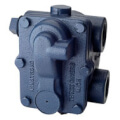


Armstrong International traces back to 1900, when Adam Elliott Armstrong founded what was originally called Armstrong Machine Works in Three Rivers, Michigan. In 1911, the company invented and patented the first inverted bucket steam trap, a design that became foundational to modern steam trap technology.
The company adopted the Armstrong International name in 1982 to reflect its growing global reach. Today it remains a private, fifth-generation family-owned business with more than 3,000 employees and representatives worldwide.
Product Lines
Armstrong's product range covers steam traps, including inverted bucket, float and thermostatic, and thermodynamic designs, along with control valves, pressure-reducing valves, and other steam specialties used across boiler rooms and steam distribution systems. The lineup extends to components for compressed air and hot water systems as well, supporting the broader mechanical systems many commercial and industrial facilities rely on.
Why Contractors Specify Armstrong International
Mechanical contractors and boiler technicians specify Armstrong steam traps and valves in part because of the company's role in originating the inverted bucket steam trap design, a product category still central to steam system maintenance today. Wide parts compatibility across existing steam systems also matters when a trap or valve needs to be swapped without redesigning surrounding piping.
How to Choose Armstrong International Products
Picking the right steam trap starts with matching the trap type to the application; inverted bucket traps suit general steam line drainage, while float and thermostatic traps handle modulating or lower-pressure loads more efficiently. Pressure and capacity ratings should be checked against actual system operating conditions, and connection size and orientation need to fit the space available in the mechanical room before ordering a replacement.
Frequently Asked Questions
What is an inverted bucket steam trap used for?
An inverted bucket steam trap discharges condensate from a steam line while keeping live steam from escaping, using a bucket that floats in condensate and sinks when steam enters, which opens a valve to release the trapped liquid.
How is a float and thermostatic steam trap different from an inverted bucket trap?
A float and thermostatic trap uses a floating ball mechanism to continuously discharge condensate as it accumulates, making it well suited to modulating loads, while an inverted bucket trap operates more cyclically and tends to handle dirt and waterhammer conditions well.
How often should steam traps be inspected?
Steam trap testing frequency depends on system pressure and criticality, but many facilities schedule trap surveys on a recurring annual or semi-annual basis, since a failed trap can waste significant energy or flood a line with condensate without an obvious symptom.
What causes a steam trap to fail?
Common failure causes include dirt and scale buildup, waterhammer, oversizing or undersizing for the application, and general wear on internal mechanisms over years of cycling, any of which can cause a trap to fail open, blowing steam, or fail closed, backing up condensate.
Can Armstrong control valves be used on existing third-party steam systems?
Armstrong control valves and pressure-reducing valves are generally built to standard pipe connection sizes and pressure classes, which allows them to be installed into many existing steam systems as long as the valve's pressure and capacity ratings match the application.
