



Armstrong Pumps


 --%3E %3Csvg version='1.1' id='No-RB' xmlns='http://www.w3.org/2000/svg' xmlns:xlink='http://www.w3.org/1999/xlink' x='0px' y='0px' viewBox='0 0 100 100' enable-background='new 0 0 100 100' xml:space='preserve'%3E %3Cpath fill='%23CECECE' d='M79.44,0.95H20.56C9.78,0.95,0.95,9.78,0.95,20.56v58.87c0,10.79,8.82,19.61,19.61,19.61h58.87 c10.79,0,19.61-8.83,19.61-19.61V20.56C99.05,9.78,90.22,0.95,79.44,0.95z M65.38,58.24l9.38,29.58L49.69,69.78L24.5,87.82 l9.34-29.6L8.8,39.6l30.73-0.17c0,0,6.98-19.61,10-28.93c0.54,1.36,9.88,29.1,9.88,29.1H91.2L65.38,58.24z'/%3E %3C/svg%3E)
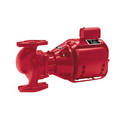


Armstrong got its start in 1934, when Samuel Allan Armstrong began producing circulating pumps from a small basement location in Toronto. In 1952, James A. Armstrong took over as company president and pushed the business into vertical pumping for HVAC applications, a move that established the company's position in heat transfer and fluid flow equipment.
Known today as Armstrong Fluid Technology, the company operates eight manufacturing facilities across four continents and continues to design and manufacture pumps and fluid flow equipment for heating and cooling systems.
Product Lines
Armstrong's commercial pump line includes Design Envelope pumps in vertical in-line, end suction, horizontal split case, and vertical multistage configurations, including the Design Envelope 4300, 4360, and 4380 vertical in-line pumps with integrated intelligent controls.
On the residential and light commercial side, the E Series high efficiency circulators cover hot water, geothermal, radiant panel, and snow melting applications, and the Compass H variable speed wet rotor circulator is built to standard flange to flange dimensions for replacing existing fixed speed circulators.
Why Contractors Specify Armstrong Pumps
The vertical in-line design used across Armstrong's Design Envelope pumps removes the need for inertia bases, housekeeping pads, and flex connectors, cutting down on piping and installation work in the mechanical room. Built in intelligent controls on these pumps also remove the need to mount a separate variable frequency drive.
For replacement work, the Compass H circulator's standard flange to flange dimensions let contractors swap out an existing fixed speed circulator without repiping the connection. That kind of drop in compatibility can shorten a retrofit job considerably.
How to Choose Armstrong Products
Start by matching pump configuration to available mechanical room space and piping layout: vertical in-line pumps suit tight footprints, while horizontal split case or vertical multistage models fit larger capacity systems. Size circulators to the system's actual head and flow requirements rather than defaulting to the largest available unit.
Decide between a fixed speed and variable speed circulator based on how much the system load varies throughout the year, since variable speed models like the Compass H adjust output as demand changes. Where a pump will connect to a building automation system, confirm what control features are built into the unit versus what needs to be added separately.
Frequently Asked Questions
What is a Design Envelope pump?
It is a pump line with integrated intelligent controls built in, covering a wide range of flow and head conditions without needing a separate variable frequency drive.
What is the benefit of a vertical in-line pump over a horizontal split case pump?
Vertical in-line pumps take up less floor space and eliminate the need for inertia bases, housekeeping pads, and flex connectors that horizontal split case installations typically require.
Can the Compass H circulator replace an existing fixed speed circulator?
Yes, it is built to popular flange to flange dimensions so it can replace an existing fixed speed circulator without repiping.
What applications use the E Series circulators?
They are used for hot water, geothermal, radiant panel, and snow melting applications in large residential and light commercial buildings.
Does a Design Envelope pump need a separate variable frequency drive?
No, the integrated intelligent controls built into Design Envelope pumps remove the need to mount a separate variable frequency drive.
