




Bibb Washers

 --%3E %3Csvg version='1.1' id='No-RB' xmlns='http://www.w3.org/2000/svg' xmlns:xlink='http://www.w3.org/1999/xlink' x='0px' y='0px' viewBox='0 0 100 100' enable-background='new 0 0 100 100' xml:space='preserve'%3E %3Cpath fill='%23CECECE' d='M79.44,0.95H20.56C9.78,0.95,0.95,9.78,0.95,20.56v58.87c0,10.79,8.82,19.61,19.61,19.61h58.87 c10.79,0,19.61-8.83,19.61-19.61V20.56C99.05,9.78,90.22,0.95,79.44,0.95z M65.38,58.24l9.38,29.58L49.69,69.78L24.5,87.82 l9.34-29.6L8.8,39.6l30.73-0.17c0,0,6.98-19.61,10-28.93c0.54,1.36,9.88,29.1,9.88,29.1H91.2L65.38,58.24z'/%3E %3C/svg%3E)

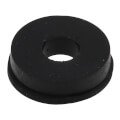
Bibb Washers are the small rubber or synthetic seals inside a compression-style faucet or hose bibb that stop a drip once the valve stem compresses them against the seat. Jones Stephens produces these washers in flat and beveled profiles across trade sizes like 00, 0, 1/4, 3/8, and 1/2, with neoprene construction rated to handle water up to 150°F. A flat washer seats squarely against a straight valve seat, while a beveled washer's angled face matches a tapered seat found on many older hose bibbs and compression faucets. Plumbers keep an assortment on hand since a single truck can run into several different seat styles and trade sizes across a single day of service calls. Matching the exact profile and trade size to the existing seat is what actually stops the drip, since an oversized or undersized washer either won't seal or wears out again quickly after installation.
Subcategories
- Flat Bibb Washers: Flat Bibb Washers seat squarely against a straight, flat valve seat rather than a tapered one, and Jones Stephens produces them in trade sizes such as 00, 0, 1/4, 3/8, and 1/2. Neoprene construction on the 00-size washer carries a rated operating temperature up to 150°F, holding shape under repeated compression. Standard washer-style faucets and hose bibbs with a flat seat use this profile most often. Plumbers stock several trade sizes together since a flat seat can show up in more than one size on the same service route.
- Beveled Bibb Washers: Beveled Bibb Washers use an angled face instead of a flat one, matching the tapered seat found in many older compression faucets and hose bibbs. Jones Stephens offers this profile in trade sizes including 00, 3/8M, and 3/8L. Installing a flat washer on a tapered seat, or the reverse, is a common reason a repair doesn't hold, so matching the bevel to the seat style matters as much as matching the size. Older fixture repairs often call for this profile over the flat alternative.
- Bibb Washer Repair Kits: Bibb Washer Repair Kits bundle an assortment of trade sizes and profiles, sometimes including mounting screws, into a single package rather than a single washer type. Assortments in the 160-piece and 205-piece range cover multiple trade sizes at once, cutting down on trips back for a size that didn't fit the first time. Plumbers who don't know the exact seat style ahead of a service call often start with a kit rather than a single washer. General repair and maintenance work across a range of fixture ages and brands benefits most from this kind of assortment.
Buying Guide
Identify the seat style before buying a single washer, since a flat seat and a tapered seat need different washer profiles to actually stop a drip. A flat washer seats squarely against a straight valve seat, while a beveled washer's angled face matches a tapered seat common on older compression faucets and hose bibbs. Installing the wrong profile on the right size still won't hold, so check the seat shape on the old washer or the valve itself before ordering a replacement. Trade size comes next, and Bibb Washers run in a numbered system such as 00, 0, 1/4, 3/8, and 1/2 rather than a simple fractional measurement, so pulling the old washer and matching it directly avoids a guess based on the fixture's nominal pipe size. Material matters less than shape and size in most cases, since neoprene construction is standard across trade sizes and handles typical hot and cold water temperatures without breaking down quickly. A repair kit with an assortment of sizes and profiles is worth carrying on the truck when the seat style isn't known ahead of time, since guessing wrong on a single washer means a second trip back for the right one. Keep in mind that washer wear is often a symptom of a damaged or corroded seat rather than the washer alone, so a fixture that keeps eating through new washers quickly may need the seat reseated or the stem assembly replaced rather than another washer swap.
Frequently Asked Questions
What's the difference between a flat and beveled bibb washer?
A flat washer seats squarely against a straight valve seat, while a beveled washer has an angled face that matches a tapered seat found in many older compression faucets and hose bibbs. Installing the wrong profile on an otherwise correctly sized washer still won't stop the drip. Checking the seat shape on the old washer before ordering a replacement avoids a mismatch.
How are bibb washer sizes measured?
Bibb Washers use a trade size system, such as 00, 0, 1/4, 3/8, and 1/2, rather than a simple fractional measurement matching pipe size. Pulling the old washer out and matching it directly against the new one is more reliable than guessing based on the fixture's nominal pipe size. Jones Stephens packages washers by these trade sizes in both flat and beveled profiles.
What material are bibb washers made from?
Neoprene is standard construction across most trade sizes, rated to handle water temperatures up to 150°F without breaking down quickly. Neoprene holds its shape under repeated compression from the valve stem, which is what actually stops the drip. Consistent material across sizes means shape and trade size matter more than material when choosing a replacement.
Why does a faucet keep leaking after a new washer is installed?
A fixture that keeps eating through new washers quickly often has a damaged or corroded seat rather than a washer problem alone. Reseating the valve seat or replacing the stem assembly addresses the underlying cause instead of masking it with another washer swap. Persistent leaks after a correct washer replacement are a sign to look past the washer itself.
Is it worth keeping an assortment kit on the truck instead of individual washers?
A repair kit bundling multiple trade sizes and profiles, sometimes in a 160-piece or 205-piece assortment, saves a return trip when the exact seat style isn't known ahead of a service call. Individual washers make more sense once a plumber already knows the specific size and profile a job needs. General repair work across a range of fixture ages and brands benefits most from carrying an assortment.
